



There’s more to it than price – reconnecting people and fish
“Sustainable fisheries management is not just about preserving fish stocks for future generations, it’s also about keeping our oceans healthy, especially for those whose livelihoods depend on them,” Virginijus Sinkevičius, European Commissioner for the Environment, Oceans and Fisheriestold the Seafood Futures Forum at Seafood Expo Global (SEG) 2024 in Barcelona.
Addressing the 2024 edition of the Marine Stewardship Council’s annual SEG event, Sinkevičius acknowledged that the fishing and seafood sectors are the “lifeblood” of many coastal communities across the EU, and that they’re vital for sustaining economies, while the supply of these low carbon foods are crucial in the fight against climate change.
Tapping into the theme of this year’s forum: planet, price and diet, and how seafood is stacking up, particularly with regards to empowering consumers to make more sustainable food choices, the Commissioner said: “More than ever, consumers are aware of and attentive to the environmental consequences of what they buy. And while they may balance these considerations against other factors such as price, health, taste and quality, they also know how important it is that our seafood is sourced sustainably. Our job is to empower them, give them reliable, transparent information to make more sustainable choices.”
Robust third-party certification schemes are one way to achieve this end, as is clear, accurate and reliable labelling, he said. While at a regulatory level, policymakers need to make sure that general food information laws and fishery-specific labelling requirements apply to all seafood products placed on the EU market.
“But this is not all. We have recently proposed a directive on the substantiation and communication of explicit environmental claims,” Sinkevičius said. “This directive tackles greenwashing. It will introduce environmental labelling rules to make sure they are solid, transparent and trustworthy. At the European Commission, we are acutely aware that our food system needs to be sustainable, fair and healthy.”
He added that the Commission is committed to reducing the environmental and climate footprint of the EU food system. And, at the same time, it is equally focused on ensuring food security, fair conditions and public health.
Increased certification
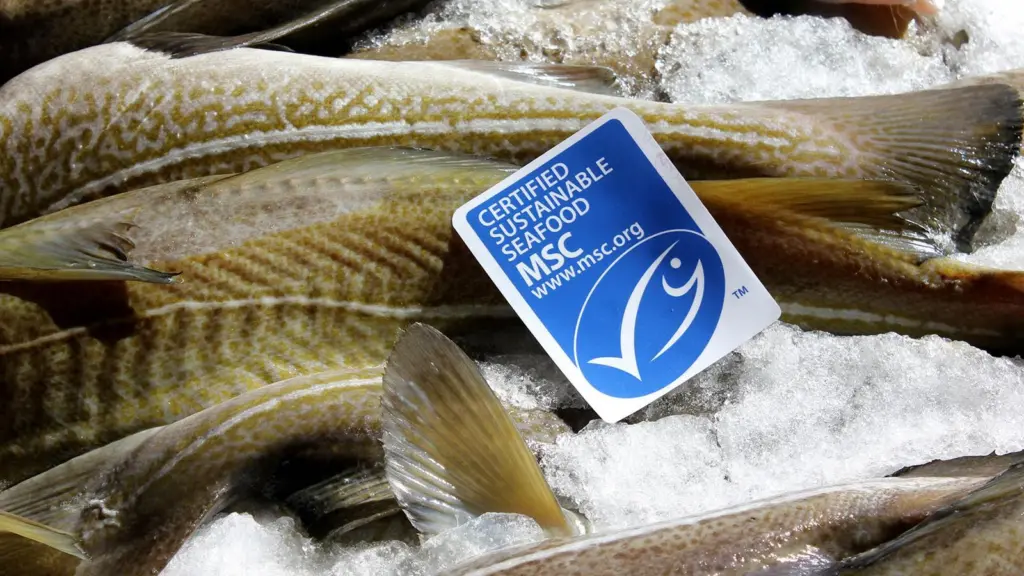
With the seafood industry facing significant challenges – not least climate change and rising ocean temperatures, MSC CEO Rupert Howes told the forum that sustainably managed fisheries are better equipped to deal with these issues, and as such, the wild-catch certification scheme, through its global fisheries target of 30% engagement by 2030, will work with partners to accelerate this engagement and to grow the market for sustainable seafood.
As of 31 March 2024, 19% of the marine catch was engaged with the programme, meaning just shy of a fifth of the wild catch is certified, has had its certification suspended, or is in assessment. This includes 713 fisheries, plus 54 that are new to MSC.
Already this year, 23 new fisheries have achieved MSC certification, 37 have been successfully reassessed, and 14 new fisheries have entered full assessment. In terms of products, almost 50% of the global tuna catch and 65% of whitefish landings are now engaged in the programme. In total, 167 different species are now represented.
Despite the economic environment, and all of the environmental challenges, there’s been continued engagement with the programme, Howes said. “No-one is slipping back. We’re seeing more and more market commitments to credible certification and labelling programmes. We’re seeing growth in the market and growth in the fishery engagement.”
And aligning with Commissioner Sinkevičius’s address, he said: “We need sustainable protein as we head to a planet of 10 billion people. It’s vital that consumers are given the right information (given all of their concerns).”
Swapping out of fish
However, people are experiencing “unprecedented upheaval” in their lives, Caroline Holme, Senior Director of international insights company GlobeScan, told the forum.
Noting that the world is still dealing with the aftermath of Covid, that there’s increased political polarisation across many regions, together with more and more extreme weather events, strong concerns over war and conflict, and pressures related to the cost-of-living crisis, she said, “It’s a lot to deal with and because change is the only constant, it is really important to keep track of peoples’ attitudes and reactions.”
Delivering key findings from GlobeScan’s most recent seafood consumer survey, Holme said there’s a growing pessimism among consumers about the health of the world’s oceans and the future availability of seafood, together with increased concerns about fishing practices, particularly overfishing, illegal fishing and accidental catches.
This analysis also found that over the past two years, people have been buying less seafood and that there’s been a decline in purchasing behaviour across all categories except canned products and diet supplements/fish oils. Additionally, while home consumption levels have remained steady over this period, people are eating less seafood when they are dining out.
“The cost-of-living crisis has impacted the amount of seafood people are buying, the type of seafood (they’re going for cheaper options), and also where they consume it,” Holme said.
With regards to diet swaps, the survey found that between 2022 and 2024 people have been increasingly swapping red meat for fish, but also that some fish consumers are swapping out of the category to eat more vegetarian- and vegan-based meals. It further found that health, quality and change in cooking habits ranked as the three main reasons for consumers to switch from red meat to fish, but that health, saving money and quality were the top three reasons to eat less fish.
“They’re thinking in their heads that I can be more sustainable by just not eating seafood and just swapping that seafood meal for something else. And to save some money,” Holme said. “They want to protect the ocean environment and they see eating less seafood as a way to do that. That’s really a concern if some people are thinking that seafood is an unsustainable diet option.”
Finding balance
With regards to what the industry can do to engage more consumers, GlobeScan found 53% of the 20,000 people it surveyed would be encouraged to eat more seafood each week if it was offered at a lower price, while 27% offered sustainability as the main driver, 23% availability and 22% health.
“We’ve seen high levels of concern about price and the cost of living but it’s not the only thing in consumers’ minds when they go shopping. They need to hear about other things to help them with their purchase decisions…Health is a strong motivator for seafood purchases, and our analysis shows a really powerful connection between [personal] health and the health of the ocean. [We also see] high levels of concern about the environment, the oceans and also some aspects of the fishing industry, and people are really looking more for what they see as sustainable diet choices. All of those things need to be addressed to keep consumers onboard.”
Responding to GlobeScan’s findings, Luciano Pirovano, Chief Sustainability Officer with Bolton Food and Tri Marine, said it’s important for the seafood industry to have a clear strategy and a long-term approach.
“It’s clear that the attention [on the industry] is growing. Obviously, there’s the price topic, but the trend is clear. I think that generally speaking, in seafood, and especially in the tuna sector, we’ve been too shy about showing our supply chain. And I think that now is the right moment [with the tools and technologies we have] to be more transparent with consumers and to show that in these supply chains, there are people spending their whole lives committed to sustainability,” Pirovano said.
“We need to be transparent; we need to show people happy being sustainable. It’s a great opportunity to explain our supply chain. If you compare tuna with coffee, tea, cocoa – they are being more transparent than us.”
Beyond certification and having MSC’s blue logo on consumer products, there’s a need for the industry to work together on educating consumers and growing awareness, while traceability should be used to show younger consumers where products are coming from, he said.
“It’s clear that seafood is a fantastic protein in terms of health – vitamin D, B12, omega-3s etc – with lower CO2 emissions and so on, and we need to convince them that as well as being healthy food, it’s sustainable food. This balance is key,” Pirovano said.