


Worlds offshore fish farming industry seeking wide recognition
The participants of the Offshore Mariculture Conference 2012, part of World Fishing & Aquaculture and organised by Mercator Media, soon found that it was taking place in Izmir in Turkey for very good reasons, reports Menakhem Ben-Yami.
The Turkish fish
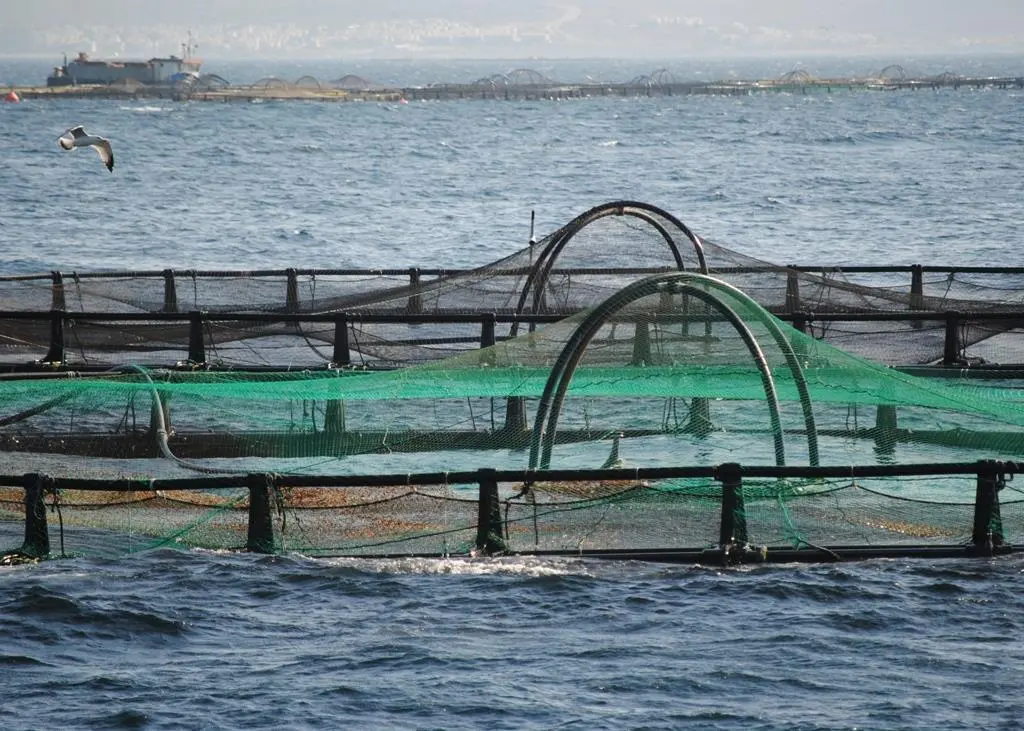
Turkey is currently the world’s third largest producer of farmed finfish, the largest producer of rainbow trout, and the second largest producer of sea bass and sea bream in Europe. It appears that Turkey has developed a mammoth aquaculture which, with a strong work force of 25,000 people, in 2011 yielded almost 190,000mt of fish and 330 million fish fry. The fast growing industry is producing about 1/3 aquaculture yields in the European Union member countries. It is one of the main, if not the biggest of marine fish farming and processing industries in the Mediterranean with 80% of its marine fish farms based offshore. Its marine fish farms are being gradually moved from inshore to offshore, with all stakeholders involved in a successful state administered spatial planning and allocation. Experience thus gained has led to the 2013 global conference on ICZM to take place in Turkey.
The Offshore Mariculture Conference, which took place in October, gave the industry an opportunity to say to the fisheries’ world: “we grew up, we’re becoming quite sustainable, we’re here to stay, or rather to float and grow, and we’re going to be an inseparable part of the future”. This year’s conference was the fourth to be held – the former three meetings have been held biannually in, respectively, Ireland, Spain and Croatia. The present, massively-attended event was hosted and organised by the Turkish Ministry of Food Agriculture and Livestock with 10 commercial sponsors and several supporting organisations, among them the Central Union of Turkish Aquaculture Producers. Dr Durali Kocak, Director General for Fisheries & Aquaculture, Turkish Ministry of Food Agriculture & Livestock welcomed the participants, while Paul Holthus of the World Ocean Council, and Alessandro Lovatelli, FAO Fisheries Aquaculture Officer, were keynote speakers.
With 80% of Turkish mariculture based offshore and with Turkey excelling in spatial planning, the choice of Izmir, a port in the Aegean Sea where a number of large offshore fish farms are located, as the venue of the conference was quite appropriate, and in view of recent developments, also timely. Those developments were the main subjects of the conference, namely, location, technology, feeds and analysis and evaluation of the past and present of the offshore fish farms, and forecasting their future. Innovative cage and mooring design for open oceanic waters was another hot subject.
No wonder, therefore, that the Izmir conference attracted participants from 35 countries, FAO, and some producers’ organisations. Some participants came to present their achievements; others to introduce and display their cage farming technology and operation, such as novel netting materials, sophisticated cage designs, feeds for farmed fish, and more. Others who were interested in fish trade came to meet people and make new contacts.
Quite aptly the conference was chaired by Neil Sims, the co- founder and co-CEO, of Kampachi Farms, a Hawaii based firm developing fish rearing in fully sealed fish cages free-floating in the open ocean.
The ascent of offshore mariculture
At the time when some apparently realistic forecasts say that in around 2020 fish farming production will top that of wild catch on one hand, and that some 160 million mt of fish would be needed for human consumption on the other, it is aquaculture which must provide this need.
Marine farming, or mariculture, has been the fastest growing element of the aquaculture industry, with its offshore sector gaining more and more both positive and negative attention. According to Neil Sims, further development of aquaculture is encountering considerable constraints: the inland fish farming – especially in terms of land and water, and the mariculture sector – biological, technological, regulatory and financial. For example, genetic improvement of the cultured strains is often opposed by the capture industry, due to the possible effect of escaping individuals on native stocks in the area – a problem brought up by C Greg Lutz of Louisiana State University. Also, capture fisheries may be affected, but, mainly in Asia, fishermen are encouraged to become fish farmers and be employed in mariculture. There are also problems of insuring both, the fish farms and the yield, the intricacies of which were brought up by Cédric Audor of GUIAN S.A, France. Altogether, the progress of mariculture during the last decade has been mainly incremental and the technological and operational breakthrough would be coming, according to Mr Sims, through the concept of free-floating, submergible, remotely controlled, large cages.
The conference participants were given the opportunity to visit some impressive offshore and semi-offshore installations of circular, top-covered floating cages, as well as a modern onshore fish-processing plant with a capacity of 10,000mt of processed product. It’s owned by CAMLI-PINAR and produces bass and bream products, mainly from own fish farms: fresh/chilled/round and fresh-frozen, smoked and ready to cook fillets. Its products are certified for quality. C-P is also a major feed producer. Another major, if not the largest vertically integrated Turkish fishery company is KILIC. It produces feed, and operates hatcheries, fish farms, and processing and packing plants. It puts on the market over 30,000mt/year of seabass, seabream and trout, as well as 320.5 million of fingerlings of sea fish and trout. Italy, Russia, Holland, Spain, UK, and the Middle East are its major exports markets.
Farm siting
The March 2012 Bremerhaven Declaration on Open Ocean Aquaculture development stressed that in view of claims by environmentalists and fishermen the socio-economic dimensions should be given sufficient attention when allocating space for offshore fish farms. Accordingly, when the conference dealt with zoning and allocation of offshore mariculture in harmony with other users of the marine realm, the question of what ‘offshore’ is came up. For example, according to Ludwig Karlsen of Norwegian University of Science and Technology (NTNU), most of the Norwegian so called offshore salmon cage farms are not really offshore, but rather in partly protected waters.
Hayri Deniz, of the department for Fisheries and Aquaculture in the Ministry of Food, Agriculture and Livestock, told the conference about Turkey’s Spatial Planning Policy towards furthering the development of offshore mariculture. One problem is that Turkish sea farms, most of them located in Aegean enclosed bays or inshore waters, compete with other activities. The government has dealt with this problem, which has hampered the future expansion of the sector, by legislating in consensus with all related institutions and stakeholders a new Environmental Law, developing a National Mariculture Development Plan, and implementing integrated coastal zone management (ICZM) models. Consequently, in 2009, many marine fish farms were moved to that or other degree offshore. FAO has assisted by introducing the ecosystem approach in planning a roadmap for marine aquaculture site selection and zoning.
Also in the US, the Department of Commerce is encouraging relocation and development of cage culture systems offshore, quoting their positive attributes, such as water flow flushing the cages, sites away from navigation routes, better water quality than in often polluted by run-off from inland sources inshore systems, less sea-lice and other pests and diseases, and sustaining the aesthetic value of the coast.
In the Philippines, as reported Patrick White of Akvaplan Niva, to solve siting problems the fisheries authorities have established Mariculture Parks, where fish farmers are growing milkfish, groupers, and siganids in cages, and seaweed on longlines. The parks are strategically located to connect the mariculture Industry to the international market through a live-fish trade network. In Australia where most fish cultured would mostly go to Asian markets, and marine spatial planning (MSP) is allocating areas for marine conservation and other purposes, the extensive coastline doesn’t leave much place for conflict, reported John Eyres of the Western Australian Department of Fisheries.
Technology price tag
According to DCB Scott and JF Muir of the Scottish University of Stirling, a range of cage systems is now available for offshore mariculture in the Mediterranean and elsewhere, though they must be selected to fit the targeted environmental conditions and production regimes. To lessen the waves’ impact of rough seas, the entire cage system must be designed to submerge upon a remote command, or automatically. The cages must be submerged down to the water layer beyond the destructive action of the waves. But, the costs of installation and operation as well as of improving design and operation methods are critical under the increasingly demanding production conditions. This is an important point because many trials in the past focused on developing cages for best performance under harsh environments without due consideration of the minimum scale of production needed to bring the investment and operational costs per such production unit down to economically realistic levels. It appears that fish farming in the open ocean must be a large-scale commercial operation that requires substantial investments. For example, only a large or a government-supported company can afford rotation of crops, which often is essential for cutting fish diseases, or to develop onshore its own breeding stock, hatcheries for seed and larvae production.
As long as the same species are raised inshore at lesser cost, some people have doubts as to the feasibility of more costly offshore technology. Culture of shellfish instead of finfish is one way of lowering the costs of offshore mariculture, since it would require less labour and feed expenses. Another way of improving financial feasibility of offshore mariculture reported by Michael W Ebeling of the Alfred-Wegner-Institute is joint use of infrastructure with other offshore installations, such as offshore wind farms, which with growing marine crops, such as finfish, mussel and macroalgae would create possible economies of scope.
One of the interesting new developments discussed at the conference was Velella Project – the world’s first unanchored fish pens (free-floating fish cages). Velella pens drifted from 3 to 75 nautical miles offshore Hawaii, over depths averaging some 4,000 m, surviving winds over 45 kts and seas up to 20 ft high, with impressive biological performance of the fish and highly encouraging other indicators. The next step would be development of cost-minimizing labour-saving technology involving automation and remote control.
In another development, Mr Sims spoke of a deep-water single-point mooring (SPM) trial planned at a 2,000m deep site, six nautical miles offshore of Hawaii. Mohamed Shainee of NTNU reported on efforts to combine SPM with submergible cages, and Ocean Farm Technologies Inc. has been supplying Aquapod™ net pens moored on unique tension-leg SPM systems that have proven to be very successful. Its new-concept spherical Aquapod Net Pen, proposed by Steve Page, is made of predator resistant wire netting that enables a stable capacity of 14,000m3. It can be rotated for cleaning and submerged by remote control.
In another development, the producers of Dyneema ultra-strength expanded polyethylene fibres tested single-layer netting, which proved to be resistant to attacks by sharks up to 2.2m in length that may become a serious and costly nuisance.
A new pilot-project run by the Marine Biological Laboratory (MBL) in Woods Hole, Mass., and coordinated by Scott Lindell, launched four experimental blue mussel farms offshore of Massachusetts and Rhode Island. The technology consists of anchored longlines suspended 10m below the ocean surface, holding biodegradable ‘socks’ filled with mussel seed, and relies upon the oceanic currents for the supply of food to the growing mussels. This development may lead to sustainable industry involving local fishermen, existing shore-side infrastructure and an underutilised natural resource.
Fouling control is a complex and recurring problem in mariculture. Barry D Pazian of Flexabar-Aquatech Corporation in a well illustrated presentation exposed the problems involved and the possible remedies, including Flexabar coating. Professor Murat Yigit of Canakkale University, Turkey, reported on successful tests of copper alloy netting. Another remedy is a design enabling rotation of the cage, so that the exposed part can be cleaned in-air.
Feeding the fish
Over 50% of operating costs in intensive aquaculture go for fish feeding, with protein being the most expensive component. The over-dependence of cage farming, which for profitability must produce valuable piscivores, on fishmeal and fish oil, is a major ecological problem. Thus, in most cases, to grow one kilo of farmed sea fish, several kilos of forage fish are needed that, in turn, are often important for ecosystem health. Hence, reduction of non-vegetable components in the feeds represents a desired goal, and the recent efforts to assess the dietary and economic potential of alternative protein sources to feed fish farmed in cages.
Macroalgae aquaculture already represents 23% of the world’s aquaculture production, but its potential is far from being fully exploited. Dr Gamze Turan of the Ege University in Izmir joined forces with Dr Amir Neori of the Israel Oceanographic & Limnological Research Mariculture Center to report on the use of farmed macroalgae for finfish diet and other purposes.
Production of macroalgae or seaweeds has been increasing, while macroalgae with elevated protein content and production rates is receiving increasing attention as feeds with potential nutritional benefits and as a possible ingredient in fish diets. Their potential for the production of fish feeds as well as for several other derivatives, such as biofuels, in a sustainable manner is huge. They can be cultivated offshore and over deep water.
In another development, reported by C A P. Andrade and N Neguira of the Madeira Fisheries Directorate, fish larvae are reared in large ‘mesocosm’ rearing tanks where they enjoy accidental natural food, such as macroplankton, at low level of technological input and at reasonable cost. Recently, in several mainly Asian countries, there was a major development of various pilot projects to this effect. Notwithstanding, various studies are still vague about how much of the protein in finfish diet can be met by macroalgae without compromising growth and food utilisation.
Dr Umberto Luzzana of Skretting Co. stressed the need for an integrative methodology, considering the various state-of-the-art approaches to nutrition: optimised for standard conditions; proactive – to prepare fish for stress; and specific – adapted to specific conditions.
Service craft designers reckon now that operation of exposed sites requires larger vessels than those employed inshore, reported Mats Augdal Heide of SINTEF Fisheries and Aquaculture, which includes more specialised equipment and vessels outfitted for specialised tasks, designed for heavy lifting and increased carrying capacity.
Other much needed specialised vessels would be wellboats to carry live/fresh fish to remote markets from among 700 islands of the Philippines.
Closing statement
The conference wrapped up with a statement, which after referring to other pertinent declarations concluded that Open Ocean Mariculture (OOM) is a sustainable, scalable means of producing high quality seafood, with minimal environmental impacts, hence representing an appropriate, responsible and reasonable utilisation in harmony with other users of ocean space and resources.
The conference also recommended to FAO, in view of the growing world’s population and demand for marine food, to assist coastal states in further development of OOM, its governance and appropriate management.
Related Articles
 AQUACULTURE
 AQUACULTURE
 AQUACULTURE