



India has logged an extra million tonnes of wild stock, and in a major development, the door of a giant consumer market is opening for foreign expertise and processors, reports Peter O’Neill from New Delhi.
Prime Minister Dr Manmohan Singh is caught between a rock and a hard place, between world recession and national political events. As finance minister, when India was about to go bankrupt, he began dismantling the economic shackles of the British Raj in 1991.
India may seem to the outsider to have made massive economic strides. But in terms of infrastructure it is probably 20 years behind modern China. The till-recent economic ‘miracle’, built on a narrow base of IT software work, back office and call-centre service industries for rich countries, is in trouble. Foreign direct investors (FDIs) across the IT, bio, health, tourism and car-part manufacturing sectors have cut back or pulled out
India lacks cash to build infrastructure quickly like China. The short-life, raw fish industry needs good infrastructure to expand – secure cold-chain electricity (India has daily power cuts everywhere), chilled warehousing, high quality processing plants, bio-safe and 24-hour water supplies, good roads, trains and trucks to move cold product.
The PM’s team has been trying to stem the FDI exit. Until recently, foreign brands were banned from setting up their own retail outlets. Despite resistance from small retailers and their political supporters, a move to 50% joint ventures with big Indian partners, for ‘single brand’ projects was put on the cards. For example, India’s Reliance (oil, gas, chemicals, telephony, retail food) setting up Marks & Spencer Reliance; or Tata Sons (of Jaguar car resurgence fame) with Tata Global Beverages and PepsiCo India setting up NourishCo Beverages, and Bharti (telecoms) which has Bharti-Walmart.
Stage two was to allow 100% FDI in ‘multi-brand’ retail (e.g. supermarket chains). The issue has caused chaos in the national parliament, walkouts, strikes by shopkeepers against this. In the late spring, government postponed the proposed legislation. It was a temporary reprieve for the political left and the nationalists who said the national silver was being put in hock at the expense of tens of millions of small shopkeepers, farmers and fishermen.
IKEA & 30 per cent
Over the summer the media reported the amazing spectacle of a prime minister seemingly implying India would be saved if a foreign furniture shop agreed to set up business in India. Sweden’s IKEA was getting cold feet about plans to invest €1.5 billion. If IKEA could be persuaded to go ahead, that would be the litmus paper to convince other foreign giants India was safe, they could come in and rescue the economy. One commentator wrote the PM had said India needed “one trillion dollars to bail out the nation from the economic crisis and FDI in retail sector can alone make that happen”.
What was sticking in IKEA’s craw was that foreign companies had to source 30% of their product from India’s micro, small and medium enterprises (MSMEs), village and cottage industries, artisans and craftsmen. This to protect the small man and inject new quality standards into Indian operations.
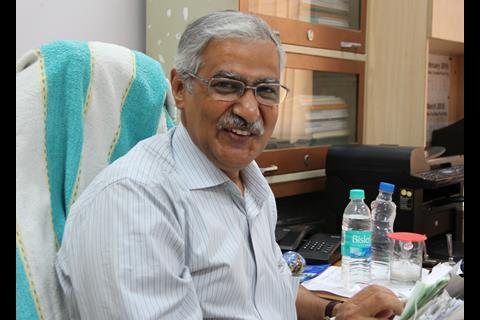
But in contrast, that 30% is the magic key to the door for foreign partners ready to work with fisheries, primarily composed of MSMEs. This is not about fishing licences for foreigners. Over at New Delhi's Krishi Bhawan (the Ministry of Agriculture), the Government of India’s Fisheries Development Commissioner, Vishnu Bhat, told WF&A that foreign vessels remain banned.
Now, the foreigners do not have to take the fish out of the country; they can access India’s own farmed and wild catch and process it for sale directly and through the chill cabinets of the incoming foreign retailers.
Whatever the disputed size of the new Indian middle class, it is big and at least half the size of Europe. It is hungry for more product, and new products reflecting safety in production and storage and convenience for the household which wants, but is generally starved of, affordable, ready-made fish meals of all kinds. It is also suggested that such products might also go for export through the national outlets of these foreign companies.
By 24 September, the government coalition, the United Progressive Alliance led by the Congress Party, took the plunge and the Cabinet approved the 51% to 100% foreign investment in the retail sector. It includes the 30% local sourcing and this would be with companies whose assets and machinery add up to less than the equivalent of US$1m. The Congress coalition should be able to take it through parliament, although one of its allies has said it will vote with the opposition against the legislation.
Cleaning up
WF&A was pleased to hear from Vishnu Bhat that the central government and the individual states, which make up India, had been working on a new survey of the country's fish resources but all the results had not yet been cleared. After some trawling and by the time this goes to print, informed sources told WF&A it is expected that India’s wild stock in the 200-mile zone will be officially notified as a million more tonnes than previously thought, a stunning jump in harvestable stock of around 3.3 million tonnes to 4.4 mnt.
Commissioner Bhat had told also told WF&A: “We don’t have much of a problem on coastal sustainability” and the aquaculture sector is expanding strongly, and not just in the prawn sector. He did his MA in brackish water fisheries research at the Mangalore Fisheries College in 1979 when prawn farming was really building in India. From there he taught for a year before moving into marketing and then quality control when, in 1981, he joined the Marine Products Export Development Agency (MPEDA) in Cochin, Kerala
There is money to be made in collaboration with Indian fishermen, fish farmers and river catch operations. Exports are comparatively small in relation to the unmet appetite of the domestic market, where you have literally several hundred million, historically voracious fish eaters. Perhaps the biggest fish-consuming state is West Bengal which alone has 80 million people. Then there are Tamil Nadu, Andhra, Karnataka, Kerala, Goa, Maharashstra and Gujarat. While chatting to Commissioner Bhat three leading members of the India fish export industry dropped in to check about some quality standards and we all tried to work out what were the true figures for fish.
Agriculture Minister Sharad Pawar had been complaining that only a fraction of subsidies, which the government had been offering to fisheries, were being taken up. He told the 2012 annual meeting of the National Fisheries Development Board (NFDB) that the sector was growing by 8% per annum and could reach 10mnt by 2014, based on current production of 8.4mnt (although official NFDB documents for 2011-2012 have a figure of 6.57mnt). India ranks second after China in caught and farmed product, and consumption is 4.5kg per capita per annum with an aim of pushing it to around 6kg, said Commissioner Bhat.
It seems however that subsidy takeup is low because many of the 14 to 15 million direct workers in fish do not have the matching cash to get the grants. Foreign partners could help them and so tap into this money.
Commissioner Bhat said that production could go even higher than 10mnt, and the exporters agreed, based on their export figures at the moment which are between 700k to 800k tonnes. That includes high-value prawns but also a lot of low-value fish such as ribbon, which is bought by China for processing. In the end WF&A took a bet it would not make 10mnt, wagering a kilo of black pomfret. The exporters rejoined black pomfret was a low-value fish! “Yes!” said WF&A, “only 400 Rupees a kg on the Mumbai market – that is why I bet it instead of expensive silver pomfret!”
But the message is clear – be careful of the figures when going into India. This correspondent has already been asked about by potential investors about the risks of entering the Indian market and making sure the claims match reality.
Commissioner Bhat and WF&A got the calculator out to try to work out some rough stats. There are 480 processing plants around the country, mainly processing exports. Of prawns around the coast, and 90% are for export, there are about 180,000t to 200,000t. Mussels, begun recently, are booming for domestic consumption and are about 10,000t to 12000t in the northern part of Kerala, not through companies, but by self-help groups of individual farmers and the state government has set up a couple of epuration units to help them. In terms of inland production for tank (village ponds) farming production would be some 4 million tonnes, and river catch another 1.6 to 2.5 mnt. The rest would be wild marine catch of around 3.3
The NFDB’s remit is to clean up and promote the fisheries sector from A to Z. It has a mammoth task and little money and not that much expertise to do it. Indians hate being told and take offence when it is pointed out, but it stares them in the face, every time they step into the street – it is a dirty country, where too many litter and many spit but expect someone else to clean it up. There is a dichotomy. Businessmen, like the seafood exporter leaders who turned up in Commissioner Bhat’s office, have created a kind of parallel world. They are surrounded by dirty, rubbish strewn streets, where shopkeepers sweep out their waste paper and dust onto the pavement (instead of packing it up) and then the wind blows it back in on their products, or thousands of flies swarm over their fruit and veg, meat or fish. Yet these businessmen have isolated their processing factories and ensure the workers move through a hygiene regime when they enter the factory. Indeed, the Indian factories may have higher hygiene standards than Europe’s as the former may be newer. They also have up to 70% spare capacity and low labour costs.
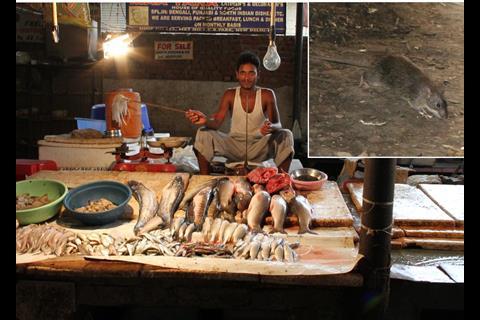
Can the gap be crossed? WF&A told Commissioner Bhat and his fish industry visitors about one of Delhi’s foremost fish markets, Chittaranjan Market I, which supplies the picky Bengali community with fish in the posh areas of Greater Kailash I and II. WF&A had dropped in to check prices in a temperature of 35C plus. WF&A has known this market for 40 years or more, and the same conditions can be seen in the half a dozen other markets in Delhi. All usually get their daily marine fish from the coasts a 1,000km and more away in late afternoon by train or truck using chipped ice made out of blocks from old fashioned ice-factories. This was mid-morning.
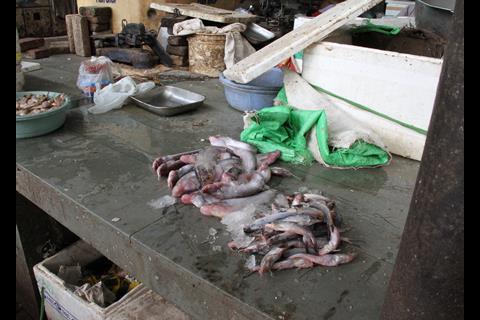
My stomach heaved, as it always does when faced with the smell there. The workers have no washing facilities, perhaps a few stand pipes. Chicken droppings, surely salmonella-contaminated, is all across one corner of the market where live chickens wander outside their filthy cages, and where the barefoot and flip-flopped fishmongers walk before climbing onto the stone slabs. There they sit and weigh then cut, de-scale fish and de-shell prawns for customers, between times splashing them with water, in short supply and often contaminated by cracked mains pipes. The supply is turned off and on several times a day, so cracked pipes suck in bacteria and muck. Behind and under the fly-infested stalls, WF&A photographed chickens casually standing next to rats, more rats calmly poking their heads out of nests in one broken floor corner, and two rats wandering back and forth across the customer walkways. Containers were old and contaminated, and even if they could be scrubbed clean, the erratic water supply means regularly sluicing down the fish part of the market is hardly an option.
Commissioner Bhat yearns for quality, is pushing hygiene education and the NFDB has announced plans for a few new fish markets in some cities. There is a massive opportunity for outsiders to come in and help, and profit. But the access route is full of potholes and dangerous whirlpools.