


New tests by the Washington Department of Fish and Wildlife (WDFW) show no signs of the Infectious Salmon Anemia (ISA) virus in farmed, hatchery or wild salmon in Washington.
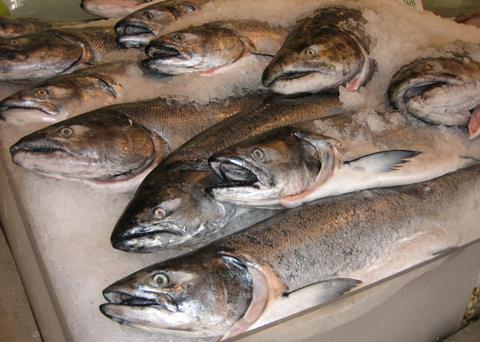
ISA was not detected in tissue samples taken from more than 900 wild and hatchery-produced Pacific chinook, coho, sockeye, chum and steelhead, as well as farm-raised Atlantic salmon.
John Kerwin, Fish Health Program manager for the WDFW, said concerns about the possibility of the virus occurring in Washington’s salmon prompted the recent tests, which are part of a two-year monitoring program specifically designed to detect ISA.
“Our traditional testing protocols would have detected most – but not all – of the disease-causing strains of ISA virus,” Mr Kerwin said. “So we expanded our program to better detect whether any strain is present in a variety of fish species in Washington. The good news is all the samples came back negative for the virus.”
Bruce Stewart, Fish Health Program manager for the Northwest Indian Fisheries Commission, said the sampling and monitoring program is a great example of tribal, state and federal managers working together to address concerns about the health of salmon and steelhead stocks in Washington.
“While this first year’s results are encouraging, we hope to increase our level of confidence that the virus is not present in Washington by continuing our efforts and including testing of pink salmon,” said Mr Stewart, who noted that most pink salmon return to Washington’s waters only in odd-numbered years.