



Vessels designer set to diversify
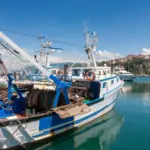
Despite the market for new fishing vessels in Iceland being slowed by cuts in quotas in the last few years, Icelandic vessel designers and consultants Skipataekni still think the future will be prosperous.
Designs during 2001 included the 68m Huginn VE-55, a purse seiner/pelagic trawler build in Chile for Huginn hf based in the Westmann Islands, and the 72m Gudrun Gisladottir which was built in China for Icelandic company Festi hf.
But although Skipataekni marketing director Helgi Krisjansson is confident that the next few years will bring a new wave of buildings to renew the ageing Icelandic fleet, he says the company will also look at other outlets such as vessels and boats for the fish farming sector to supplement the slow fish vessel market.
“I think the future will perhaps see more multi-purpose vessels that are purse-seiners as well as be able to trawl for pelagic and bottom fish but there is no doubt we will be looking at other sectors such as fish farming as well,” Helgi Krisjansson told World Fishing.
The design emphasis is very much on quality according to Helgi Krisjansson, who says providing superior fresh fish is now fundamental. “Adding value will become more and more important,” he adds.
Since Skipataekni was founded in 1974, the company has worked closely with vessel builders around the world, including shipbuilders in Poland, Spain, Norway, Scotland, China and Chile.
Helgi Krisjansson says he thinks Russia will prove an interesting market in the future with the country intending to renew its old fleet, but he also thinks Russia’s fluctuating economy will prove problematic. But plans have already started to get Skipataekni into the fish farming sector with plans drawn up for live fish carriers and workboats.
The live fish carrier is highly specialised and has been developed to comply with stringent requirements regarding the transportation of salmon fry and mature fish for slaughtering. The tanks are designed to provide a constant flow of sea water and include oxygen enrichment equipment to guarantee that the fish are carried in conditions that are acceptable where sea water extration is not possible because of potential risk of infection.
Related Articles
 FISHERIES
 FISHERIES
 WORLD FISHING EVENTS