





King crab tails are a little utilised resource, but a study has shown that boiled, peeled crab tails taste great and may be an ideal product for markets including restaurants.
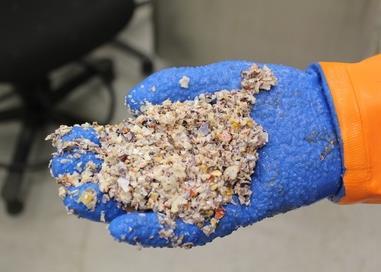
At Nofima in Norway, crab meal has been produced from the shell, tails and guts, which proved to be extremely well suited as an ingredient in start feed for lobster. Further, adding this crab meal to salmon feed resulted in increased growth.
The by-products of king crab in Finnmark account for approximately 32%, or around 700t. The absence of depots for further handling means that consent has been granted for the depositing of these by-products in landfills or at sea. Consequently, companies are inflicted with logistics and handling costs for freezing and/or freight.
The main objective of the project was to acquire knowledge that may contribute to establishing industrial activities based on by-products from king crabs. Scientists have looked at new production lines for crab meal and alternative uses for crab meal and by-products.
During the project period, a simple and functional production line was developed for the production of crab meal based on by-products from the crab industry. The level of chitin in the by-products from the king crabs is high and it may be a suitable source for production of chitin. An amino acid and heavy metal analysis of the king crab meal was also carried out.
“The amino acid in the crab meal was exciting with regard to the use in special feeds for shellfish and as a source of attractants in fish feed. Analyses of heavy metals showed no limitations in the use of crab meal as feed ingredient,” says project manager Even Stenberg.
In light of these results, two new dry feeds were developed: a start feed for lobsters and a dry feed for salmon intended for the sea phase. The crab meal proved to be extremely well suited as an ingredient in start feed for lobsters, producing a high survival rate and good growth results.
The muscle from the walking legs is currently the main product from the production of king crab. A sensory evaluation was carried out of crab tails compared to the muscle in the walking legs. The muscle from crab tails has less intensity of shellfish flavour, sweetness and salty taste compared with muscle from the walking legs. In summary, the muscle from the tails was described as having lower intensity of flavour, and hard and tough to chew compared with muscle from the walking legs.
Peeling crab tails that are frozen then later boiled will take a long time compared to peeling fresh, boiled tails, and is hardly economically viable. A strategy for the industry may be to sell boiled, peeled tails, as an ingredient to the industry or the restaurant market.