






Unwelcome arrival of sea squirt in Scottish seas
Marinas in the Firth of Clyde and on the Argyll coast are to be surveyed by marine scientists following the discovery of another invasive non-native species in Scottish waters.
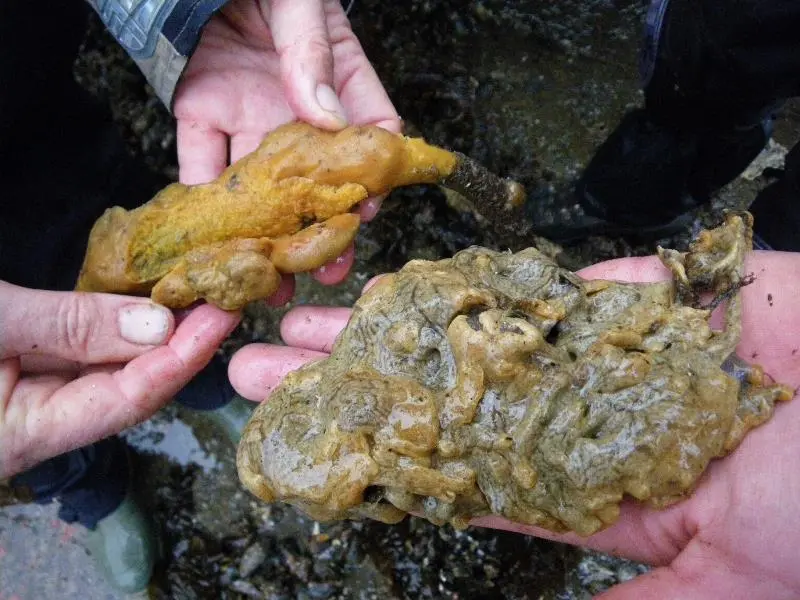
A small colony of the invasive carpet sea squirt (Didemnum vexillum) has been found in the Firth of Clyde. Surveys will be carried out from late January by the Scottish Association for Marine Science (SAMS) to investigate how widespread it has become. Funded by Scottish Natural Heritage (SNH) and Marine Scotland, the information gathered will help decide how the species should be dealt with.
Meanwhile boat owners are being asked to make extra efforts to keep boat hulls clean and free of fouling to help prevent its spread.
Dr David Donnan, policy and advice manager at SNH explained: “The carpet sea squirt can reproduce and spread rapidly and tends to smother other marine life that grows on the seabed. It is especially good at growing over underwater structures such as aquaculture equipment, boat hulls and pontoons. It has spread around the world although it is thought to have originally come from Japan.
“Experience from Canada, New Zealand, continental Europe and Ireland has highlighted it as a potential nuisance species that causes economic and environmental problems. The removal of the large, gelatinous growths can be difficult and costly.”
Carpet sea squirt is most likely to spread by attaching itself to the hulls of boats. It is a distinctive mustard, pale orangey-yellow or beige colour and often appears as pale flat patches. Larger growths may look like wax dripping from artificial structures just below water level. Its surface has leaf-like veins with tiny pores and it has a spongy texture and a leathery feel to it.
Dr Donnan added: “It can be quite tricky to identify but top tips to help prevent its spread are as follows:
- Keep hulls of boats clean, free of fouling and treated with anti-fouling paint
- When hulls are cleaned make use of a closed-loop or filtered wash down facility and/or steam clean
- Clean fishing gear and other equipment on a regular basis
- Dispose of any fouling including weed carefully so that it doesn’t go back into the water.
Related Articles
 FISHERIES
 FISHERIES
 WORLD FISHING EVENTS