



Understanding ocean acidification
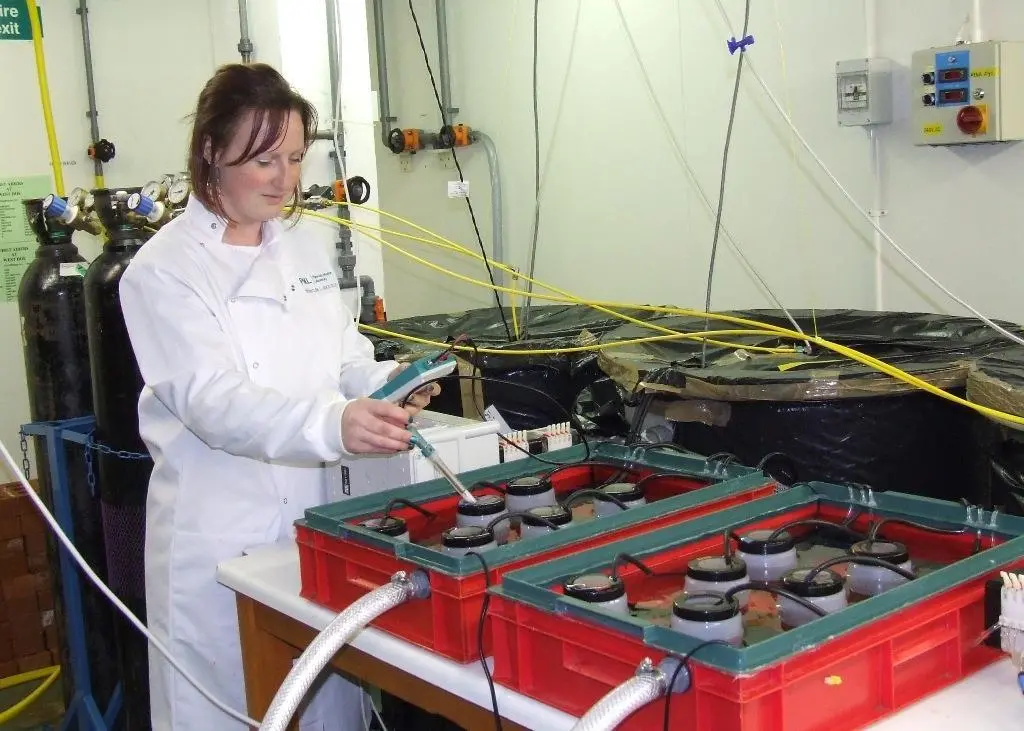
Global warming is here to stay and there is no shortage of scientific evidence to show increased carbon dioxide in the earth’s atmosphere is to blame, reports Bryan Gibson.
Whether or not humanity is entirely responsible, the potentially catastrophic effects of over production of anthropomorphic CO2 can only be minimised and not totally overcome. We who are alive today must start considering those who will live tomorrow, and that doesn’t mean protecting just humanity.
We are all part of the food chain that is life on Earth and no matter how insignificant the plants and animals we are sending into obscurity may seem to be, they all have their part to play. And if we don’t start changing the way we consume Earth’s natural resources and stop throwing what we don’t want back into the environment, then it is only a matter time before we will be joining them outside the gates of oblivion.
For two centuries, ocean acidification has increased, cheek by cheek with global warming, scientifically proven to be caused by mankind’s industrial activity, which started during the early 1800’s, and is now worryingly altering the acid/alkali balance (PH) of our oceans. To make matters worse, higher acidity occurs more readily in the cold water surrounding most of the worlds’ industrially productive nations.
Heat from the sun is prevented from escaping back into space due to the greenhouse effect of CO2 saturation in the upper atmosphere and as a result, Earth is getting warmer and the polar ice caps have started to melt. Millions of acres of what used to be solid ice is now entering the oceanic system and sinking down to the sea bed, altering well established eco-systems as well as creating a massive additional surface area for more CO2 to become absorbed by the sea, increasing acidity levels even further.
So what does the sea becoming more acidic really mean? Maybe to you and me, not very much for the moment, but by 2100, ocean acidity will have altered monumentally. Having already increased by 30%, it is expected to rise by at least 150%.
For the humble pterapod, a microscopic shellfish whose existence occupies the very bottom of the sea food chain, “it’s going to be curtains, along with a lingering demise for many a sea creature currently occupying the food ladder that is life in the sea, from winkle to walrus”, according to Bonnie Laverock of Plymouth Marine Laboratory, UK, trying not to sound too scary as she attempted to define ocean acidification to me in layman’s terms.
Bonnie went on to say, “Earth’s creatures and plants evolved from a chemical balance, which remained constant for millions of years. Humans began burning fossil fuels and releasing more carbon dioxide into our atmosphere than it is capable of processing. Excess CO2 is now being absorbed out of the atmosphere and into our oceans. It is then very slowly converted back into life-giving oxygen by plant photosynthesis, but the process is not quick enough to repair damage already done, let alone what is yet to come.
When C02 combines with water, acidity (PH) increases and starts to dissolve creatures constructed from calcium carbonate, namely shellfish, crabs, corals and lobsters”.
I asked Bonnie if there was a potential antidote to ocean acidification. “There’s no simple biological fix”, she replied “We just have to cut our CO2 emissions, but it’s not all doom and gloom. Many organisms will adapt but some will inevitably die out”.
Marine scientists are now taking ocean acidification so seriously that Plymouth marine scientists have joined with international colleagues such as Woods Hole Marine Institution, Massachusets, USA, to help educate the public, as the scientific details are intricate and sometimes counterintuitive.
As part of the European Project on Ocean Acidification, German investigators are researching the effects of increased acidity upon cod larvae, the results of which will have great bearing on the prospects of overall sustainability of pelagic fisheries operating in cold water areas.
Twenty-seven scientists from five countries worked together to produce and distribute a document to provide accessible and accurate answers to the most commonly asked questions about this growing problem. Seven of those scientists engaged in ocean acidification research are from the UK, including four from Plymouth. The UK government has invested £12 million into a five year collaborative research programme funded by NERC, the Department for Environment, Food & Rural Affairs (Defra) and the Department of Energy & Climate Change (DECC).
University of Plymouth researcher Dr Jason Hall-Spencer writes: “Studies have provided a glimpse of what the future might look like for the marine environment if ocean acidification continues to increase: “By investigating how life copes around submarine volcanic vents emitting CO2, we have seen that sea grass and some seaweed species actually thrive, but over the longer term the environment is degraded, alien algae move in and coastal habitats are disrupted. I am very happy to contribute to the document ‘Frequently asked questions about ocean acidification’, in the hope that more people will become aware of this worrying phenomenon”.
The overall aim of the Research Programme is to provide a greater understanding of the implications of ocean acidification and its risks to ocean biogeochemistry, biodiversity and the whole Earth System. The programme will also provide effective policy advice and make a significant contribution to the Living With Environmental Change programme.
If you wish to learn more, please visit the website of FAQs on Ocean Acidification at: www.epoca-project.eu/index.php/FAQ.html