

Thór Sigfússon and The New Fish Wave
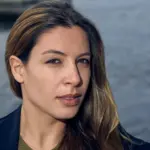
Thór Sigfússon’s sheer enthusiasm can hardly fail to make an impression. This someone with an irrepressible passion for the whole business of seafood – and who has made a huge effort to put that passion into practice.
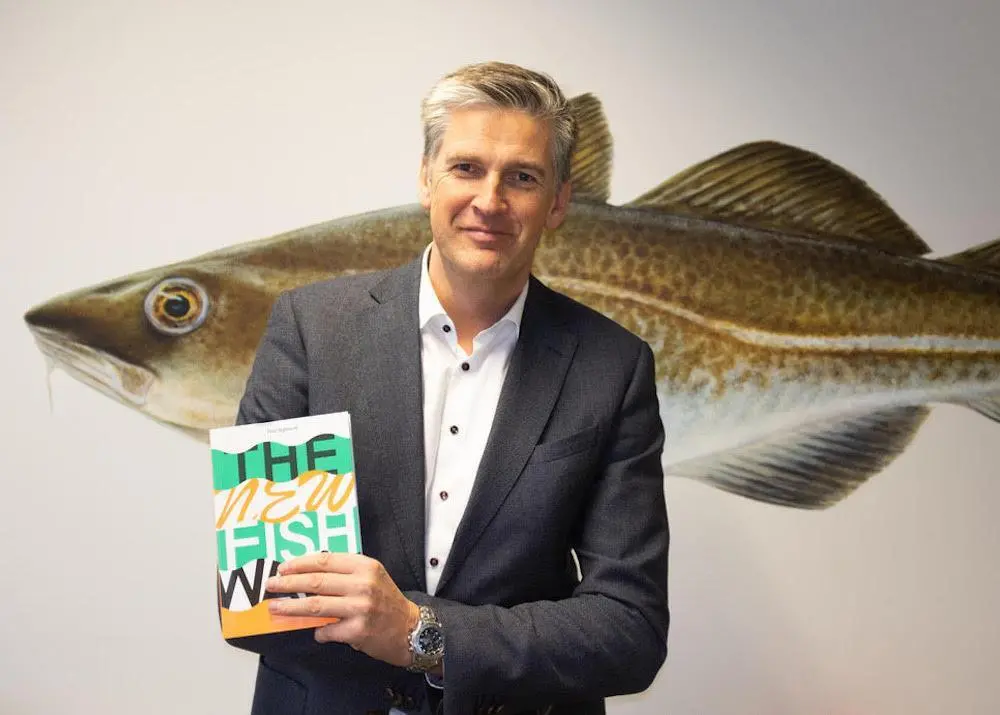
A few years ago he took the idea of a fishing industry cluster in Iceland, and ran with it. Since then things have just mushroomed – and now his book The New Fish Wave details not just the concept of the cluster itself, but sets out both its successes and failures. Fortunately the successes outweigh the ideas that didn’t work out. It’s practically a given that not every smart idea will flourish, but as he points out in the book, these are things to learn from.
The Iceland Ocean Cluster (IOC) started life as a research project at the University of Iceland and opened its doors in 2012. Originally one end of a building on the Reykjavík quayside that had for years been a net loft, the Cluster started out with a dozen companies and since then has grown the full length of this building that seems to go on forever as more companies were attracted to such an innovative space.
Today there are around seventy companies based there, ranging from modest ventures to larger concerns, and bringing under one roof a startling variety of ventures that are involved in one way or another with the seafood business. Not all of them stay – some have simply outgrown what the Cluster can offer them and have moved on to bigger premises of their own, but there hasn’t been a shortage of companies seeking to fill the vacant space.
At the heart of the Ocean Cluster and Thór Sigfússon’s overview of the seafood industry is the concept of waste – or rather, of eliminating waste – that there’s so much more to each fish than the fillet or the loin that ends up on a plate in a restaurant.
The Iceland Ocean Cluster has become central to an emerging ‘new’ seafood industry in Iceland in which cross-pollination of ideas is a vital element.
The IOC has become a agent of change for Iceland’s seafood industry in Iceland, and The New Fish Wave sets out both a vision of what the seafood sector could be – and needs to be – while detailing the experience of establishing such a venture.
As the Ocean Cluster at the Reykjavík quayside has grown, sister clusters have also been established in the US, with the Portland, New Bedford and Seattle clusters all built around the same philosophy of driving innovation and collaboration in the marine industry.
“Can we inspire other seafood nations to follow the Icelandic example; creating more value in seafood through innovation and collaboration?” Thór Sigfússon asks – and this is one of the key questions the book tackles.
The seafood sector around the world has plenty to learn from Iceland, which in many ways has rapidly transformed itself from being one of the poorest countries in the world a century ago to its present position as a leader in the technology of many aspects of the seafood industry.
“Iceland is a nation which has shown pride in its seafood industry and uses new innovation to safeguard the environment, create wealth, derive more value from each fish and manage fisheries in a sustainable way,” he said.
“The oceans – their temperature, chemistry, currents and life – drive global systems that make the Earth habitable. Our rainwater, drinking water, weather, climate, coastlines, much of our food, and even the oxygen in the air we breathe, are all ultimately provided and regulated by the sea. Throughout history, oceans and seas have been vital conduits for trade and transportation. Careful management of this essential global resource is a key feature of a sustainable future. However, there is a continuous deterioration of coastal waters having deleterious effects on ecosystems, biodiversity and small-scale fisheries.”
The New Fish Wave provides a blueprint for how to set up a marine cluster – what to do and what to avoid – and how to spark people’s imaginations as their ideas mesh together, frequently identifying common threads that would not otherwise have been apparent. It also lays bare some of the traditional failings that industry can suffer from – not just the seafood industry – such as the club culture of keeping things within a tight circle or collaborators or acquaintances. The simple truth of it is that sharing ideas and asking a few questions is a healthy thing to do.
There aren’t many rules for companies at the Cluster’s offices, but one of these outlaws making your own coffee. The thinking is that the communal lunch and coffee area is where people who wouldn’t normally interact will meet and that triggers ideas – and it works. There are plenty of examples of problems in one sector being solved with input from an apparently unrelated end of the same industry.
“Our greatest success will probably be where we connect veteran fishermen with R&D people who have never been on board a fishing vessel,” he said.
Secondly, Thór Sigfússon’s book sets out a vision of where the seafood industry should be heading. Anyone would imagine that it would be common sense to extract the maximum value from every ounce of raw material that’s landed – but for a whole range of reasons there are obstacles to this, not least the thinking that if something’s done like this already, why change it? to the reality that enterprises tend to be focused on their core activities to the extent that examining innovative ideas is relegated to the back of the usual list of priorities.
The New Fish Wave demonstrates that this can be done, and the obstacles can be overcome. It goes without saying that not every idea will come to full fruition, but enough of them will work out to make the change in philosophy worthwhile, and giving the ideas tree a shake will always produce a result. The New Fish Wave should be essential reading for anyone with an interest in the seafood industry’s development – and its themes and ideas have a relevance beyond fishing and seafood.
The New Fish Wave by Dr Thór Sigfússon is published by Leete’s Island Books. ISBN: 978-0-918172-78-5
Related Articles
 FISHERIES
 FISHERIES
 WORLD FISHING EVENTS