



The mercury quagmire
Whether to stop eating fish suspected of mercury contamination and forfeit the benefits of Omega-3, or ignore the mercury content and keep eating fish because the benefits outweigh the risks involved, is an ongoing, nagging argument.
The mercury scare originated in the tragedy of Minamata, Japan, where local people consumed large amounts of seafood heavily contaminated with industrial effluents containing mercury compounds that, over some 35 years, were being dumped into Minamata Bay. Some 3,000 victims have lost their lives, suffered from physical deformities, or had to live with the physical and emotional pain of “Minamata Disease”. Their nervous systems were degenerating, their limbs and lips getting numb, their speech slurred. Many had their vision affected, and even serious brain damage.
Fish from Minamata Bay had mercury concentrations in their flesh of 50ppm (parts per million), which is around 100 times what is usually found in fish, and the people who ate them, up to twice that figure. Although, Minamata was a single, exceptional case, its horrors still throw their shadow over our present considerations.
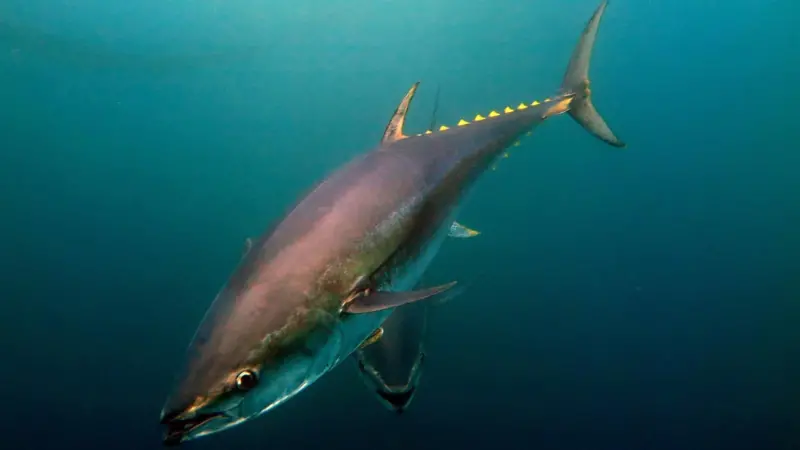
Tuna, swordfish, shark, and some marine mammals at the top of the food chain, tend to accumulate mercury.
The older the animal and the closer it occurs to sources of mercury in the sea, such as volcanic activity or industrial effluents, the higher the mercury content in its flesh. Mercury in such fish may reach levels above what’s considered
safe by EPA and FDA in the USA, or some European standards. Consequently, warnings are issued, sometimes quite alarmist ones.
Last May, an old friend, Dr. Witek Klawe, formerly with the Inter-American Tropical Tuna Commission, sent me the following information that clarifies the mercury-in-fish problem.
According to the “Talk of the Nation” programme on National Public Radio in America, the US National Academy of Sciences in its attempt to put some order in all the scientific and unscientific noise about fish and mercury, has warned of a risk that women who consume large amounts of seafood during pregnancy may cause their children “to have to struggle to keep up in school”.
Not exactly, according to Dr. Gary Meyers, who was interviewed on the programme. Dr. Meyers is a pediatric neurologist and a professor of neurology, pediatrics, and environmental medicine, and has for many years investigated
this problem, with particular attention to children.
Dr. Meyers and his associates went to the Seychelles. In parallel, Harvard scientists went to the Faeroe Islands. In both, there’s very high fish consumption and high levels of mercury in the hair of people.
The Seychelles children have been eating fish on average 12 times a week that is 10 times as much as is common in the USA. Also, their hair levels of mercury of almost 7ppm have been about 10 times the US average. They were examined on six occasions with extensive neurological, psychological, behavioural and other tests covering their IQ and various aspects of performance and achievements. Actually Meyers’ team used almost every test that had been used in any other study of mercury or other toxins.
Their conclusion so far is that there’s no consistent evidence of any adverse effects from mercury exposure from fish consumption at the levels characteristic of those of Seychelles’ children. While there may be a worldwide general increase in ADD, ADHD, and other childhood disorders, nothing of this sort was found in the Seychelles in association with fish consumption and mercury levels.
Asked about a study from Harvard showing that in the Faeroes high levels of mercury passed from mother to child in utero and produced irreversible impairments to specific brain functions in children, Dr. Meyers pointed out some important differences. While the Seychelles women eat fish, in the Faeroes they seasonally also eat whale meat. Whale meat has quite high levels of mercury as well as many other contaminants which are not present in fish, such as PCBs, cadmium, dioxins, etc. Thus, unlike the Seychelles, there is a periodical high level of contamination. This is a rather complex situation that must be taken into consideration when trying to draw conclusions.
Moreover, the Harvard study covered only slightly over 100 children, a relatively small number for a convincing statistical assessment. Also, the association found the link between consumption level and adverse consequences was rather marginal, such as for example, a measured difference of “one finger tap in 15 seconds, between those children who had the higher exposure and those who had the lower exposure, hardly a developmental disability, a learning disability, or a mental retardation”.
According to Dr. Meyers, actual mercury poisonings before birth resulted from poisoning episodes. The majority of the less than 100 such episodes worldwide, have been from the consumption of grain due to it being treated with methyl mercury and with people occasionally eating such grain.
The study indicates that in some respects, like athletics, children were actually doing better in the Seychelles than elsewhere. These children might be benefiting from the high levels of Omega-3 in the seafood they consume.
In any case, while we may still argue about mercury in the large predators, we can safely get our Omega 3 supply from small pelagics, such as herring, sardines, sprats and mackerel, as well as salmon. Omega 3 fatty acids are of great importance in prenatal food and during the growing years of children, because being important building blocks of the human brain, which to a large extent is made of fatty acids, they provide proven benefits to children’s neural development. Dr. Meyers recommends that all, especially children including his own, stick to their fish diet.
benyami@actcom.net.il