





Taking raw lobster out of is shell complete
The culinary innovation of 2012 is how Chez Pascal of the Netherlands describes its high pressure processed (HPP) whole lobster.
The company says that the complete tail and claw meat of the lobster can be taken from its shell in three easy steps in the final presentation. It is then ready to be cooked – baked, grilled, steamed, butter poached etc – for serving at home or in a restaurant.
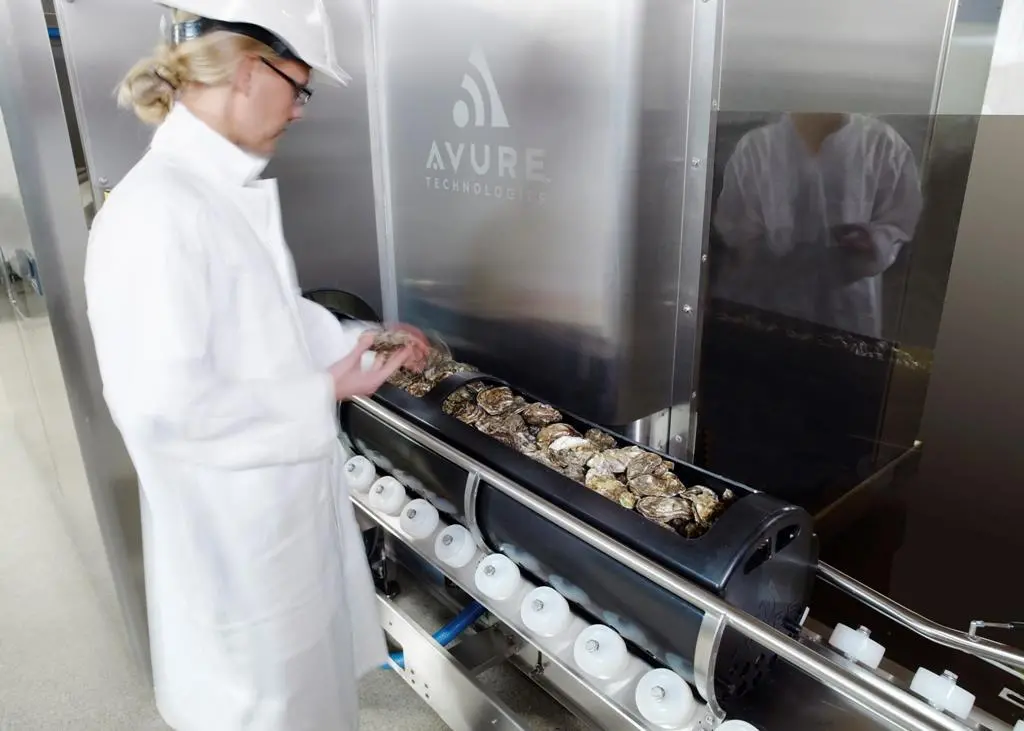
HPP is increasingly being used by seafood processors to shuck and shell shellfish such as lobster, crab and bivalves like oysters, clams and mussels, according to equipment manufacturer, Avure of the USA. “Oysters are the biggest use for HPP shucking today globally,” says Glenn Hewson, vice-president of global marketing, “but the fastest growing [use] is for lobster.”
HPP is very big for shucking oysters in the USA. As well as an improvement in yield because literally all the meat is separated from the shell, there is a reduction in labour costs compared with shucking oysters with a knife and the resulting meats suffer no cuts or other damage.
Not only does HPP separate shellfish meats completely from their shells, it also inactivates pathogenic and spoilage micro-organisms. “Vibrio and other viruses are pretty easy to kill,” Mr Hewson says. “The system also gets rid of listeria, E coli, etc.”
Double shelf-life
Avure claims that HPP can double the shelf-life of fresh seafood. For fresh raw lobster this means 15-20 days so the animals can be shipped in this form with no loss as there would be if the lobsters were transported live.
The QFP 320L – 400 vertical system is the most commonly used by seafood processors. However it is becoming more popular to specify Avure’s horizontal systems such as the QFP 350L – 600 and mid-range sized QFF 100L – 600. “The 100L can process 750kg of seafood per hour,” says Mr Hewson, “or 800-850kg per hour if used for oysters or mussels.”
Shellfish are loaded into the machine in baskets and the aperture is closed. The body of the machine is then filled with cold water and the machine is pressurised to 4000 bar. This separates the meat from the shell, and then after decompression the water is removed and the baskets taken out. (The water can be filtered and re-used.)
“One hundred per cent of the meat is separated from the shell,” Mr Hewson says, “which means that there is a gain in yield over other forms of shucking or shelling of up to 25% depending on the species being processed. With soft shell crabs there is almost a doubling of the yield.”
Part of the gain in yield is due to the improved product weights of as much as 10% from the natural hydration of proteins.
As HPP is generally carried out post packaging, enhanced shelf-life with added food safety is ensured, Avure says. “Additionally, as the pressure is isostatic (equal in all directions), the product integrity is largely retained.”
Current application of HPP in addition to seafood includes ready meals, ready-to-eat meats, fruit and fruit juices, and vegetable products. “As the processing is carried out at low temperatures, most of the volatiles and bioactive ingredients are retained,” the company adds.
Related Articles
 PROCESSING & REFRIGERATION
 SEAFOOD
 SEAFOOD