





Sustainable fuel from carbon dioxide
Carbon Recycling International (CRI) was founded in 2006 in Reykjavik, Iceland to provide solutions for CO2 recycling and electricity storage to produce liquid renewable transport fuel by recycling CO2 emissions.
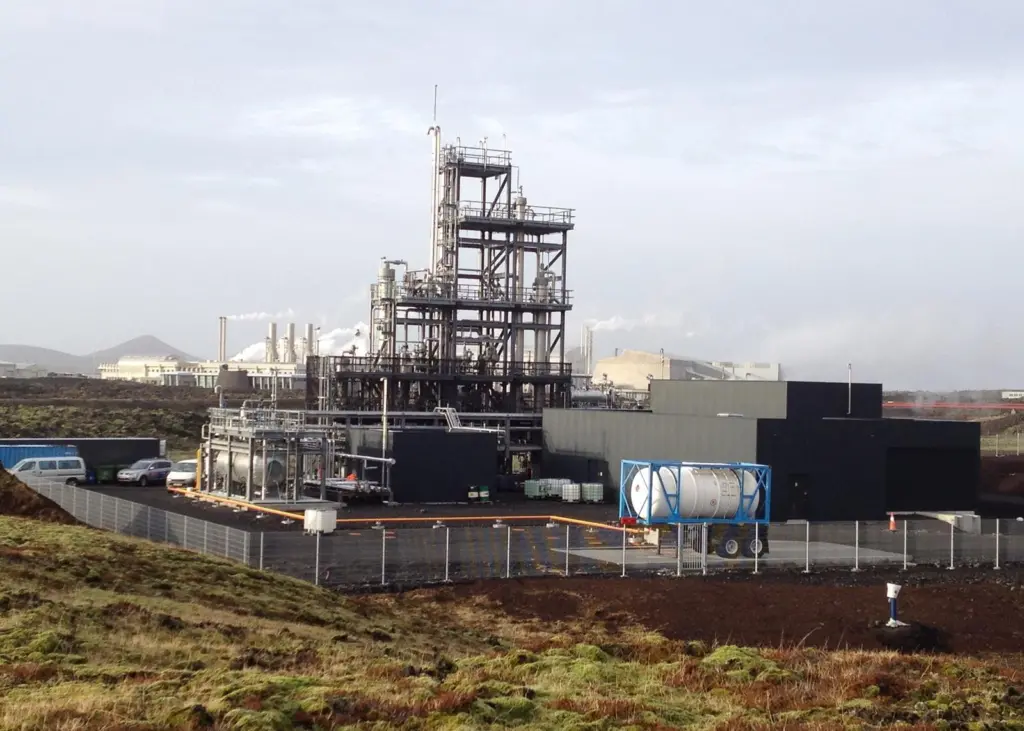
CRI built and operates the world’s first production plant which uses CO2 from flue gas and H2 to produce a renewable transport fuel and chemical feedstock (methanol) under the brand name VulcanolTM. VulcanolTM is a green alcohol with the same chemical properties as methanol.
CRI produces and sells renewable fuel of non-biological origin that reduces greenhouse gas emissions by up to 100% compared to gasoline. The GO Plant’s production capacity is 10 tons/day of VulcanolTM.
VulcanolTM main application is renewable transportation fuel. It is currently used in gasoline blending and to produce greener biodiesel by customers in Iceland, Sweden and the Netherlands.
VulcanolTM can be blended directly into gasoline under current EU regulations or used as feedstock for fuel components and green chemicals worldwide. The addressable market for Vulcanol as a fuel or fuel feedstock in the EU alone amounts to billions of litres per year through multiple pathways.
Additionally, VulcanolTM can be used for ships in modified engines, either directly or with an onboard converter of methanol to DME. Both options were evaluated in a research program called SPIRETH, a joint cooperation with Wartsilla, Methanex, Haldor Topsoe and StenaLine with positive results. Key findings were that it is feasible to convert ships to operate methanol and DME based fuels and these fuels provide significant reduction in emissions compared to traditional marine fuels.
Northern Europe and North America are increasing demands for reduction in emissions from ships, with tighter regulations starting January 2015. In 2020, the International Maritime Organization has additionally scheduled to require all marine fuels globally to contain less than 0.5% sulphur.
CRI offers a unique opportunity to utilise stranded and intermittent electricity, byproduct H2 and CO2 to generate renewable fuel of non-biological origin. CRI’s technology can be used to increase resource and energy efficiency in power – and industrial plants by recovering chemicals from flue gases and optimising utilisation of energy streams as storage application as well as provide cost effective solutions to reduce greenhouse gas emissions.
CRI has been granted Icelandic and US patents on its production process, which is defined as Emission-to-Liquid process.
Stand G60
Related Articles
 ICELANDIC FISHERIES EXHIBITION
 WORLD FISHING EVENTS
 WORLD FISHING EVENTS