



A vision for incorporating the fundamentals of sustainability into the design of entire food systems has been set out in a new paper and is part of the One Food collaboration programme between the UK and South African governments.
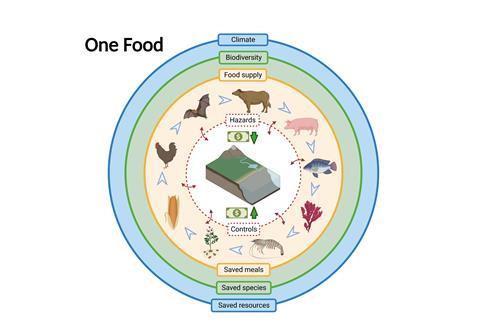
Operationalising One Health for Food Systems, published in the journal One Earth, describes the challenges of producing food that is safe, nutritious, economically viable, equitable and environmentally benign across a country’s food system.
The paper argues that the main challenge to sustainable food systems is in dealing with the many hazards associated with the food supply chain, stretching from those that limit supply – like pests, pathogens or chemical contamination –through to the ways that food production drives environmental degradation, including greenhouse gas emissions or fertilisers that damage river biodiversity.
It advises that hazard control mainly happens inside of individual food sectors like maize crops, beef husbandry or prawn aquaculture, with little attention to how these sectors link and to how the hazards might spread between the sectors. Assessing each hazard individually is also problematic, it says, because it will not give the whole picture on their combined impacts on food supply or the environment.
There is also a lack of methods to look across all hazards and food sectors, and to make informed decisions on which to prioritise.
The answer, according to the paper’s authors, lies in applying “One Health” principles to the whole food system. This is a concept that aims to optimise the health of humans, animals, plants and ecosystems, with each being equally important. The paper proposes a “One Food” approach where all food sectors are considered together, incorporating all hazards and the links between them.
With partners from academia, intergovernmental organisations, industry and NGOs, the One Food programme is developing a food risk tool that combines hazards across food sectors to identify and prioritise intervention strategies. It also examines the policy changes that will be needed to allow a food systems approach to be achieved and how stakeholders can take the movement forward.
Neil Hornby, Chief Executive of the Centre for Environment, Fisheries and Aquaculture Science, which leads the programme, said: “Here at Cefas we understand well how land and sea are connected and that the food we produce must balance safety and adequate supply against environmental protection. We are delighted to bring together colleagues from across the food spectrum.”
Ian Brown, Director of Scientific Services at the UK Animal and Plant Health Agency, the UK programme co-leads, added, “This paper sets out our ambition for a future where animal and plant health experts work alongside environmental and social specialists to solve pressing food problems.”