



New action plan released for Alaska salmon
The Arctic-Yukon-Kuskokwim Sustainable Salmon Initiative (AYK SSI) released its new research and monitoring blueprint addressing declined Western Alaska chum salmon populations, entitled: “Arctic-Yukon-Kuskokwim chum salmon research and monitoring action plan: Evidence of decline of chum salmon populations and recommendations for future research and monitoring”. The full report is available at: http://www.aykssi.org
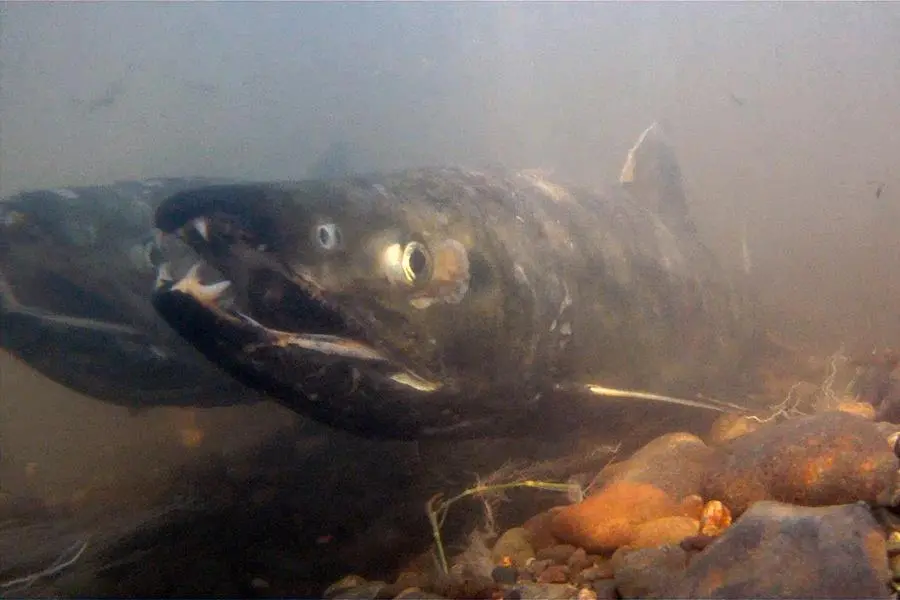
Beginning as early as 2018, chum salmon populations experienced widespread declines and have not yet returned to their former abundance in the Yukon River, Kuskokwim River, and rivers in the Norton Sound region. These declines have resulted in widespread commercial fishing closures, restrictions in subsistence harvests and unmet escapement targets.
The Chum Salmon Action Plan was developed by the AYK SSI’s six member Scientific Technical Committee. The centrepiece of the action plan is a set of six strategic research and monitoring priorities aimed at advancing the understanding of the causes for the decline and, in turn, to promote the rebuilding and sustainable management of AYK chum salmon stocks.
Because the AYK region is data limited, additional research and expanded monitoring is seen as critical to increasing the understanding of which factors have contributed most to the chum salmon decline.
AYK SSI will use the priorities as a roadmap to guide and inform the choosing of projects to fund.
Other salmon and marine research programmes are being encouraged to review and consider inclusion in their research programmes the priorities identified in the AYK SSI’s new plan.
AYK SSI is a native-state-federal partnership launched in 2002 to cooperatively address the causes of Western Alaska salmon declines through the implementation of a program of research based on the best available science. The partnership includes the Association of Village Council Presidents, Tanana Chiefs Conference, Kawerak Inc, the Bering Sea Fishermen’s Association, the Alaska Department of Fish and Game, the National Oceanic and Atmospheric Administration and the United States Fish & Wildlife Service.
Related Articles
 AQUACULTURE
 FISHERIES
 SEAFOOD