




Cod is considerably more valuable fresh than frozen, according to Vilhjálmur Vilhjálmsson, CEO of HB Grandi, one of Iceland’s largest fishing companies.
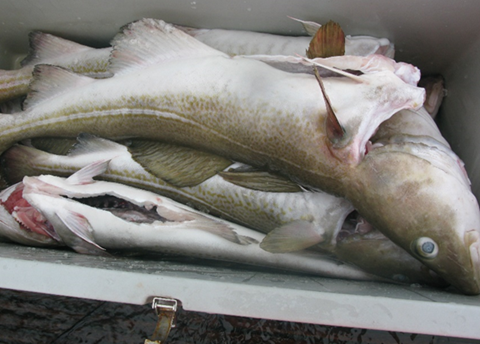
“Customers are simply prepared to pay a higher price for fresh fish,” he says.
However, fresh cod exported from Iceland needs a suitable shelf-life if it is to retain its appeal to customers. Super cooling is a process which will improve the quality of fresh cod and extend its shelf-life, according to Ingólfur Árnason, CEO of Skaginn, in his presentation at the inaugural Icelandic Fisheries Conference held in Reyjavík on 25 September.
The point had already been made in the conference by Sigurjón Arason, chief engineer of Matís, that cooling and bleeding were the most important factors to ensure that fish by-products stored aboard a fishing vessel would be of high quality when landed. He said that the storage temperature should never rise above 2 deg C.
Ingólfur Árnason, on the other hand, was talking about the temperature of whitefish such as cod being kept on board the catching vessel at -1 deg C – below this the fish will freeze he said. He also talked of putting pressure on the fish to squeeze out the blood. “This will take away the most popular food from [spoilage] bacteria.”
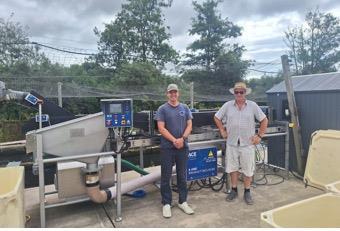
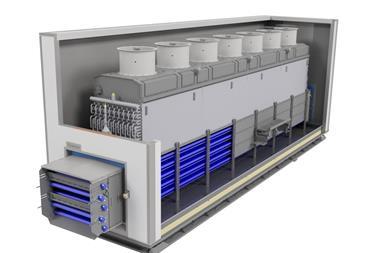
Not surprisingly Ingólfur Árnason talked about the Rotex bleeding, buffering and cooling system manufactured by 3X Technology in which Skaginn has a majority share. In the first stage of this rotary system the fish are bled at 2 deg C, then pass to a second stage and cooled to -4 deg C and at the third stage are super cooled down to -8 deg C. The whole process takes one hour.
Being super cooled before they enter rigor mortis, the fish can be processed later than they would be otherwise, Ingólfur Árnason said. He gave an example of cod being stored for eight days before filleting and there was “an excellent appearance of fillets” and “perfect loins”.
It wasn’t just appearance which benefited from cod having been super cooled - the microbiological performance was better than had the fish not been brought down to and stored at such a low temperature.
Super cooling is not new. Trials have been carried out on whitefish caught in northern Norway which were then processed and the fillets/loins trucked to the UK, for example, which is where Icelandic cod is also sold.
Icelandic companies are switching from freezing cod products at sea to bringing the fish back for processing ashore. This is for economic reasons such as the cost of oil and workers’ salaries, plus uncertainties regarding fishing opportunities – fishing fees also pose a problem.
The number of operational freezer trawlers in the Icelandic fishing fleet has already dropped from 35 at its peak in 1992 to 23, and the number is expected to decline still further. In fact, the proportion of cod being caught by Icelandic freezer factory trawlers has already declined to the point where it is now only a bycatch while fishing for red fish, saithe and Greenland halibut.
Whether this will lead to a widespread use of super cooling for cod is uncertain, but it could well do so.