


A EU-funded two-year project (2020-2021), proposes new technologies for the safety of small-scale fishing people and sustainable marine resource management. STARFISH 4.0 aims to provide digital tools to support and study Mediterranean small-scale fisheries.
Surprisingly little is known about how much catches from small-scale fisheries (SSF) – which species and where – and this creates significant challenges for sustainable resource management. The tools used to regulate and monitor large-scale industrial fisheries simply will not work for local and traditional SSF.
In this context, the EU supports fisheries to adopt more sustainable practices and actively seeks innovative ideas that aim at modernising the fisheries control and management system.
The STARFISH project aims to empower local, small-scale fisheries, increasing opportunities to fish further offshore for higher value species and actively engage in the management of their marine protected areas, while ensuring traceability, which improves marketability of catches. The resilience built in SSF through this project might help their recovery after the global COVID pandemic.
At the core of the STARFISH 4.0 is the NEMO system, a solar-powered Vessel Monitoring System (VMS) terminal with a call for assistance button, and a fisheries monitoring software with Big Data capabilities, that handles information gathered from large numbers of traditional vessels.
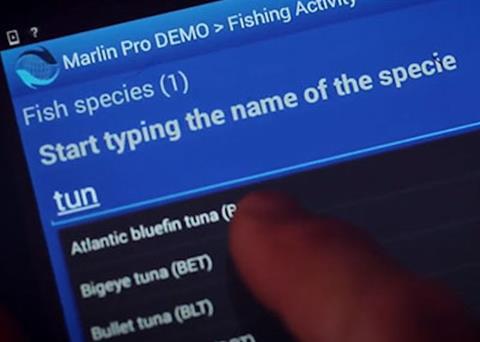
In addition to that, some integrated apps have been specifically developed to support SSF fishers, such as GPS navigation maps, VMS track visualisation, real-time positioning on a sea map and the possibility to mark ‘point of interest’ as specific fishing zones or places to avoid. Other apps provide comprehensive catch reporting, noting species, size and where caught: this helps demonstrating to authorities, fisheries managers and export markets that the fish was not caught in illegal zones or marine protected areas.
Reporting enables fishermen to market their catch as ‘locally sourced’, offering a degree of traceability, and ensuring the characteristics of the catch handling on the vessel from a food safety perspective/cold chain integrity. Further apps are in development and will be refined according to the fishermen’s feedback, to include weather bulletins, marketplace information or even reporting for invasive species.
The overall objective is to refine the system through fishers’ feedback and improve stakeholder engagement.
“It’s increasingly recognised that fisheries around the world – of any size – need to adopt sustainable practices if they are to have any sort of long-term future,” said Michel Dejean, Head of CLS Fisheries Division, one of the partners in the STARFISH consortium.
“Small-scale fishers are incredibly diverse, they need systems, which will empower the traditional communities, few traditional fishers can afford the technical equipment used by industrial fisheries and most have been fishing in the same way for generations. Any attempt to monitor their activities must be collaborative, offering clear benefits to gain their support and buy in.”
The STARFISH consortium has been designed to obtain a comprehensive user feedback in two very different yet very important fisheries countries: Greece, which counts the largest number of small-scale vessels in Europe (approximately 15,000 SSF vessels working with nets, long lines, and traps), and Mauritania, a primary fisheries exporter to Europe and representative of West African fisheries. Collecte Localisation Satellites (France) brings its expertise in design, engineering, and the fisheries data chain, while local partners Advanced Planning & Consulting (Greece) and Entreprise de Commerce et de Représentation (Mauritania) have unique local knowledge and contacts with artisanal fisheries, port authorities, and local fisheries managers. A hundred Greek fishing vessels in the Mediterranean and fifty in Mauritania are testing the product at sea. Various characteristics of the product such as robustness, battery life, ease of use, and data accuracy are under examination.
“The Greek SSF fleet is the biggest of the EU. With the user feedback collected, the project partners can further refine the system to the needs of these fishermen,” said Nikos Anagnopoulos, head of Advanced Planning & Consulting and fisheries consultant to the EU
“Overall, the project is showing with the help of the fishers that 4.0 digital technologies in a data-poor sector can add value to their business operations, based on local and sustainably sourced seafood supply chains and direct or short-circuit sales.”