



Sharks at risk from deepwater gillnets
TRAFFIC has written to the fledgling South Pacific Regional Fisheries Management Organization (SPRFMO) to express alarm that Flag States are allowing deepwater gillnetting, a potentially devastating fishing practice, of species such as deep water sharks.
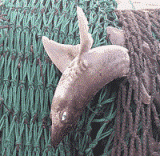
This is despite an agreement to restrict current fishing using this technique to earlier lower levels because of questions over its levels of impact on susceptible species.
Delegates from 20 nations will meet next week in Auckland, New Zealand, to continue plans to establish a South Pacific Regional Fisheries Management Organization, a legally-binding body, that would have control over the high seas areas of the South Pacific Ocean from the most eastern part of the South Indian Ocean through the Pacific towards the Exclusive Economic Zones (EEZs) of South America.
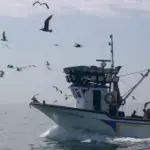
Before the fledgling committee is a claim by Spain that two of its vessels, which have been setting deepwater gillnets up to 2km underwater in seas off Lord Howe Island and elsewhere, that the practice does not present any serious impact on vulnerable marine ecosystems.
“Nothing could be further from the truth,” said Glenn Sant, TRAFFIC’s marine programme co-ordinator.
“The available scientific evidence points towards deepwater gillnets being extremely damaging to certain species.”
In 2006 the North East Atlantic Fisheries Commission (NEAFC) banned the use of gillnets in waters deeper than 200 metres, noting: “The unregulated use of gillnets in deep water is potentially damaging to deep-water stocks due to excessive soak times and consequent high discard levels, and due to the long-term impact of lost or abandoned gears.”
“The SPRFMO should follow the NEAFC’s lead and ban the use of deep water set gillnets unless they can demonstrate sustainability around their use and prevent the loss of gear and resultant ghost fishing,” said Mr Sant.
Ghost fishing is when lost or discarded fishing gear continues to catch fish, further depleting stocks, which are never landed.
Related Articles
 FISHERIES
 FISHERIES
 WORLD FISHING EVENTS