

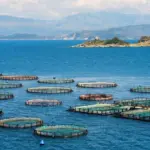




Japanese seafood imports exceed domestic production
Japan’s fishing and aquaculture industries supplied a total 3.9 million tonnes of marine products in 2022, representing a decrease of 5.8% or 24,000 tonnes on the previous year, according to the country’s recently published 2023 White Paper on Fisheries.
Reasons for the supply downturn included a reduction in the fisheries yield, including less bonito and mackerel catches.
However, soaring fish prices helped the country’s production value increase by 14.8% year-on-year to JPY 1.6 trillion.
The data also confirms a sharp increase in the value of marine product imports in 2022 – to JPY 2.1 trillion. It’s calculated that Japan’s self-sufficiency rate for edible seafood was approximately 56% in 2022. This rate has been on a long-term downward trajectory since peaking at 113% in fiscal 1964.
Over the past decade the number of people working in Japan’s fishing and aquaculture industries has declined by more than 30% – dropping from 180,000 in 2013 to 123,000 in 2022.
Meanwhile, the 2022 production output and production value by type of fish in the domestic fishing and aquaculture industries showed that tuna fishing and “buri” (yellowtail) aquaculture came joint top with JPY 139 billion each. This was followed by eel aquaculture at JPY 89 billion, scallop fishing at JPY 88 billion, and nori seaweed aquaculture at JPY 83 billion.
The top three import values by species in 2022 were salmon/trout at JPY 278 billion, bonito/tuna at JPY 232 billion and shrimp at JPY 221 billion. The countries with the highest import value were China, Chile and the United States.
Japan mainly imported eel and squid from China, and salmon and trout from Chile.
While Japan is known for its love of fish and other seafood, per capita consumption is on the decline – currently at around 41.3 kg.
Related Articles
 FISHERIES
 SEAFOOD
 SEAFOOD