



Involving Kitty and Fido in blue actions
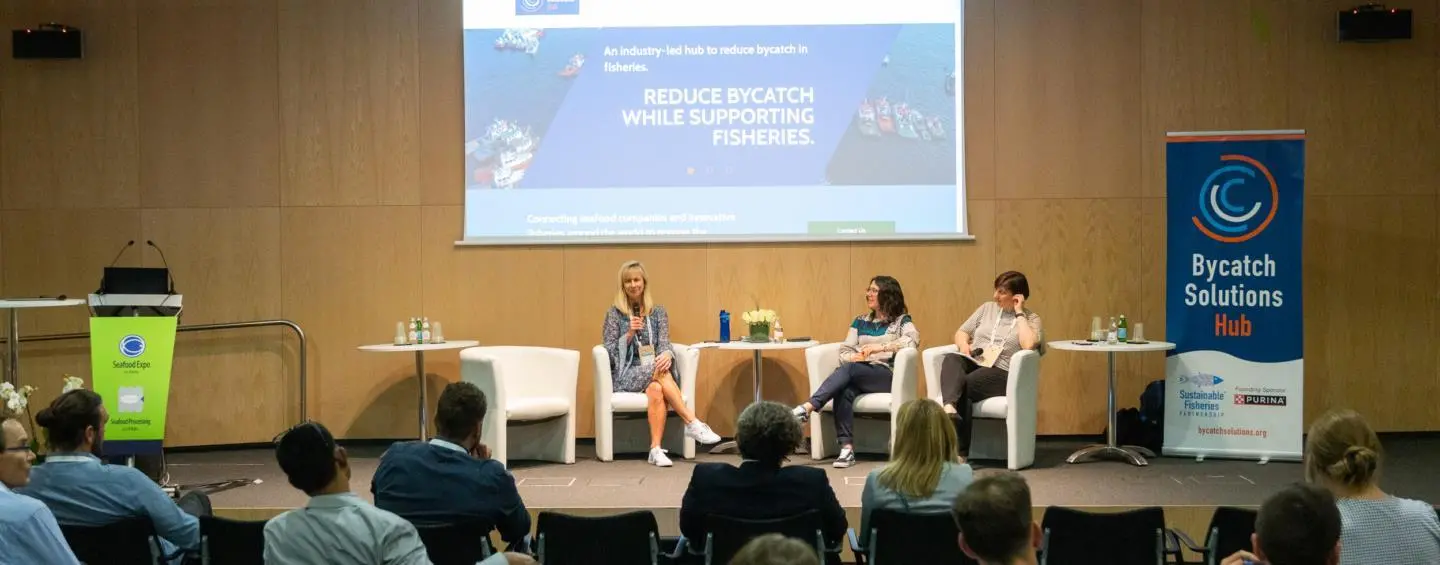
Officially launched at Seafood Expo Global (SEG) 2023 in Barcelona, the Bycatch Solutions Hub is a web-based platform connecting retailers and other businesses that want to financially support projects to reduce ocean wildlife by-catch undertaken by organisations capable of implementing in-the-water solutions.

Developed by the US-registered non-profit Sustainable Fisheries Partnership (SFP), the hub has been sponsored by Purina Europe, the petfood manufacturing arm of the Nestle Group, with the company’s buyer Nicola Bedding explaining how challenging it can be for the pet food industry to get information on seafood sources and the origins of the by-products being utilised in products.
“We have plenty of petfood varieties out there that are particularly liked by cats and dogs, but we realise we need to be sourcing these ingredients in a more sustainable way and ensuring a resilient supply into the future. We’re also thinking about working towards sourcing ingredients that aren’t having a negative impact on the ocean, by, for example, the methods being used. This brought us to by-catch, which is known in the industry as an issue. It’s also something that Purina is keen to address,” Bedding said.
Purina therefore saw that there was a place for such a tool that shares information, knowledge and experience as well as providing companies with the means to support projects and trials as well as fisheries improvement projects (FIPs) that are looking to advance, she said.
“We also see this as a great opportunity for amplifying and multiplying the effect as more likeminded businesses come together through the same platform and essentially make a bigger impact on the industry and the by-catch issue.”
Purina will also look to fund some projects through the hub, Bedding said.
Filling the information void
SFP’s Biodiversity and Nature Director Kathryn Novak told the launch event there’s an increasing interest towards wider impacts of commercial fishing on the wider marine environment and biodiversity. “Because of that, our partners have been asking more questions,” she said.
The hub follows on from a partnership project that SFP started two years ago with Birdlife International and Whale & Dolphin Conservation that was conducting endangered, threatened and protected (ETP) species by-catch audits. Those audits were used to identify fisheries that might be impacting or interacting with sea turtles, sharks, marine mammals and seabirds and then highlight those risks to supply chain partners. Recommendations on mitigating those risks and reducing by-catch were also passed on.
“As we did these things, we started to realise there needed to be more tools out there available to industry on by-catch. There was really no one place to go as a seafood buyer to learn more about what solutions may already be out there and being implemented, what opportunities there are to trial new things, and what FIPs were already taking different approaches to this. We decided to pull it all together into this one industry platform,” Novak said.
Underlining the by-catch problem, she said the unintended catch of ETP marine species in commercial fisheries is one of a number of significant threats to ocean biodiversity, stressing that this has come despite a considerable increase in the number of fisheries that are certified as sustainable or in FIPs.
Mobilising fisheries funding
Another intention of the hub is to raise the profile and visibility of new and existing industry efforts to reduce the by-catch of vulnerable marine species, such as the use of circle hooks and eliminating wire levers in certain tuna longline fisheries in the Western Central Pacific, while in Eastern Canada there’s a snow crab FIP that’s trialling new rope-less pot and trap gear to reduce the risk of whale entanglement, Novak said.
“We hope the hub will be a place to not only showcase and highlight these efforts to the broader market but also be a place for fishers to come and share lessons learned,” she said. “The primary goal is to provide a sort of matchmaking service – bringing together interest, funding and expertise to reduce ocean wildlife by-catch. The hub has the ability to mobilise significant amounts of funding that will directly help hundreds of thousands of sharks, sea turtles, marine mammals and seabirds being harmed and killed in fishing gear.”
Certain criteria need to be met for projects to feature on the hub. It also requires projects to submit quarterly reports on the activities implemented with the funding provided. SFP’s longer-term hope is to be able to track and quantify some of these projects through the hub, Novak said.
According to Tracy Murai, Assistant Director Global Fisheries – Sustainability at seafood processing giant Thai Union, which has been working with SFP for the past 18 months to analyse its seafood portfolio, including conducting by-catch audits, the new solution is “a great way for everyone to roll up their sleeves, get their feet wet, and get involved in creating some change”
Related Articles
 PROCESSING & REFRIGERATION
 SEAFOOD
 SEAFOOD