




Forsea achieves new level cell density with its cultivated seafood
Cell-cultivated seafood innovator Forsea Foods Ltd has made a breakthrough in making freshwater eel farming a viable commercial reality, with the Israel-headquartered start-up confirming that its organoid technology has reached a record-breaking cell density of more than 300 million cells/ml, and with minimal and precise use of cultured media ingredients.
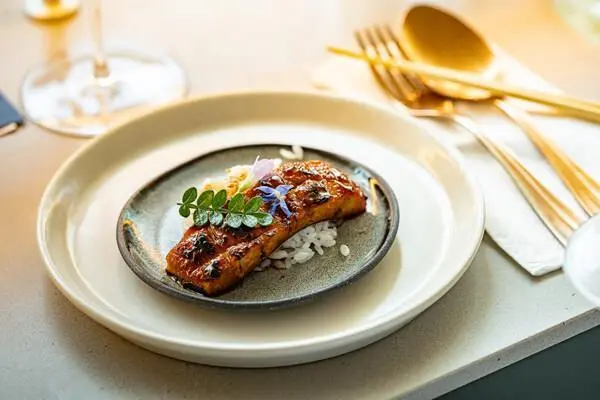
Forsea said this is the highest cell density recorded in the field and that its technology allows for a scalable and highly cost-effective supply for the hugely popular traditional Japanese delicacy eel (unagi).
Eel availability has been significantly hampered by overfishing and the destruction of aquatic ecosystems.
The company is currently focusing on manufacturing cultured freshwater eel due to the immense market potential, particularly in Japan. As the world’s largest consumer of eel, Japan recorded sales of 140,000 tonnes in 2023 – 50% of total global sales.
Freshwater eel is endangered and cannot be commercially-bred in captivity. Demand for eel far surpasses the industry’s current supply capabilities, translating to skyrocketing prices.
Forsea’s patent-protected platform involves creating the ideal environment for animal cells to spontaneously assemble into three-dimensional tissue structures with their natural composition of fat, muscle and connective tissue. It explained that the method not only echoes the natural growth process of these tissues in a living animal, giving it a closer-to-nature edge, it bypasses the scaffolding stage and is dramatically less dependent on expensive growth factors.
This, the company said, makes the process highly affordable and positions its cell-grown version to price parity (or potentially lower) with traditional aqua-farmed eel, a key challenge the cell-based industry was desperate to overcome.
“The breakthrough to this level of cell density highlights the strength of our organoid technology,” Forsea CTO Moria Shimoni said. “It’s a validation of our approach to high-efficiency cultivation of seafood to meet both economic and sustainability goals at scale”.
After completing its proof-of-concept continuous harvesting process, Forsea said it is ready to take production of its cultured fish products to the next phase of commercial scale-up.
”Forsea’s organoid technology requires less capital expenditure than other technologies,” Forsea Founder and CEO Roee Nir said. “Achieving this level of cell density with minimal resources will translate to substantial reductions in the unit of economics and will bring cultured seafood production to a cost that is actually below the traditional market price. This is major milestone for Forsea and validates our vision of making sustainable, high-quality seafood affordable and widely accessible. It also sets a powerful precedent for scaling other cultured seafood products and establishing sustainable alternative supply chains for ecologically sensitive species.”
The company is preparing for commercial launch of its unagi product in 2026.
Related Articles
 AQUACULTURE
 SEAFOOD
 SEAFOOD