





Scottish sea lice argument
The Scottish sea lice issue has reared its head again with one of the largest seafood companies in the world, Marine Harvest, facing renewed calls to move its farms away from wild salmon populations to prevent transmission of parasites.
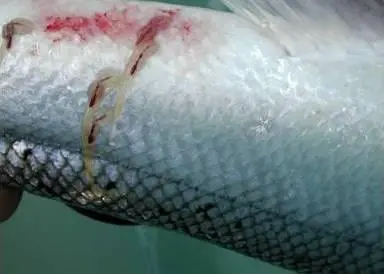
This is despite the fact that the company is working towards the Aquaculture Stewardship Council (ASC) Salmon Standard which sets an unprecedented standard for sustainable food production and is recognised by the World Wildlife Fund (WWF).
The Salmon and Trout Association (S&TA) says that the ASC standard does not do enough to safeguard the wild salmon population from infestations of sea lice which are “prevalent” in salmon and trout farms.
It has published a list of 67 farms which it says were noted during Fish Health Inspectorate (FHI) inspections in 2011 and 2012 as having breached Code of Good practice thresholds of sea lice during the period for which records were inspected. Marine Harvest’s name consistently appears.
S&TA says that these farms should be moved away from wild populations to “protect and conserve Scotland’s wild fish heritage.”
Meanwhile it’s demanding that the Scottish Government “stop protecting” salmon farmers from proper scrutiny. Currently, fish farmers are required to take weekly counts of sea lice on farms but they are not required by law to publish this data, nor submit it to the FHI.
And it wants a change in the law to bring Scotland into line with these requirements in Ireland and Norway.
Meanwhile, Marine Harvest says the ASC standard includes the need to attain minimal sea lice standards.
Alf Helge Aarskog, CEO, Marine Harvest, said: “In our existing plans for investment for the next 5-10 years several of the strict criteria in the ASC Standard will be fulfilled.”
He says that that attaining certification for all of its farms is challenging and will take time – but all of its farms should be certified by 2020.
The S&TA’s warning over the threat of sea lice runs contrary to a recent study carried out by the Marine Institute and NUIG Galway which found that sea lice infestation is unlikely to be a significant factor influencing the conservation status of salmon stocks. And there has been a similar long term study carried out in Norway.
Related Articles
 FISHERIES
 FISHERIES
 WORLD FISHING EVENTS