




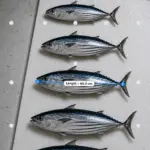

Scientists study effects of Norwegian Sea fish
Scientists have been studying the supposed effects of the ‘pelagic complex’ of the North Sea – that Norwegian spring-spawning herring, blue whiting and Northeast Atlantic mackerel, have significant effects on each other as well as the ecosystem.
All three species are planktivorous and inhabit similar parts of the sea. The scientists set out to address the hypothesis that the planktivorous fish populations feeding in the Norwegian Sea interact and negatively affect individual growth. The outcome depends on the decrease of their common zooplankton resource.
During research by scientists from the INFERNO project , there was found to be a decrease in zooplankton biomass, resulting in less food for all fish. Studies showed that changes in fish-migration patterns, temperatures, horizontal and vertical distribution, variability in the amount of food also had the potential to affect the three species.
The findings confirm the scientists’ hypothesis that “all the stocks showed signs of density-dependent length growth, whereas for herring and blue whiting there were also significant effects of interspecific competition.”
The scientists are presenting nine papers and related research in the current issue of Marine Biology Research to help marine scientists predict future trends in the Norwegian Sea. Several papers address the use of 3D and Individual-Based Models (IBMs) to estimate the horizontal overlap of fish and the amount of food they consume, making it relevant to a wider audience of conservationists and marine biologists.
Related Articles
 FISHERIES
 FISHERIES
 WORLD FISHING EVENTS