

Robust Iceland will report pirates
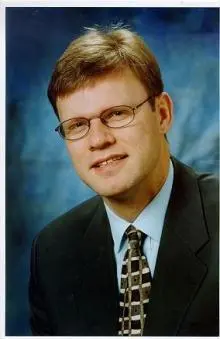
Q: What are the main strengths of the industry today?
It is diversity. Most of the Icelandic stocks are in a stable situation or growing. There is probably only one stock in trouble, the prawn stock. The part of the industry doing better is the pelagic fleet and the pelagic stock. A greater proportion of the pelagic catch is now being processed for human consumption and the herring stock is now in Icelandic waters with processing trawlers operating inside our EEZ. Ground fish, haddock and pollock are also doing quite well. The cod stock is more or less stable these days.
Q: And the weakness?
A: It is the currency exchange rate. The value of the Icelandic krona (ISK) is quite high so the bottom line is not as positive as it would be if the currency exchange was in a more normal situation. The industry is running quite well but is the exchange situation that is troubling it.
Q: Last year you said that Icelandic seafood exports, especially whitefish, were ‘suffering from increased competition with cheaper product from China’. What is the present situation?
A: There is still competition from China but we have reacted in two ways. One has been to increase mechanisation in the industry by using more equipment to do the processing and cut down on costs. This is possible because interest [rates] are quite low so the industry can finance changes like this. The other has been to move part of the processing to China.
Q: What about job losses in Iceland?
A: At the moment, there is a phenomenal growth in the economy here and a lot of activities, so there is no unemployment here. In general I am not worried about the unemployment issue, but in specific areas there could be problems. But I think that the industry is quite sensitive to that. For instance in Eastern Iceland there are factories closing down but these companies are working with the local communities to develop new jobs and help people by providing them with transport to go to get jobs in other towns.
Q: What problems does the Icelandic fishing industry share with other fishing nations?
Reporting pirates
A: It is the illegal, unregulated and unreported (IUU) fishing. This is a problem that we really need to tackle. At the Ministerial meeting in Rome, it was reported that as much 30 per cent of the world fisheries is IUU fishing. If we could eliminate that we will go a long way in solving the [reduced catch] in our oceans. We [in Iceland] are making an effort. There are pirate vessels in the Greenland Sea fishing for redfish. We are using our surveillance systems to record them, follow the transhipment to see where they are going and then talk to the harbour authorities to see if they can stop them.
We are also planning to alert the market operators and the retailers about the vessels fishing illegally so they can reject offers to buy illegal catches. This means that those countries that are the market for illegal catches, like the EU, the US and Japan have to cooperate, especially if they are also the countries whose harbours these vessels want to use. Then they have to be reactive and to close that harbour too. But this hasn’t always been the case and we cannot do this on our own. This is something that we need to tackle together.
Q: Is there IUU fishing in Icelandic waters?
A: No, as far as we know there is no IUU in Icelandic waters! There is IUU just outside, in the Greenland Sea, and that is for straddling stocks, which are managed by the North East Atlantic Fisheries Commission (NEAFC). These IUU vessels are registered in countries that are not members of the NEAFC and therefore do not have an allocation in the quota and are fishing illegally.
Blue over blue whiting
Q: In the North Atlantic, blue whiting catch levels reach 2.3Mt per year but scientists have recommended a TAC of 650,000t with Iceland, Norway and the EU refusing to reduce their quotas. Can we foresee a solution to this problem before it is too late?
A: In recent years, it has been rather difficult to reach agreements within our regional fisheries management organisations. Especially it is very sad that the Norwegians pulled out of the herring agreement.
He hopes there can be some movement by a number of countries on the issue of blue whiting stocks and adds: I still hope that we can close that fishery for this year and that could be a basis for long-term agreements on that.
A: We have reduced our quota. Our quota so far this year is about two thirds of what we caught last year. [For each of the] last three years we started off issuing a low quota and were keen that others do the same. But [initially] nobody responded so we [had] to follow [the others] and increase our quotas later on in the season. This year the Norwegians have responded, and they have stopped the fishery to a large extent. And we asked others to respond in a similar way, to curb the fishing this year. We are waiting for a reply from the Faroe Islands, from the EU and the Russians later this month to see what their reaction will be.
We are constantly taking the lead by lowering the quota. But so far [apart from] the Norwegians this year, nobody has responded. If everybody had responded in the way the[Norwegians] did, then, we [would] probably lower the total catch [by] about two thirds of what we caught last year. And that would be a considerable change and would give us a good basis for reaching an agreement next year. You have to take things one step at a time.
In negotiations like this, quotas are allocated looking at [the] historical catch. If we lower our catch and everybody else keep theirs’ high, then other countries would say ‘you will have [to have] a lower quota because you didn’t catch enough’. That’s the reason why we have to follow the others. They probably say the same as well.
Mathiesen said Iceland had not previously fished blue whiting as a major target and added: But we have been fishing it [consistently] for about 10 years now and the EU is complaining that we don’t have a right to fish this stock because we haven’t been fishing it for very long. But blue whiting is in our waters and we have a right to fish stocks that are in our waters even if they are in other people’s waters as well.
And then, that doesn’t mean that they have an exclusive right to fish that stock. We should have a share of that stock because is in our waters, in international waters and is in other people’s waters.
Icelandic quota system
Q: In what way has the system been beneficial for the Icelandic fisheries and for Iceland’s economy in general?
A: I can’t actually see the Icelandic economy without…the quota system. We’ve been running the quota system for more than 20 years and a lot of things have changed apart from the quota system. But [the quota system] has been the basis for so many changes. It has made fisheries much more [viable from an economic standpoint], made the fishing companies much more valuable, and made it possible for the country to start the stock exchange. When the stock exchange started, it was mostly made up of fishing companies. Now the tide has changed and other [sector] companies are taking over the stock exchange and there aren’t many fishing companies in the stock exchange any more. But if we hadn’t had the fishing companies, if we hadn’t had the quota system, we wouldn’t have started the stock exchange.
From the point of view of the financial system, the industry has been much more reliable. The companies have been able to plan ahead, to know more or less what the catch will be — a cash crop. It has also totally changed the business mentality. It provided the capital that has been used for investment in other industries. The fishing industry has also been leading Icelandic investment abroad. Icelandic companies are now involved in fishing operations in many different countries through investment.
Protecting the small community
Q: What about the negative aspects of the system: small fishing villages losing their quotas, big firms getting bigger with quotas accumulating in fewer hands?
A: The problem with rationalisation and getting bigger units from a number of small ones, and mechanisation using less labour, [is that] there is the danger of unemployment. We have responded to that and you can’t say that the quota is going from the country areas to the urban areas, or from country areas to the Reykjavik area or to the Southwest. That is not the case. There is no concentration of quotas happening in this part [Reykjavik and the Southwest] of the country. But there are places around the country that have more quota and areas that have less. Then the demography changes — but that happens all the time for different reasons.
We have now a large share of the groundfish quota caught by small boats [using] hook and line and we have managed to keep alive those areas where these boats operate. The small system is limited to boats under 15 tonnes, using hooks, longlining or reels. Most of the boats are from country areas [away from the capital] and they move around during the seasons, so they have had a [good economic effect] on the smaller towns. So I wouldn’t look at this as a big problem.
Then, if you also look at the general situation of the economy, [for example] what’s happening in the East and also in the North in Akureyri. We are building Akureyri as a university and cultural town, plus developing tourism town and this is in addition to the traditional fishing industry which still keeps on going on there.
Hydropower has been [developed] in the East and an aluminium plant is going to be established there. So there is not going to be any unemployment problems in these areas.
There are possibly more difficulties in the West, where there are more small localised boats and [people] there are in favour of our system. We try to help the small fishing villages. They have a certain amount of quota which we distribute to them. You shouldn’t go to any lengths to stop changes, you cannot do [that]. But our experience is that you can boost the industry. I am not saying that there are no problems, that nobody is in trouble, because at all times there is somebody in trouble and you can’t help everybody — but there is no collapse.
Q: What about the risk of these bigger companies closing. Is that one of the threats of rationalisation where a town depends on one, not half a dozen employers?
A: You are absolutely right, but that happens in every system. We have limits on how large the companies can get so that [reduces] that danger as well. I am not saying that the system is trouble-free but I am saying that the benefits far [outweigh] the problems and we have tools to alleviate those problems to a certain extent. People have to be on their toes — it has always been like that.
Q: What would have happened if change had not been introduced?
A: The industry would have collapsed. We would not have been able to manage our industry and the industry wouldn’t have been so strong as it is now. We would have had a much weaker industry and the industry wouldn’t have [had] the possibility to support the smaller communities as they have been doing.
I suggested that other countries did not have the same system and his reaction was that those countries have more problems than Iceland. I pointed specifically to Norway.
A: Norway has in many ways a similar system to ours. It is more centralised and with more [intervention] but, I would say in balance, that they have more problems than we have.
Q: Last year, you said of the Common Fisheries Policy (CFP): “It has improved in the last revision but it is a long way from how I would manage the fisheries in the EU if I could decide.” What are the main points on which the CFP needs too improve?
A: It needs a much better inspection and surveillance system. They need to record the catches more accurately and more quickly. That information is very difficult to manage if you don’t have the right data. Secondly, they have to introduce clear property rights [on] the right to fish. Thirdly, they have to follow the advice of the scientists much better than they have done so far and, fourthly, they have to stop subsidising the industry.
EU: fish vs. coal & oil
Q: Why is the Icelandic Government not interested in joining the EU and would that position change if Norway decided to join? The opposition in Iceland maintains that the country could most likely get a satisfactory agreement with the EU regarding fishing rights.
A: I don’t think we would get a good deal for our fishing. Nobody has, nobody that has joined the EU has got a good deal for its fishing. Honestly, I don’t understand why the EU keeps defining and deciding that the fisheries resources should be a common resource when coal and oil are not a common resource. They are managed by individual countries. I can’t understand why the EU keeps on and its constitution still keeps on [emphasising] this definition of the fish stock as a common resource.
I think we won’t get a deal that would be good enough for us. I am sure of that. What will happen in the future? That is very difficult to say. One of the circumstances that will make us think [would be] Norway joining the EU. But the way things stand at the moment, I don’t see Norway joining in the near future.
Q: Why would you have to stop and think if Norway joins?
A: Because of the fishing interest, due to the influence that Norway will have on the fisheries policies in the EU and, therefore, on international agreements. But by that I am not saying that if Norway joins that means that we need to join automatically.
Another thing that would mean that we have to stop and think would be the UK joining the Euro Zone. Then, because such a large part of our external trade will be in Euros, we would have to think about that as well. But, as I said, I don’t see Norway going into the EU in the near future and I don’t see the UK going into the Euro in the near future. So I don’t think any of this is on the horizon.
I must also underline that this doesn’t mean that we are against the EU, or we are against the EU enlarging. On the contrary, we want the EU to be successful in what is doing and the EU is our biggest trading partner and we have very good agreements and a very good relationship with the EU and we think that it can continue to be that way for a long time.
If we take fisheries out of the picture and just say ‘Iceland will manage their fisheries in the way they like’, then we could start a normal EU debate about the other pros and cons of joining the EU. That is a prerequisite. I don’t say that there is a reason for debate at the moment in Iceland. But for a normal debate to start, fisheries should be put aside.
We haven’t really gone to the other issues because the fisheries issue is such a [sticking] point. As I said, as long as the EU defines fishing resources as a common resource, I don’t see us solving that issue.
Aquaculture
Q: At what stage is fish farming in Iceland at the moment?
A: It is growing slower than we hoped and anticipated. This is due in part to the difficult of the fish farming world in general. The prices have been a roller coaster and [then] on a down swing in the last couple of years. Secondly, the problems between Norway and the EU affect us indirectly. Because our currency situation has been very strong in the last couple of years, our fishing companies haven’t had that much money for investment.
We are still working on halibut and cod and I think there is a future for those species alongside salmon and arctic char, where we have being doing quite well.
Because of the water exchange in Iceland, farmed fish from Icelandic waters would be the closest you get to wild.
Eco labelling
Q: What do you think about eco labelling?
A: We have been working on eco labels for 10 years now. Five years ago, I was given the task, by the other ministers of Nordic countries, to promote the ideas that we have brought on to the international community, to the EU and the FAO. Last march the eco-labelling guidelines were agreed at the ministerial meeting in Rome and they are based to a large extent on this earlier work of the Nordic countries. We think that this will have a positive influence on the development of eco labels in the future.
He agreed that eco-label brands, such as the Marine Stewardship Council, will probably have to adapt their system to the guidelines: Any new labels that come out will have to be in line with the guidelines. I think this should have a positive effect both in a passive and active way.
Everybody should be moving in the same direction to fulfil the requirements of the eco labels. [Paradoxically that would mean that soon] you would not need eco labels. The companies and the producers [would] themselves set standards which are equal to the eco labels standards. That will be the general situation and you [would not] have to pay a middle man for stamping your products.
We have in Iceland excellent cooperation with some very large retailers and marketing companies. We supply them with the information that we have about our stock and they, on that basis, promote Icelandic products specifically. [France’s] Carrefour and [the UK’s] Waitrose are good examples of this cooperation [abroad].
The Government is responsible for the traceability of the products and the eco label.
Q: Fishermen have the best data available for scientists. Can fishermen be trusted?
A: I disagree with you. I don’t think they have the best data available. I think the scientists have the best data available because they have an overall view. Fishermen have knowledge about an area or about certain species, or about certain species in a certain area, so that information can be important to fill the gaps to give a greater detail than the scientists can give. But the best overall information can come from the scientists. We also make use of fishermen’s information as well.
Q: What aspects would you highlight in your six years as ministry of fisheries?
A: There are two issues I can think as the most important in the long run.
One is the increase on the value of the catch. There is more fish processed for human consumption. For example, this is the case of the pelagic products.
Then, of course, there is the fish stock situation. They are doing quite well in general. The state of some fish stocks is not as good, but have being improving.
Q: What do you expect from the Icelandic Fisheries Exhibition?
A: I think the exhibition will stir up the waters. My experience in this show is that it is a great melting pot of ideas. A lot of people come and meet and get together and talk about what they are doing, get new ideas. I think it is fantastic that we can have so many people from the fishing industry around the world so close to our industry.
Sustainable stocks & shares?
Q: Are Icelandic Fisheries sustainable?
A: Yes, I think they are.
Q: How would you like to see the industry in a few years time?
A: I would like to see more quotas. I would also like to see the industry making more money from the catch and therefore on the basis of greater volume and greater value contributing larger to the total economy. At the same time, I expect our proportion of the economy will decrease because I see other industries growing as well. I think this is possible because I think our fisheries are sustainable.
Q: In 1994, 24 fish sales and marketing companies were registered on the stock exchange. Now, half of the companies have pulled out. At one time, the fishing industry accounted for 40 per cent of the market value of the companies registered on the main list of the exchange. In 2003, the figure plunged to 11 per cent and has continuing to fall. What do you think is the reason for this to happen?
A: It is negative but the reason is that in the fishing industry, [as] opposed to the new industry, there is a limit to external growth due the limited resources. The companies that are doing well on the stock exchange are the ones growing fast. So, because of that, people dealing with the stock exchange are not as interested in the fishing companies as they were before. They are more interested in other kinds of companies. At the same time national and international interest rates are quite low as well.
Many fishing companies are being bought and taken [off] the stock exchange and they are being run as private companies through holding companies. I think that in the future, when [those] companies have grown, they will come back to the stock exchange.
Related Articles
 PROCESSING & REFRIGERATION
 PROCESSING & REFRIGERATION
 PROCESSING & REFRIGERATION