






Real-time fishery management reduces bycatch
A new study has found that using real-time management polices to regulate fisheries can reduce the accidental bycatch juvenile fish and endangered species with less economic impact on fishermen.
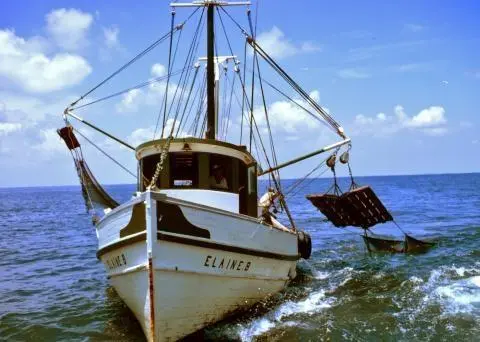
The Duke University-led study compared results from six different types of fishery closures commonly used to reduce bycatch.
Daniel Dunn, lead author of the study and research scientist at Duke’s Nicholas School of the Environment, said: “The ecological patterns that create bycatch don’t occur on monthly or 100-square-kilometer-size scales or larger. They occur at much smaller time-space scales.”
“Our study provides empirical evidence that if we’re not managing the ocean at these smaller scales there is an inherent inefficiency in the system that costs both fishermen and species alike,” he added.
It found that dynamic closures are up to three times more efficient at reducing bycatch with lower costs to fishermen than static measures that close large areas and remain in force longer.
Sara Maxwell, assistant professor of biological sciences at Old Dominion University, who co-authored the study, said: “The success of dynamic fisheries management hinges on recent advances that extend the real-time technology at our fingertips and take it into the ocean.”
She continued: “The speed at which we can now collect and share data means we can communicate in real time, or very near real time, when bycatch species are sighted or conditions are right for their presence.”
The new study found that employing dynamic closures, such as daily move-on rules, placed less than 9% of the targeted catch off-limits, compared to more than 40% that were placed off-limits through static month-long total closures.
“For a while, the speed of communications between fishermen and managers was outpaced by the speed at which fishermen could catch fish and impact the ecosystem,” Mr Dunn said.
He concluded: “But now, fishermen and managers can communicate catch data with each other using mobile apps such as eCatch, Digital Deck and Deckhand, or even just emails or texts. It is a real game changer.” The study appeared the week of 6 January in the Proceedings of the National Academy of Sciences.
Related Articles
 FISHERIES
 FISHERIES
 WORLD FISHING EVENTS