




Purse seiners caught fishing after fishery closure
Oceana researchers on board the Marviva Med present evidence showing how Italian, Turkish, Tunisian and Libyan vessels continue fishing southeast of Malta.
The early closure of the bluefin tuna fishery came into effect on June 16 for all EU tuna purse seiners, except the Spanish fleet. The European Commission prohibited fishing as an emergency measure for the conservation and sustainable exploitation of this resource, as these fleets have repeatedly disregarded the EU Bluefin Tuna Recovery Plan.
As part of its campaign for the protection of bluefin tuna in the Mediterranean, Oceana, is currently on board the research vessel “Marviva Med” documenting the activities of bluefin tuna fleets operating south of Malta.
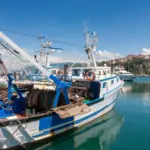
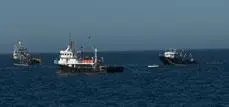
Oceana says that it was able to collect real-time evidence of a fishing operation carried out by the vessels of three different nationalities, 20 miles southeast of Malta and on the same day the fishery was closed. Most of these vessels are linked to the Italian industry. Two old Italian tuna purse seiners currently flying the Libyan flag, the “Abr-Albihar” and the “Abr-Albihar II”, were found fishing when Oceana’s vessel reached the area. These vessels were assisted by two industrial Italian purse seiners, the “Luigi Padre” and the “Maria Antonietta”, during the entire operation, and by another Tunisian vessel, the “Essaida Janet”. Furthermore, these vessels have been operating in close collaboration with a Turkish support vessel, the “Serte Ahmet”, which was hauling a collapsible cage and providing supplies to the Italian tuna-fattening farms.
Xavier Pastor, Executive Director for Oceana Europe and head of the campaign on board the “Marviva Med”, declared: “The presence of Italian tuna purse seiners sheds evident doubts on Italy’s compliance with the fishing prohibition. Furthermore, it is obvious that third-country fleets continue fishing for EU vessels in favour of European companies.”
Related Articles
 FISHERIES
 FISHERIES
 WORLD FISHING EVENTS