
Protecting fisheries in the pacific – part 2
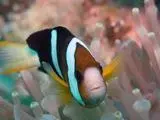
An estimated 120 million people depend on fisheries for their economic and food security on the vast marine resources in the Coral Triangle which covers a 5.7 million square kilometre expanse of ocean.
Coral Triangle countries Indonesia, Malaysia, Papua New Guinea, the Philippines, Solomon Islands and Timor Leste already are implementing various projects with international assistance aimed at improving coral reef protection and sustainable fisheries management. These schemes will form the first stage of the Coral Triangle Initiative (CTI) as work begins to coordinate preparations for a new series of projects to launch as the second phase of the Coral Triangle programme.
“New money is coming in 2010 and 2012 which CTI will look at investing. ADB did the coordination for the first stage and expects to do the second round,” explained David McCauley, principal climate change specialist at the Manila-based Asian Development Bank (ADB) which is coordinating resource mobilisation for the CTI programme. “ADB will do a technical assistance evaluation of the lessons learned from the first round of projects, identify gaps to fill and put together a project package for the Global Environment Facility (GEF), ADB and the United States and Australian governments to finance.”
At the end of July ADB announced it would provide US$2.8 million in funding to be used with a $1.2 million grant from GEF and $600,000 in contributions from the six CTI countries for a project to improve coastal and marine ecosystems management. The project will help establish systems to collect and disseminate research-based information to assist in sustainable marine resource management decision making and to help explore innovative financing possibilities to implement the CTI regional action plan.
The first stage of the CTI programme includes a wide range of projects which reflect some of the individual sustainable fishery development needs of the six countries as well as the institutional resources and professional strengths of the various supporting organisations.
“The United Nations development Programme (UNDP) and the United Nations Food and Agriculture Organisation (FAO) are involved in CTI with small analytical projects. UNDP, for example, is looking at Western Pacific fishing agreements and how they are affected by the CTI programme,” Mr McCauley remarked.
“The FAO has a project in the South China Sea which it is moving under the CTI umbrella. The project involves bycatch limitation to establish fishing gear standards to reduce fishing bycatch of turtles, dolphins and trash fish.”
The United States and Australian governments also are involved in funding various initiatives to support fisheries management and development in the Coral Triangle region through fisheries assistance programmes.
Australian government support, for example, includes assistance monitoring tuna fishing in the Pacific to control illegal tuna fishing while the United States government USAID foreign aid agency is implementing a Fisheries Improved for Sustainable Harvest (FISH) project in the Philippines aimed at assessing current fishing industry challenges and recommending good fisheries management practice focussing on four strategic fishing grounds in important biodiversity conservation areas.
In the Coral Triangle the ADB also is supporting fisheries development in the Philippines and Indonesia, and recently completed a sustainable fisheries development project in Papua New Guinea where the Bank provided a US$5.7 million loan for a coastal fishery management scheme.
“We have two project loans in use in the Philippines that are related – covering mountain ridge to reef and looking at key watersheds and coastal pollution from the urban human and industry waste aspect,” Mr McCauley said. “We are looking as well at doing that type of project in Malaysia and Papua New Guinea but it is not part of the first CTI tranche.”
In 2008 the ADB approved a US$33.8 million loan to the Philippines for the government’s integrated coastal resources management project that covers 68 municipalities in six provinces in the central and southern Philippines.
Planned for implementation over a seven year period for completion in mid-2013, the project will become part of the CTI programme and involves the addition of 600 key staff in national, regional, provincial and municipal agencies; also, training for more than 1,000 people in integrated coastal resources management and strengthening marine watching teams.
Aimed at improving coastal marine resource management to promote sustainable fisheries, facilities planned for the project include the setting up of 50 marine protected coral reef areas covering about 5,000 hectares, each area including a “no take” zone of about 100 hectares.
Meanwhile, in Indonesia ADB is involved in coral reef rehabilitation and providing support for the development of sustainable inshore fisheries management. A US$33 million ADB loan is supporting work to develop sustainable coral reef fishing in six districts in three provinces of Sumatra. The loan is the second of ADB’s planned three phase fisheries management lending programme to Indonesia
In addition to placing the almost completed six and a half year Indonesia coral reef management project under the Coral Triangle programme, ADB expects to provide the Indonesian government with loan finance and technical support for a Phase 3 project in future but this time under CTI.
“Phase 3 will be at least a $50 million ADB project loan in 2011,” Mr McCauley said. “Our Phase 1 project in Indonesia was an assessment of threats to Indonesia’s coral reefs, while Phase 2 is looking at local and district governments to manage coral reefs. Phase 3 will be at a national level building on Phase 2 and include climate change considerations on the rise in sea level, ocean temperature and ocean acidity levels.”