




A University of Washington professor wants to scan and digitise all 25,000 species of fish on the planet.
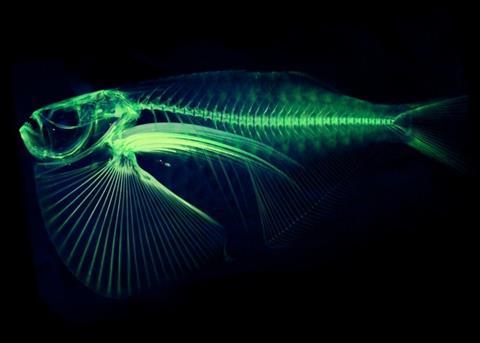
This means that each species will soon have a high-resolution, 3-D visual replica online, available to all and downloadable for free.
It can be used by scientists, teachers, students and amateur ichthyologists to look at the fine details of a smoothhead sculpin’s skeleton, or 3-D print an exact replica of an Arctic alligatorfish.
Adam Summers, a UW professor of biology and aquatic and fishery sciences who is spearheading the project, said: “These scans are transforming the way we think about 3-D data and accessibility.
“It’s been so fun to throw this data up on the web and have people actually use it.”
Mr Summers uses computerised tomography (CT) scanner in the back room of a lab to churn out dozens of fish scans from specimens gathered around the world.
The machine works using a series of X-ray images is taken from different angles, then combined using computer processing to create three-dimensional images of the skeleton.
Its goal is to make it possible for scientists to examine the morphology of a particular species, or try to understand why a group of fish all have similar physical characteristics such as bony head or the ability to burrow into the sand.
Students, postdoctoral researchers and professors from around the world have taken Mr Summers up on the offer and come to the labs on San Juan Island to scan their favourite specimens.
He added: “We just make it a group effort to get everything done. Having this scanner has made it clear to me the incredible power of this system if you think about it the right way.”
So far about 515 species have been scanned and many are posted online to Open Science Framework, an open-source, sharing website for scholarly projects.
Mr Summers expects to finish scanning all of the fish species in the world in two-and-a-half to three years.