In order to meet customer demands, it has long been the practice of processors to bring down the price of frozen fish or shellfish by adding water using polyphosphate solutions, or by excessive glazing, sometimes even both together.
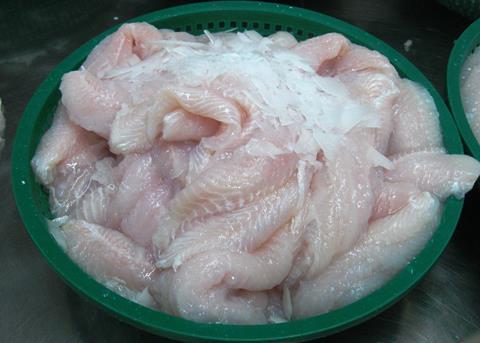

Soaked product

Soaked product

Indeed glazing became so excessive at one time that it was being mooted ‘water’ should be declared at the top of the list of ingredients for some seafood products.

Now, largely because of the growing presence of discount supermarkets such as Aldi and Lidl, where price is the main, if not the only, selling point, this situation is coming to the fore yet again. The big retail and catering chains are driving prices down to a level where some producers are struggling to break even.

Nowhere is this more evident than in Vietnam where the pangasius industry is in dire straits. Unfortunately Vietnamese producers do not help themselves by fiercely competing to be awarded these cheap contracts. As a result processors are taking dubious practices to a whole new level.

Not only are tripolyphosphate solutions being used to bind in water, but also substances which fulfil the same function, but are virtually undetectable in standard analyses, are now being used. Processors have long argued that polyphosphates prevent excessive drip when these products are thawed out so are all right to use.

In some cases, as was the practice of scampi (langoustine) processors in Scotland, pangasius fillets are being left in polyphosphate solutions for up to 14 hours to allow them to absorb more water.

Evil trick
The latest development is what one industry insider calls “the evil trick of adding an artificial protein to the fillets to make them even heavier”. After freezing they are then glazed, re-glazed and even re-glazed again until up to 40% of water has been added to the fillets.

While the practice of excessive glazing is nothing new – processors have said, and still do, that glazing is necessary to ‘protect’ the fish from freezer burn in cold storage, despite scientists refuting this claim – the addition of artificial protein, ‘a chemical substance’, is a more recent process.

Processing malpractices as described above are not helping the Vietnamese pangasius industry. The ultra low prices for IQF skinless, boneless fillets are driving farmers out of business and already the industry is a shadow of its former self.

Pangasius production is forecast to come in below one million tonnes this year, compared with one and a half million tonnes about 10 years ago, and processors expect another shortage in the beginning of next year as more farmers stop production.

At the same time as prices are being eroded, farmers’ costs continue to escalate. The price of feed has nearly doubled during the last decade, as has the price of fingerlings. Meanwhile the interest rates payable on bank loans are sky high.

Now, of course, there is the added expense of paying to be certified as sustainable as more and more NGOs are twisting the arms of the big retail and catering companies to use their services.

The potential for producing pangasius in the Mekong Delta in Vietnam is about two million tonnes but it seems as though this amount will never be realised.