





Russian processing struggling to keep its head above water
When representatives of the Russian fish industry gathered for a first meeting to discuss the impact of the Western sanctions in 2022, the mood was close to panic, recalled Herman Zverev, President of prominent Russian fishermen’s union Varpe.
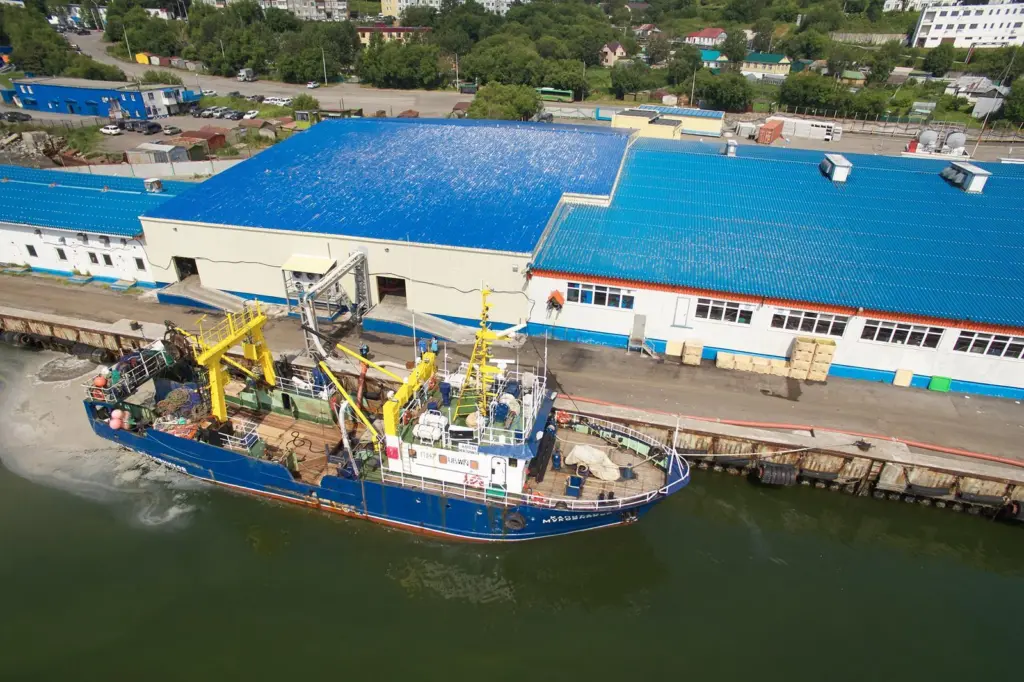
“In the heat of the moment, fishermen claimed that there is no equipment for the fishing industry [manufactured] in Russia at all,” Zverev said, adding that this wasn’t entirely true. “Russian manufacturers and engineers, in turn, complained that they were being constantly neglected.”
At that time, the Russian fishing industry was already in the middle of an investment quotas programme. This was an ambitious plan embarked on by the government aimed at modernising the fishing fleet and processing infrastructure in the Far East and Northern basins. As part of the programme, Rosrybolovstvo, the Russian federal agency for fisheries, set a bold target of ramping up the share of the fish catch that’s domestically processed from 25% in 2021 to 80% in 2030.
Western sanctions, however, have since barred access to European technologies and massively delayed the commissioning of new capacities. The Russian Fishing Company, for example, will get the last of its ships ordered under the programme at the Admiraltey Shipyard after 2030-2031. The initial deadline was set for 2025.
Several other big Russian fishing companies have found themselves in the same predicament.
Meanwhile, local news outlet East Russia reported the on-shore processing sector has not been hit too hard, but that it’s still suffering from the sanctions, mainly through construction delays.
In the wake of the sanctions, the investment quotas programme has turned into “a black hole” for the Russian economy, according to Zverev. He compared its scale to the post-Soviet unfinished programme of civil construction. Back then, managers ran into similar problems, having no resources to finish the big and already started undertakings.
They also lacked the will to admit defeat and to abandon them altogether, he said.
Falling profitability
Business margins in the fish processing industry are trending downwards and have already reached a dangerous level, reported Fish Union, a business organisation that unites fishers, processors and wholesalers. It has estimated the sector’s average profitability stood at only 15% in 2022 – among the lowest figures seen in recent years. By comparison, in 2020, despite the impact of the Covid-19 pandemic, the average profitability sat at a comfortable 25%, according to Sergey Panin, the organisation’s chairman.
It’s widely expected that the decline continued in 2023.
“Moreover, the real figures are even lower than what the official statistical data shows,” Panin suggested.
Panin pinpointed three main reasons for the drop in the sector’s profitability since the end of the Coronavirus-related restrictions: the Western sanctions; Russian currency exchange turbulence; and a hike in the Central Bank key interest rate to 16%. The latter made bank loans barely affordable for fish processors.
“A slump in profitability takes a toll on the industry’s investment attractiveness, which is one of the reasons why fish processing has a relatively low level of consolidation,” Panin said.
Indeed, it’s been observed that big wallets are yet to jump into new projects in the fish processing segment, especially since they have more lucrative investment options.
Varpe, however, paints a slightly different picture. It reckons that in 2023, the Russian fish industry’s net revenue jumped by 15.5% compared to the previous year, crossing the 1 trillion roubles (US$11 billion) mark for the first time ever.
According to its calculations, net profit is expected to have dropped by 5% to 150.1 billion roubles ($1.6 billion), while the profitability in fish processing will grow by 5% to 42.6 billion roubles ($469 million). In the fishing segment, Varpe expects an 8.7% slump in profit to 107.5 billion roubles ($1.2 billion).
This slump in profitability has already hit some operations. Russia’s largest bank, Sberbank, recently filed a claim demanding that the Sokra fish processing plant in the Kamchatka region be declared bankrupt.
Although the amount of the accumulated debt is not specified, it is known that in 2021, Sokra got a 3.8 billion roubles ($42 million) loan from Sberbank to build three fishing vessels and a new on-shore processing complex as a part of the investment quotas programme. This is the first known case when participation in that programme has driven a Russian fish processing company to a potential bankruptcy.
Weak sales
According to market players, several factors now weigh heavily on the Russian fish processing sector. According to Fish Union’s data, over the past decade, fish consumption in Russia per capita dropped by nearly 30% from 27kg to 18kg.
“During the past three years, we’ve seen a stagnation in consumption rather than a continuous decline. Still, there is nothing good in that trend,” Panin said.
Meeting domestic demand was one of the key reasons the government encouraged the development of fish processing. However, as consumption has plummeted, some businesses fear it might not make sense to try to build new capacities.
Additionally, for the Far Eastern fishermen, the idea of expanding supplies on the internal market is linked to logistics subsidies. Nearly 80% of fish in Russia is caught in the Far East – a part of the country that accounts for only 5% of the national population.
Delivering fish to the mostly populated European part of Russia is only economically feasible with government railway subsidies. In 2023, the money authorities allotted to fishermen to compensate for transport costs ran out in April, Zverev explained.
At the same time, export duties imposed by the Russian government in October 2023 on fish products, have hurt some development plans in the processing sector. These duties were imposed to fill the strained Russian federal budget, which is experiencing growing pressure amid rising expenditures and falling incomes.
In response, Russian fish company Sodryzhestvo decided to transfer some of the fish processing capacities from the Kaliningrad region to Belarus, confirmed Anton Alikhanov, governor of the Kaliningrad region. He noted that the 7% duty was killing the economy for processed fish product exports.
The largest Russian fish can manufacturer Za Rodinu also suspended exports due to the duty, confirmed Sergey Lutarevich, Chairman of the board. He said the average marginality of fish could export was as low as 3%, while export duty stood at 7%, meaning the company would have to sell its goods to non-Russian customers at a loss.
According to the Russian Fishery Shipowners Association, Russian fish is sold at a 10% discount on global markets. The organisation, which involves prominent Russian fishing companies, attributed this to “sanctions and logistics difficulties”.
Soaring costs
But weak sales and profitability only partly account for the difficulties facing the Russian fish processing sector. Surging costs – including labour, construction and maintenance expenditures – are also taking their toll.
The labour shortage is a problem common for the entire Russian economy. Indeed, a study conducted by recruitment firm Superjob in early 2024 showed 86% of Russian firms have experienced difficulties filling vacancies. In the Russian industrial sector, this figure is estimated at 87%, Superjob reported.
Russia lacks around 5 million workers, the Economy Institute under the Russian Academy of Science advised in a study published in December 2023, with analysts suggesting the problem has put the breaks on Russian GDP growth.
Furthermore, while the sanctions have hindered official trade routes, Western fishing equipment has continued to land on the Russian market – primarily through third-countries like Turkey, Armenia, Kazakhstan and China. But soaring logistics costs have led some operations to pay double the price for these items.
To counter the situation, Varpe has put a lot of effort into promoting Russian import-replacement technologies, launching a database called “Know Ours” that gathers all local manufacturers. As of early 2024, it has listed eight companies that produce fish processing equipment, and the feeling from some observers is that while the import-replacement efforts have yet to bring tangible results, they do seem to be gaining momentum.
Related Articles
 PROCESSING & REFRIGERATION
 SEAFOOD
 SEAFOOD