





Pinkies more effective than scarers
Warp deflectors, commonly known as ‘pinkies’, are effective in reducing seabird interactions with trawl warp wires by 75%, according to a new report.
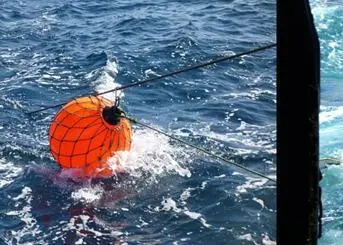
The report, Assessing the Effectiveness of Seabird Mitigation Devices in the Southern and Eastern Scalefish and Shark Fishery of Australia, examined the effectiveness of two devices over a two year period in reducing seabird interactions with trawl warp wires in the Great Australian Bight and Commonwealth Trawl sectors of the Southern Eastern and Scalefish and Shark Fishery of Australia (SESSF).
The two devices were warp deflectors (pinkies – a plastic ‘pinkie’ buoy that is attached to the trawl warp by a clip and connected back to the vessel on a rope) and warp scarers (a rope interlaced with semi-stiff streamers that is clipped onto the trawl warp).
The results showed that pinkies reduced seabird interactions with warp wires by 75% while warp scarers had only limited success.
Nine trawl boats participated in the trial and a total of 124 trawl shots were observed to assess how well the mitigation devices worked. The trial was conducted in areas of high seabird concentration to ensure there was good information on how well the equipment worked.
The trial also highlighted the periods of time when seabirds aren’t at risk. It was revealed that trawling at night has a much lower chance of seabird injury compared with trawling during the day.
Based on the results of this research, the Australian Fisheries Management Authority (AFMA) has said it will refine its seabird strategy with fishers, seabird experts and environmental groups to further reduce the risk of seabird interaction.
Related Articles
 FISHERIES
 FISHERIES
 WORLD FISHING EVENTS