




The World Association for Waterborne Transport Infrastructure (PIANC) has published a new report on the construction and operation of fishways, which it says can minimise the negative effect of dams on migratory fish.
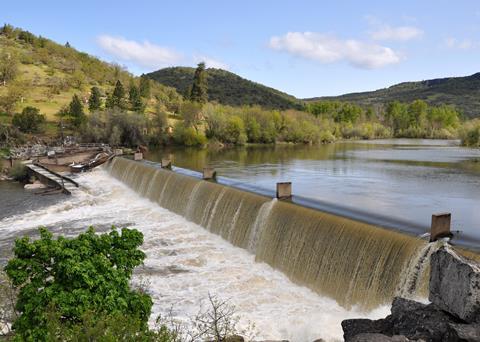
The natural flow of large rivers have been modified with dams to provide stable water supplies, electricity (hydropower), navigation and flood risk reduction and recreation.
The new report, Fish Passage, looks at the damage these dams have caused to aquatic species diversity, riverine fish abundance and water quality.
According to the report, the regulation of flow in river systems has led to a decline in the abundance of long distance migratory fish species like salmon, sturgeon, shad, eel and lamprey.
PIANC says understanding fish passage in the context of a river’s ecological system leads to better decisions in managing rivers. The report reveals that a conceptual model, known as the ‘River Continuum Concept’, can help to demonstrate how localised changes affect the ecology of the entire river.
According to this concept, a natural river can be divided into three zones: upper reaches, mid reaches and lower reaches. These represent the spatial succession of aquatic organisms consisting of species that complete their life cycle within one single zone.
The report also stresses that migratory fish are also affected by a number of other temporal and physical factors including the quantity and timing of flows, river landscape interactions and sediments, among others.
PIANC says a successful fish passage design considers these factors together with the project’s economic and social setting.