


The Salt Roads
Fishing industry stalwart and author John Goodlad writes for WF

Most fish sold today is either fresh or frozen. But it wasn’t always so. Before our age of our sophisticated supply chains and freezing technology, fish had to be salted. Unless you were fortunate enough to live by the coast, the only way to eat fish was after it had been salted. It was not salted for any culinary reason. It was salted to preserve, so it could be eaten months, and sometimes years, after it had been caught.
My latest book examines how salt fish from Shetland, which was the main export from the islands for more than 200 years, powered the local economy and closely linked Shetland to Europe.
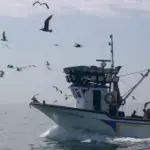
It began with cod in the early 19th century. Large sailing sacks from Shetland ranged across the north Atlantic with their crews catching cod on hand lines. Making three trips a year (each lasting around 10 weeks) these Shetlanders caught cod off Greenland, Iceland, the Faroes and Rockall.
The fish were split and salted on board and laid out on Shetland’s stone beaches to dry at the end of each fishing trip. This dried salt cod was then exported to Spain where the “Shetland cure” became very popular as the main ingredient for that most Iberian of dishes, bacalao.
Shetland had become the hub of a salt fish supply chain – a salt road if you like.
Shifting focus
When cod was superseded by herring at the end of the 19th century these links changed as one European market was replaced by another. Instead of selling dried salt cod to Iberia, Shetlanders began exporting barrels of salt herring to Russia, Poland and Germany.
Fishing with drift nets in the North Sea, fishermen caught phenomenal quantities of herring. By 1905, Shetland was described as the herring capital of Europe and salt herring from Shetland had become a regular part of the winter diet for the peasantry of eastern Europe.
New salt roads, with new personal and cultural connections, had been established.
My book tells the fascinating story of these salt roads through the personal lives of many historical characters – including skippers, fishermen, curers and exporters.
Current concerns
Although this is a book about the fishing industry, it’s really about compelling life stories. When undertaking my research, I spoke to many people working in the contemporary seafood industry whose ancestors had worked in the salt fish trade.
As their historical conversations spilled over into the present, it became clear that the modern seafood industry is under attack from ill-informed and aggressive environmental campaigning groups. My book therefore also looks at the challenges of sustainability, climate change and food choices.
It’s clear to me that despite all the campaigns against fishing and fish farming, fish is actually part of the solution – not the problem. Compared with other proteins, fish has an extremely low carbon footprint. The lowest carbon footprint of all is farmed shellfish and various pelagic species.
This fact is not well known outside the fishing industry – despite being is the best argument against irrational anti-fishing campaigns. If you want to save the planet, my suggestion is your dinner should consist of farmed mussels for a starter followed by mackerel as a main course.
The Salt Roads by John Goodlad is published by Birlinn in September and available for pre-order now
About the author
For many years John Goodlad was the voice of the Shetland fishing industry when he led the Shetland Fishermen’s Association. He then became a fish farmer and now advises various national and international seafood organisations and companies. His previous book, The Cod Hunters, was shortlisted for the Maritime Foundation’s Mountbatten Award for Best Maritime Book in 2020.