

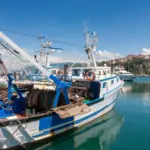

On fuel and fisheries…
Some 40 million small-scale and artisanal fishermen that depend on outboard motors and small diesel engines are suffering from the spiralling rise in fuel prices.
In Australia, for example, two years ago they filled an outboard-motor tank for AUD12.50 – last June it was AUD40. In Britain, between 2007 and 2008, the cost of diesel fuel doubled.
In industrialised countries less fish can lead to higher prices (although it hardly does) and where fishermen deliver their catch far from the end consumer, price increases, if any, dissipate. Thus, many small-scale fishermen turned to fish inshore or went handlining from shore or from paddled boats, however meagre their catch, keeping their larger boats waiting for better times.
Artisanal fishermen never have been spoiled by their governments. Where large-scale fisheries enjoy discounted fuel prices, small-scale fishermen, pay the same prices as private cars. For example, during the “Deep Sea Fishing Policy” introduced in India in 1991, foreign vessels could buy diesel-fuel for Rs2 per litre, while local fishermen in Kerala paid Rs7.62. In Thailand, the government promised fishermen discounts on fuel price, though.
Frustration
The cost of fuel for fishing vessels became the constant issue of the day. In southern and south-eastern Asia and even Japan, where the price of fuel oil is 2.7 times the price it used to be, fishermen are getting bitterly angry and frustrated. Elsewhere, small shrimper’s fuel became twice as much as a few years ago, but the shrimp price did not increase proportionally, with so many farmed shrimp on the market. Fishermen look for what’s left, now often in vain, while governments sticking to their tax rates enjoy financial gains.
In North America
Fishing people in the north used to enjoy high living standards and don’t have the ‘African option’ of feeding their families by handlining from a dugout canoe. A July report said that some 80% of Florida shrimpers stayed in port because of the sky-rocketing fuel price. North Carolina’s fishermen, with the diesel price in June up 65% in one year, suffer also from low fish prices. Where fish prices rose, they didn’t keep pace with fuel costs, which is why 20 to 40% of shrimpers, crabbers and gill netters along all the US East coast remained in port.
The situation on the West Coast and Alaska is not any better, and many fishing people say that they can no longer afford to fuel their boats. American fishermen turned to Congress for legislative help. Some American legislators obliged and introduced The Fisheries Fuel Tax Relief Act of 2008, which, if approved, is supposed to go a long way toward helping fishermen.
In Europe and Japan
The northern governments stick to the notion that any reduction of taxes equals subsidy, and hope to use the fishing industry’s difficulties to reduce fishing effort and capacity; sort of Lords’-of-OPEC-induced fishery management. According to EU’s Fisheries Commissioner, Joe Borg, it is illegal for the EU to subsidise fuel. This “would do nothing to solve underlying problems”, Borg says. The solution? Fleets shrinking.
Although the 400,000 fishing people in the EU may form less than 1% of the world’s fishermen, their share in world’s fish yield and its value is much higher. Their advantage over their poorer brethren in the south consists of their stronger organisations, electoral power, and physical presence and strong actions in the ports of their countries. Fuel prices for fishing vessels in EU countries have risen 240% since 2002. After the protests against the increasing fuel and falling fish prices spread on both coasts of the Atlantic, the English Channel and the Mediterranean, the EU’s fisheries ministers have agreed on an emergency aid worth up to €2bn.
While also in Japan, the government originally had refused to subsidise the increases in fuel costs, it appears that after that thousands of Japanese fishermen organised massive strikes and submitted a petition seeking fuel cost subsidies, the government was considering emergency help and a fund for energy-saving measures.
What to do?
The obvious answer is lower horsepower engines, or running engines at moderate rpm. Others could be:
• Auxiliary sail-power
• Fishing methods that use less fuel than trawling, dredging, etc
• Navigating at cruising speed, except in emergency
• For trawlers: using the increased towing power of propeller nozzles to save fuel rather than to increase towing speed; drag-reducing fishing gear/method; hydrodynamic trawl-boards, stronger but thinner netting twine (e.g., Dyneema), two-boat trawling and Danish seining instead of otter trawling, multiple-rig trawls
• Preferring smaller catches nearby over larger catches farther off
• Resting at the weekend
Stop the folly of regulating by boat length that results in ‘rule-beating’, fuel-guzzling,
10-m long monsters, almost half as wide and deep as they are long. Increase in the use of static gears such as gillnets pots and traps, longlines and handlines. Get more fuel efficient engines. Measures such as these can improve the ratio of fish caught per unit of fuel used making fishing financially more efficient.
Cruising speed
Trolling, in most cases, is inefficient, except for some of the most expensive and available fish. Fishermen who are powering their canoes and other displacement-hull craft with outboard motors and small diesel engines should bear in mind that for each boat there is a cruising speed at which the distance to fuel-consumption ratio is best. Speeding beyond cruising speed may result in increasing fuel-consumption by half or more.
Fuel can also be saved by replacing kerosene lamps in fishing electric ones, provided that they can be recharged by solar energy.
The spiralling increase in the cost of energy in fisheries over the last few years has started a process that produces a chain of consequences that are hardly possible to envisage. One can only hope that the world’s small-scale fishing people, who constitute over 90% of the manpower in fisheries and provide over half of the world’s food fish, and their communities will somehow manage – with or without much help from their governments.