

EcoFive – a shipful of new thinking
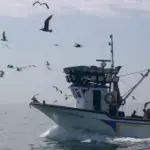
Taking shape at the Westcon yard, the ambitious new trawler for Ålesund fishing company Bluewild has already won awards for the new thinking that has gone into the 73-metre Ulstein FX101 design developed with Ulstein Design & Solutions.
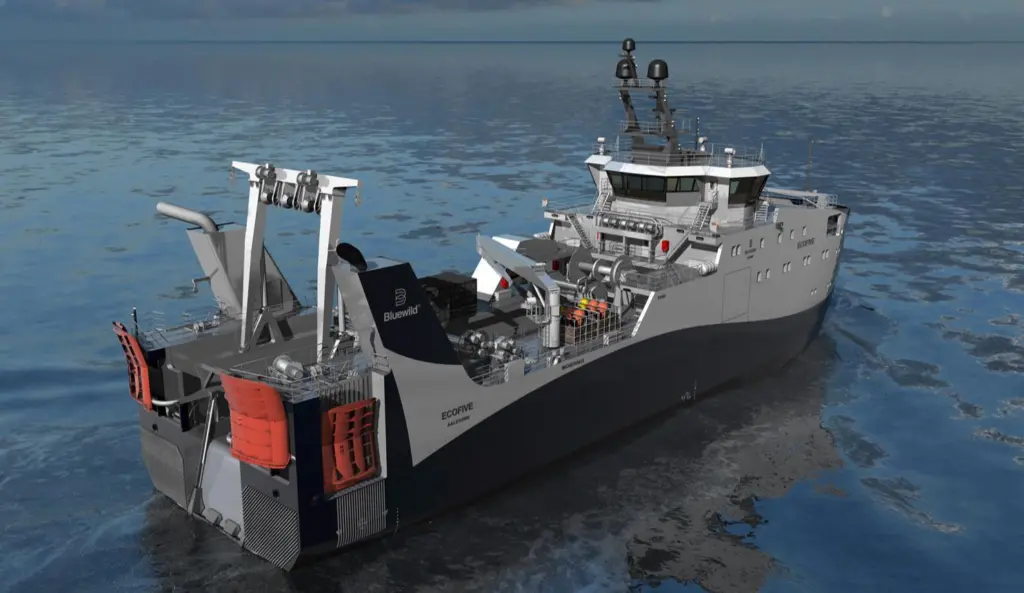
The concept took the Innovation Award at Nor-Fishing in 2022 and was named Ship of the Year at Nor-Shipping in 2023, and it’s fair to say there’s a great deal of attention focused on EcoFive – the name’s a contraction of Eco-Friendly Fishing Vessel – and the combination of systems brought together, some new and others adapted from other sectors.
Every aspect of conventional ideas of how to build a factory trawler have been addressed by Bluewild and the designers at Ulstein, in some instances throwing out accepted wisdom to go with new thinking and in others adapting technologies from other sectors.
The inverted bow is an immediately striking feature, and this contributes to better seakeeping and a more effective use of space on board, while below the waterline are a pair of large-diameter propellers mounted in steering nozzles. This is coupled to a hybrid energy system to provide a power and propulsion configuration that Ulstein’s designers predict will lead to fuel savings of at least 25% per kg of product when compared to a conventional power system, rising to even exceed 40% under some circumstances.
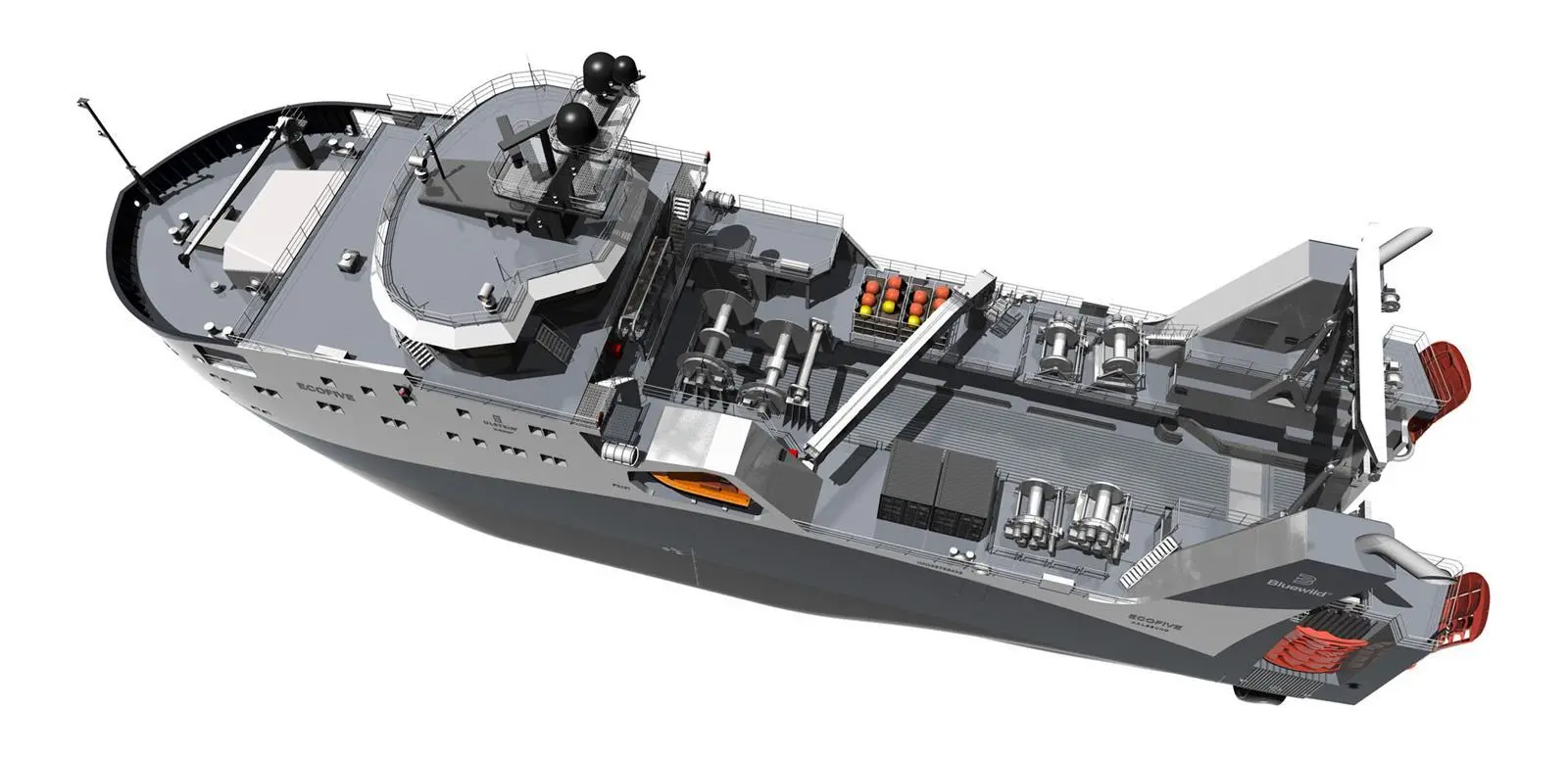
EcoFive’s deck is laid out for handling quad-rig demersal gear, also with options for working pelagic gear. The spread of quad-rig trawls towed on five warps is ideal for shrimp, but for groundfish, two or even a single trawl can be expected to be enough. The new thinking is at the stern, and where there would usually be a hatch through which the catch would be dropped to the pounds on the deck level below, there’s a trawl fork which is raised as the belly of the trawl is in the ramp. This is designed to catch and secure a connector ring built into the trawl belly, and once secure, the codend can be released from the rest of the trawl.
The concept is for the retractable trawl fork to then be lowered below the surface to align with one of the openings to the reception tank. The codend is lifted to encourage the live catch to make its way into the tank in a system that draws on technology developed for well boats to keep fish alive and at their best throughout the process.
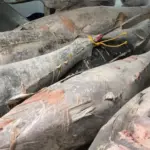
It’s an exciting idea, and the premise is that the catch is kept alive and in prime condition until routed to the processing deck. It’s all about gentle handling, eliminating the crush damage that can occur with conventional trawl handling, and avoiding the problems associated with fish dying quickly as they are dropped into a dry pound, with stress leading to blood being captured in the muscle tissue and discolouring the finished product.
100% utilisation
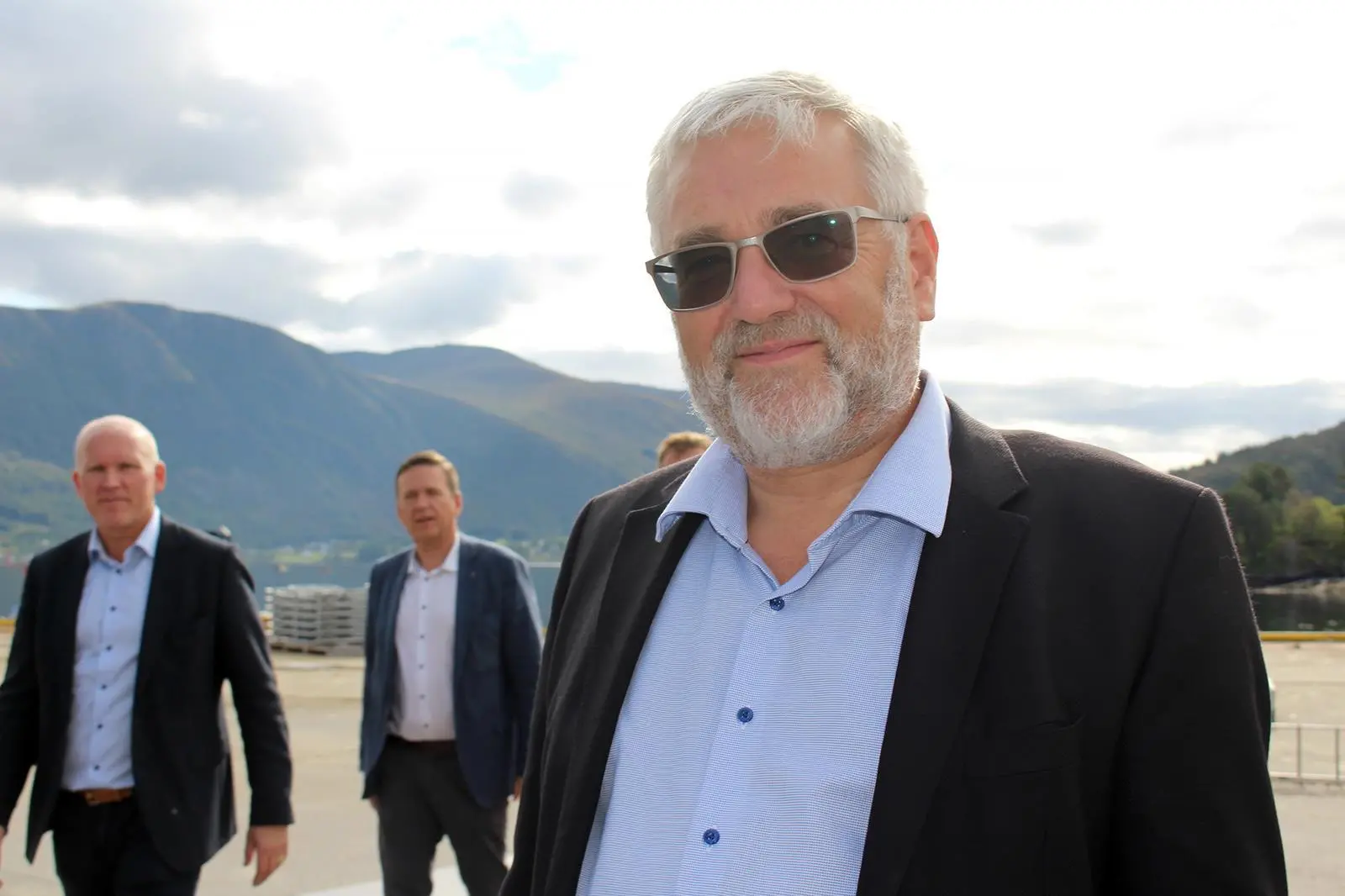
Bluewild’s aim is 100% utilisation of the catch with minimal quality loss, while maximising nutritional potential and slashing energy consumption. It’s a big set of asks, but the company’s Tore Roaldsnes is confident that there is a great deal to be achieved here.
“Great emphasis has been placed on fish welfare and high quality of the raw material. Resources are limited, and we will ensure zero loss of residual raw material,” he said.
“An increase in the quality of the fish product can be achieved by careful handling of the catch, by avoiding squeezing and pressure, and by storing the catch alive until production. Better quality has been achieved through new gentle reception for the catch that is better adapted for live storage and with an optimised flow of the catch into the factory. We have also worked to increase the factory area on board so that there is sufficient space for processing the high-quality catch, the remaining catch and treatment of the residual raw material,” he explained.
Keeping the fish alive in circulating sea water on board has some positive implications for processing. The catch doesn’t leave the water until the point at which production begins, with fish or shrimp kept alive in a system that uses controlled water exchange, oxygen supply and temperature control.
Catches are transferred to the upper factory deck via an overpressure release, avoiding the damage that can occur when using negative pressure pumping, and the expectation is that the end product will be significantly higher as fish arrive live and kicking at the factory to be bled and subsequently passed through cooling channels to bring down their temperature, contributing to better bleeding and faster freezing.
For the production deck, the clock isn’t ticking in the way it would be with fish in a dry pound, with an immediate urgency to getting the catch through production and into the freezers. This means that production becomes a smoother process. This ability to keep fish alive for extended periods allows the factory deck to operate at a steady rate with smaller fluctuations, taking in raw material as capacity is available.
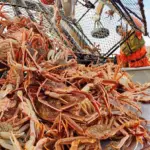
Bluewild had a two-year conversation with Skaginn 3X (now part of Baader) that resulted in a deal for the company in Iceland to deliver EcoFive’sprocessing deck. This catch handling layout is tailored to take fish from the water tanks to the factory section, in a process designed to extract the best possible value from whitefish, to produce fillets, loins, centre pieces, tails, and bellies. Alongside this, EcoFive is getting a production line for cooked, single-frozen shrimp, with smaller grades to be block frozen as an industrial product. All other material is to be processed to ensure it remains fit for human consumption, with off-cuts, backbones and tails kept separate and block-frozen, while offal goes for production of unoxidised oil in a low-temperature process.
EcoFive’s refrigeration plant is designed to operate on CO2, – both a safe option and allowing for significantly lower temperatures to be achieved – which supports greater energy efficiency. At the end of the production process, there’s a 2,000-cubic-metre refrigerated fishroom, with some sophisticated warehousing logistics for sorting and zone storage to streamline offloading and the onward chain once frozen catches have left the vessel.
Ambitious
When it emerges from the Westcon yard, EcoFive is intended to replace Bluewild’s current vessels Ishavet, built in 2013, and Langenes, which was built in 1986, and it represents something of a quantum leap in factory trawler technology of a kind that hasn’t been seen for a generation or more.
There’s no denying this is a venture with some highly ambitious goals, which boil down to producing even higher quality seafood with lower running costs – primarily fuel– and consequently reduced emissions. Bluewild has thrown everything at this new vessel, and there are going to be a lot of people paying careful attention to how this highly innovative combination of technologies performs in practice.
Related Articles
 VESSELS & SHIPYARDS
 VESSELS & SHIPYARDS
 NEW VESSELS