





NOAA’s Fisheries Service has announced that two of three populations totalling more than 200,000 spotted seals in and near Alaska are not currently in danger of extinction or likely to become endangered in the foreseeable future. The announcement follows an 18-month status review.
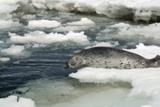
However, NOAA is proposing to list a third smaller population of 3,300 seals off China and Russia as threatened.
Spotted seals have three distinct populations. The 100,000-strong Bering Sea population segment lives near Kamchatka and in the Gulf of Anadyr in Russia and in the eastern Bering Sea in United States waters. Another distinct population segment of roughly 100,000 seals has breeding populations in both the Sea of Japan and the Sea of Okhotsk. The southern-most population of about 3,300 seals is centred in Liaodong Bay, China and Peter the Great Bay, Russia.
The two northern populations are large, have many offspring, and have a broad distribution, diminishing their need for protection under the Endangered Species Act.
For the southern population, lower winds and warmer temperatures will likely cause a decline in sea ice large enough to harm the population. Because of its smaller size and vulnerability as a southern species to the potential lack of ice, NOAA decided to list the third population in China and Russia. This means they may be in danger of extinction in the foreseeable future. The importation of these animals or their parts into the US would be regulated under the Endangered Species Act.