


A new project in Europe is developing innovative ways to use fish waste and sidestreams to tackle inefficiency in the seafood supply chain and create marketable products.
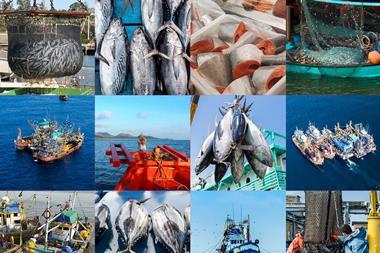
According to estimates around a quarter of waste generated from fisheries is discarded. Not only does this cause significant environmental impacts but it also results in a loss of the potential value of such products. With the global population expected to increase by two billion over the next 30 years and the demand for seafood continuing to rise, finding adequate modalities for fish waste management is becoming even more important.
A new project is underway in Europe to tackle this issue. Known as WaSeaBi, a contraction of the words waste, seafood sidestreams and bioeconomy, the consortium is an interdisciplinary team of 13 partners from five European countries. The partners include three research institutes/universities, one industry cluster and nine companies from Denmark, Sweden, Belgium, France and Spain.
Together, they’re aiming to develop new processes to utilise the currently under-exploited biomass in seafood production for high-value products.
“WaSeaBi was established to solve the challenges that the seafood industry faces with its waste/sidestreams,” said Project Coordinator Charlotte Jacobsen from the Technical University of Denmark (DTU).
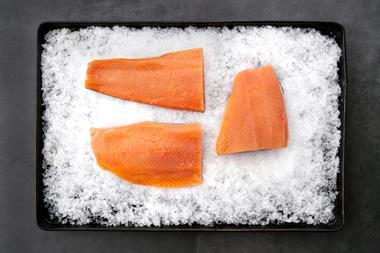
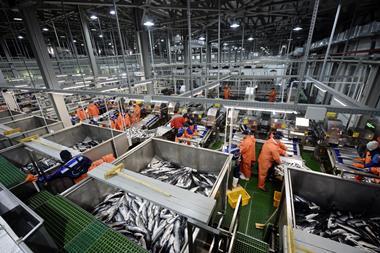
“Only 30 to 50% of a fish ends up as a fillet. The rest is a sidestream that often ends up as a low value product, for mink feed for example, or it’s wasted. There are a number of logistical challenges that needs to be solved before the sidestream can be used to produce new food ingredients. Furthermore, its quality has to be maintained at the same high level as the fillet if it’s to be used for human consumption.”
Two key concerns surrounding low-value waste products are whether their quality is good enough for human consumption, and whether consumers will accept food that contains ingredients made from such products. In order to address these issues, the WaSeaBi team plans to optimise the utilisation of sidestreams from fisheries, aquaculture and processing industries by developing storage solutions, sorting technologies and decision tools to secure an efficient, sustainable supply system of bycatch and sidestreams.
The team hopes that through this work they can create marketable products such as bioactive peptides for nutraceutical, food and feed applications, protein-based food ingredients, savoury ingredients and mineral supplements for food and feed.
Identifying barriers
In order to identify the barriers towards utilising sidestreams to produce new ingredients for human consumption, WaSeaBi is conducting questionnaires in the seafood industry and carrying out consumer studies to identify the motives and barriers in relation to consumer willingness to buy products containing ingredients from sidestreams. It’s also evaluating the commercial potential of any produced ingredients, and quantifying the specific environmental, economic and social impacts of any proposed solutions.
“We are also establishing new sorting technologies for herring to enable sorting of the sidestreams into at least three fractions,” Charlotte Jacobsen said.
“At least three new storage methodologies for sidestreams will be presented to primary fish and shellfish processors and to transport companies, while new decision tools are being made to ensure the best possible valorisation of the sidestream and the optimal logistics to handle it. Work is also underway to develop new storage solutions for sidestreams before they’re used for ingredients production. Any developed solutions will be analysed before upscaling and demonstrated at companies, with results disseminated to the seafood industry.”
Although still in the initial phase, the WaSeaBi project has developed promising storage solutions using antioxidants that can protect sidestreams. The team is also ready to obtain important information via questionnaires on the barriers faced by the seafood industry, to build on existing data sets and understand industrial partners who wish to leverage the project’s findings to develop more circular business models. Initial lab tests on the production of proteins, bioactive peptides and savoury ingredients from seafood sidestreams are also looking promising, according to Charlotte Jacobsen.
As well as herring, WaSeaBi is working with by-products from cod production in Denmark and Greenland, and a range of species including salmon, mackerel and mussels from Spain. She commented that these species are important for the countries and companies participating in the project, because since WaSeaBi is looking at both lean and fatty fish, several of the results they obtain can be transferred to other fish species.
The WaSeaBi project began in May 2019 and will run for four years until May 2023. Results will be made available to the seafood industry, although some may be patentable and protected by IPR. All developed technologies and solutions in participating countries will be fully tested by the end of May 2023 but lab-scale and pilot-scale results will become available in 2020.
If the seafood industry is to successfully tap into the potential of sidestreams, its infrastructure needs to be re-evaluated, says Jacobsen. But with WaSeaBi already attracting plenty of interest, Charlotte Jacobsen believes that the fisheries and aquaculture sectors can be encouraged to use low-value waste more efficiently.
“We need to demonstrate that it’s technically and economically feasible to do so,” she said.
“If our results show this, consumers will care and have an interest in new products that are based on sidestreams. With this project, we want to help the industry exploit their raw materials much better and in a more sustainable manner. We need to find ways to make the most of the resources that are available so that ultimately we are able to produce more food for the world’s growing population,” she added.
According to WaSeaBi, the project has a total project budget of €4,158,214 and receives €3,197,422 in funding from the Bio Based Industries Joint Undertaking (JU) under the European Union’s Horizon 2020 research and innovation programme under grant agreement No 837726. The JU receives support from the European Union’s Horizon 2020 research and innovation programme and the Bio Based Industries Consortium.