



Scientists in Japan have developed a cheap and efficient squid aquaculture system to help ensure the high-protein, nutritious food remains on the nation’s table.
Japan’s squid population has been declining since the 1980s to an estimated 10% of previous numbers, and the country is now forced to import processed squid from South America.
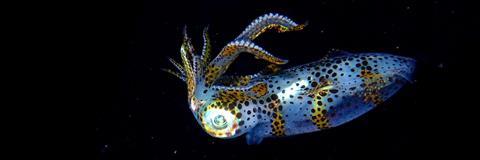
But now researchers from the Physics and Biology Unit, led by Prof Jonathan Miller, at the Okinawa Institute of Science and Technology (OIST) have developed the first squid aquaculture system that has the potential to be commercialised.
“Generally, people think that aquaculture is easy but actually it’s quite challenging,” said Dr Zdenek Lajbner, who is responsible for squid culturing within the OIST Unit. “Take, for example, Japanese eel and tuna. Marine scientists have been trying to develop aquaculture for these two animals for decades. Despite of that, both markets still predominantly rely on wild catch.”
Squid have a complex lifecycle and are aggressive and sensitive to water flow meaning that, despite 60 years of effort, successfully rearing farmed squid has not been achieved before.
But now this project, which has worked with a species called oval squid, has overcome these challenges, closing the lifecycle of the squid and making commercialisation possible.
“We applied knowledge from different parts of aquaculture and made a lot of adjustments,” said Dr Ryuta Nakajima, visiting researcher at OIST. “Compared to my experience in two other labs, the hatching and survival rate of the animals is much higher here.”
Researchers have filed a provisional patent and are now meeting companies to explore bringing the technology to market.