





Irish seafood grows 15%
The Irish seafood economy grew by more than 15% in 2021 despite the challenges of Brexit and the Covid-19 pandemic.
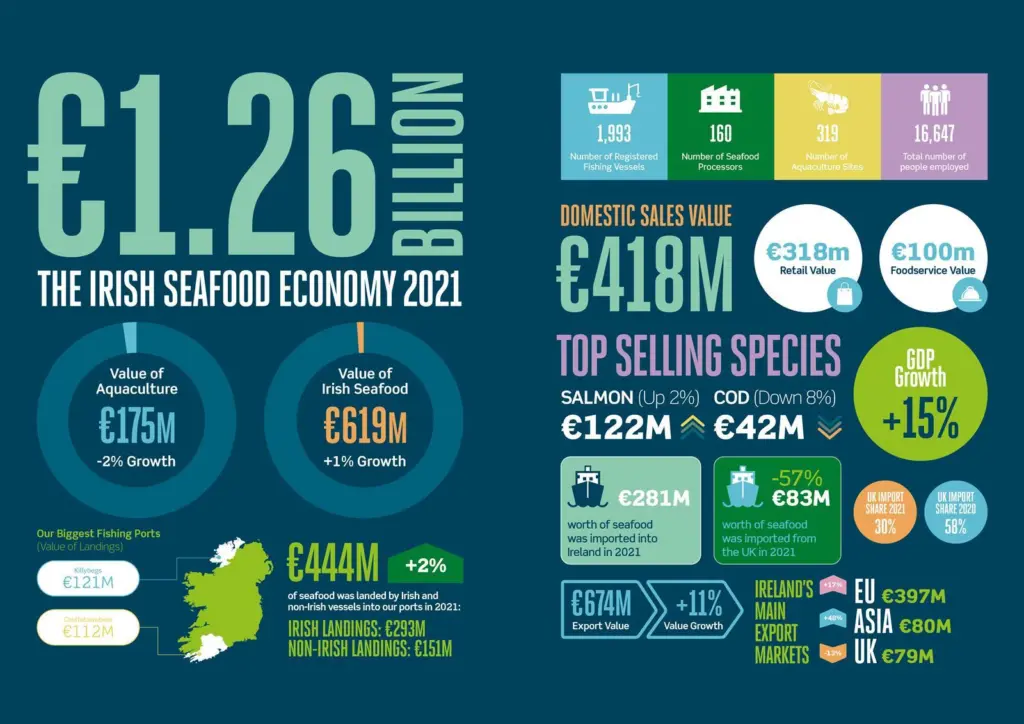
In its annual report, Bord Iascaigh Mhara highlighted how strong exports to the EU and Asia helped the sector enjoy growth in GDP of 15.3% – the highest rate since 2016 – pushing its value to €1.26 billion.
BIM chief executive Jim O’Toole said that the sector had proven to be highly resilient and innovative. “The key insights from this report are the sector’s success in both identifying and driving opportunities in different markets along with an increase in value for some categories,” he said.
“The industry continues to adapt, for example in the seafood-tech sector there are now over fifty companies employing more than 700 people from disciplines including engineering, fintech and marketing and we have seen turnover more than double in the past few years.”
He warned that, despite significant growth, the sector still faced challenges from rising costs, with the price of marine diesel increasing by 150% since the start of the crisis in Ukraine. “Support to the industry to help withstand this economic shock will undoubtedly be required,” he said.
Recovering from the pandemic
Foodservice sales increased by 12% in 2021 after nearly halving in 2020 because of lockdown restrictions. Domestic consumption grew by 3% and the balance of exports vs imports also grew by 45%, driven by strong exports, particularly to the EU, which is now Ireland’s main import market after Brexit saw the value of imports from the UK dropping by 57%.
The government continues to invest in the sector, with an increase of 11% to €232 million. Support also comes from the European Maritime and Fisheries Fund along with €221 million from private industry.