



Bangkok skipjack tuna prices end 2021 on a high
Prices of frozen whole skipjack tuna in Bangkok continued to increase as 2021 drew to a close due to a decreasing raw material supply, according to the Vietnam Association of Seafood Exporters and Producers (VASEP).
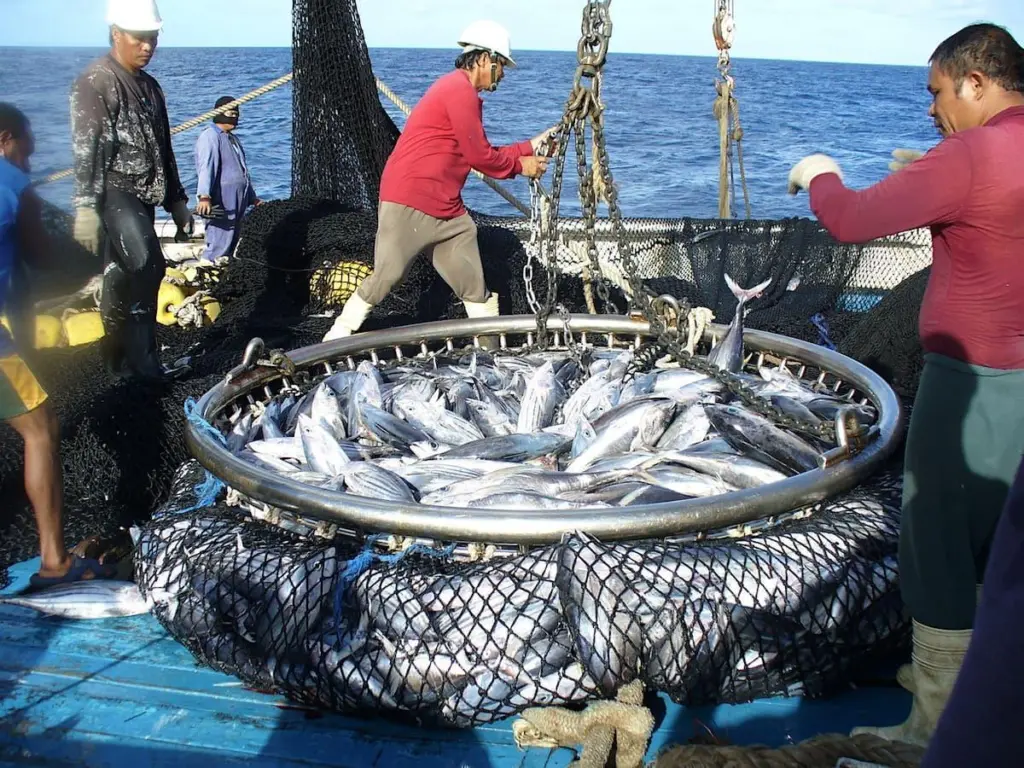
VASEP reported that the average price of frozen whole skipjack tuna (size >1.8 kg) delivered in Bangkok in mid-December was at US$1,650 per tonne, which was the highest price paid in 2021. Some trades were done at $1,700 per tonne.
In November, skipjack prices were about 3% lower at $1,600 per tonne.
Overall, purse seine catches in the Midwest Pacific (WCPO) decreased slightly in November after recovering in October to 87,941 tonnes.
With boats diverted to the western Pacific, fishing in the waters of Papua New Guinea (PNG) has accounted for about 40% of the catch.
VASEP said it is likely that the La Niña weather phenomenon is causing high concentrations of tuna in parts of PNG, Micronesia (FSM) and the Marshall Islands. La Niña is expected to continue in the Pacific during the winter months until around April 2022. During this event, the seas at the centre of WCPO tend to warm up and pushes tuna westward, although this is not always the case.
Skipjack catches fell again with WCPO vessels about 14% lower in November – falling from 62,028 tonnes in October to 53,037 tonnes.
Fuel prices have also been affecting Bangkok skipjack prices, with VASEP highlighting that global benchmark marine oil and gas (MGO) prices in Singapore increased by an average of $692 per tonne last month. This means that shipowners have to spend an average of $450 on fuel to catch 1 tonne of ocean tuna, which ranks amongst the highest prices since January 2020.
Consequently, they will be trying to sell their whole frozen tuna for more money, the association declared. This will also go to cover other operational costs such as transportation, license fees to fish per day in the waters of the countries participating in the PNA, and crew salaries.
The low WCPO skipjack catch has been offset by very high daily catches of large yellowfin tuna, added VASEP. Vessels have been catching around 7.2 tonnes/day, which is the second highest level in the period 2019-2021.