




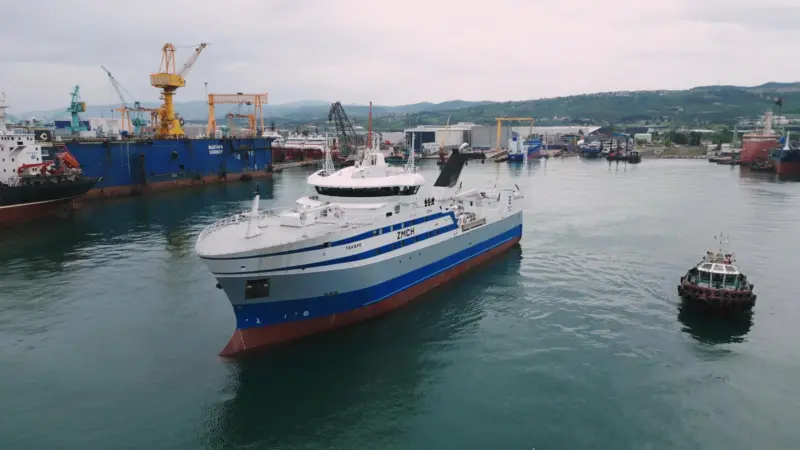
Sanford scampi trawler heads to Holland for outfitting
With diesel-electric propulsion and an array of electric winches, designed to minimise fuel consumption and emissions, San Koura Rangi is expected to contribute to Sanford’s target of reducing the carbon footprint from its direct operations by 25% between 2020 and 2030.
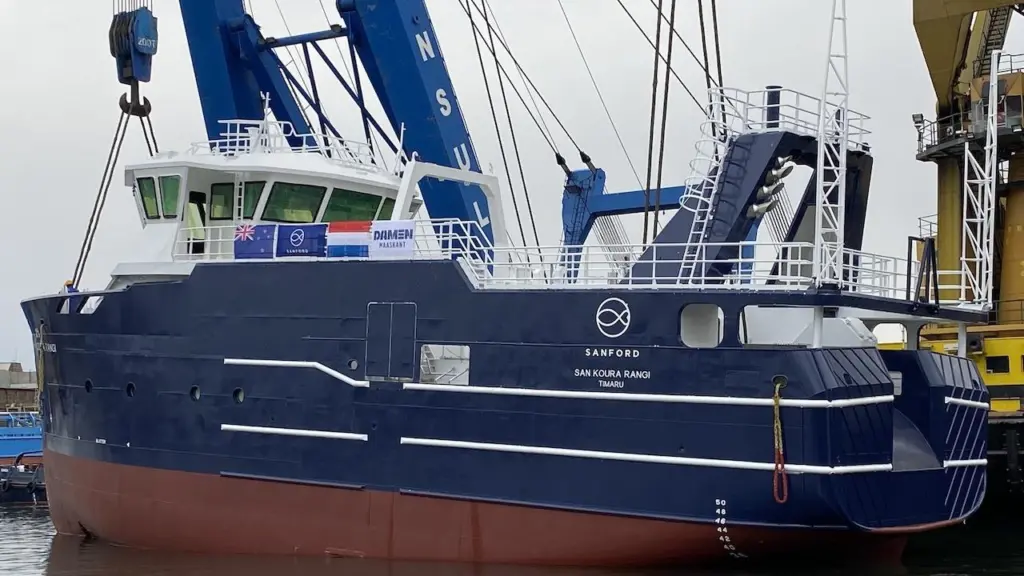
Based on the Damen Sea Fisher 3210, the new vessel’s design has been developed through a process of co-operation between Sanford and the management and technical teams at Damen Shipyards, Damen Maaskant, and Damen’s representative in New Zealand.
As well as diesel-electric propulsion, the vessel will also have electric trawl winches integrated into the electrical system to re-route energy back to the switchboards, and the main propulsion also has a ‘get me home’ backup option in the event of problems with the main propulsion motor.
Further innovations include fans and large motors on variable speed drives. In colder climates in or near the Southern Ocean, the fans can slow down to reduce energy usage. Sanford has focused on using a robust long-lasting paint and anti-fouling coating system, which will reduce paint consumption and reduce solvent release to the atmosphere.
The choice has gone to CO2 as the refrigeration gas to be use onboard, and while this is still a greenhouse gas, it is a significant improvement on CFSs and HFCs as a refrigerant.
San Koura Rangi will also feature the latest safety facilities for the crew, advanced bird protection for seabird safety and enhanced waste management to minimise any emissions.
Related Articles
 VESSELS & SHIPYARDS
 VESSELS & SHIPYARDS
 NEW VESSELS