


New US inspection rules worry Vietnamese pangasius exporters
New catfish inspection rules came into effect in March, transferring responsibility from the US Food and Drug Administration (USFDA) to the US Department of Agriculture’s (USDA).
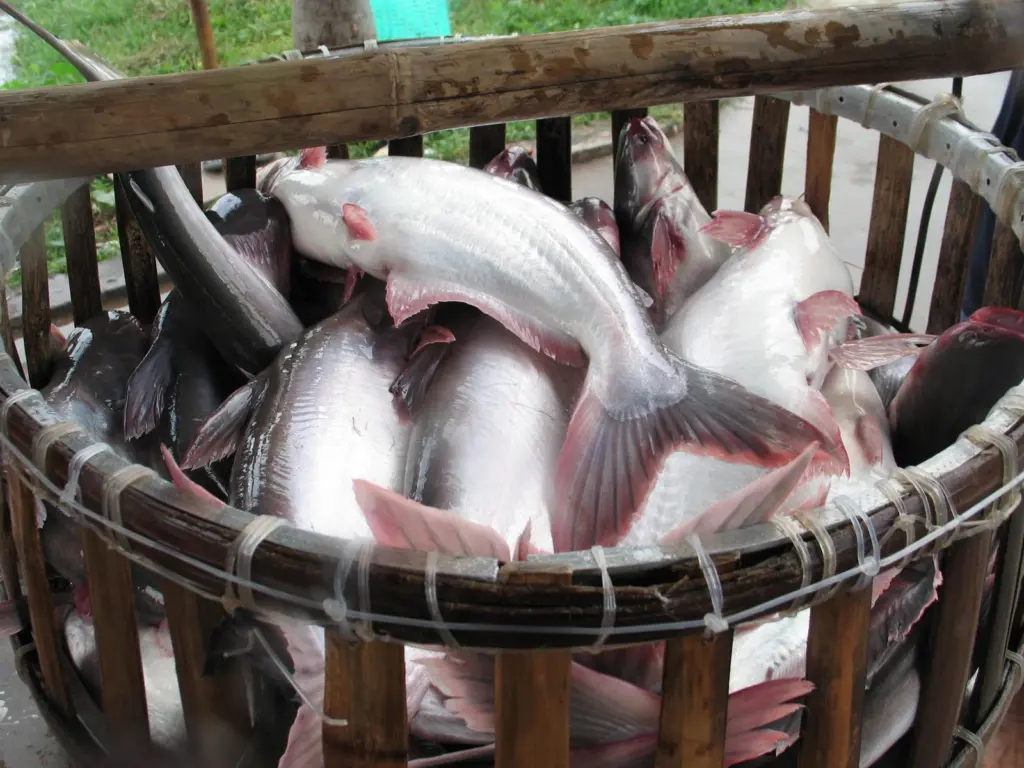
These rules have major implications for Vietnamese pangasius producers, processors and exporters.
Whereby the USFDA was concerned with food safety, pangasius must now be farmed and processed in Vietnam using the same methods and standards employed to farm channel catfish in the USA.
The new rules don’t just apply to pangasius from Vietnam, but to all catfish species imported into the USA. However, the USA is the number one market for Vietnamese pangasius, accounting for 2.4% of total exports in the first five months of this year. This is a rise of 12.9% compared with the same period last year and was worth $152 million according to the Vietnam Association of Seafood Exporters and Producers (VASEP).
Meeting the US standards will create a huge financial burden for Vietnamese exporters, according to Truong Dinh Hoe, VASEP’s general secretary, since there are huge differences between rearing, transporting and processing catfish in the USA, compared with Vietnam.
The fish are pond-raised in both countries, but in the USA the ponds are sporadically filled with well water, whereas in Vietnam the ponds are situated on the banks of the Mekong River and are continuously supplied with treated water from the river.
In the USA, catfish are fed an extruded pellet made from grain, but in Vietnam they are fed a less expensive diet manufactured mostly from soybeans.
Again, harvested catfish are supplied live to processing plants in both countries. In the USA they are transported in aerated water in trucks. In Vietnam they are transported in well boats, but not in aerated water.
Differences
Major differences are apparent in the processing plants. Although some Vietnamese processing plants are state of the art, in general processing plants in the USA are better equipped.
Cynical observers, and not just in Vietnam, strongly suspect that the new legislation is effectively a form of protectionism and is contrary to World Trade Organization (WTO) principles.
For years the catfish farmers in southern US states such as Mississippi, Alabama and Louisiana, have been lobbying the US government to implement tariff barriers, name changes, etc. The USFDA was even persuaded to rule that pangasius could not be sold in the USA as catfish even though scientists state that it is a member of the catfish family.
However, all is not yet lost and the Vietnamese may be worrying unnecessarily. It is not certain that the catfish rule will become mandatory as there is an 18-month transitional implementation period until August 2017.
Meanwhile, the US Senate has voted to scrap the legislation saying it is wasteful and unnecessary. However, this decision still needs the House of Representatives’ approval and President Obama’s signature to become law.
If the new rules do become mandatory, they could actually benefit Vietnamese pangasius industry, according to Vo Hung Dung, vice chairman and general secretary of the Vietnam Pangasius Association. Forcing an upgrade in quality would provide an effective marketing tool, he said.
Vietnamese pangasius would no longer be in the ‘lower segments’ of the fish trade so its export value would improve.
Related Articles
 FISHERIES
 FISHERIES
 WORLD FISHING EVENTS