


New research vessel for Stockholm University
A new scientific research vessel has been delivered by Baltic Workboats to Stockholm University in Sweden.
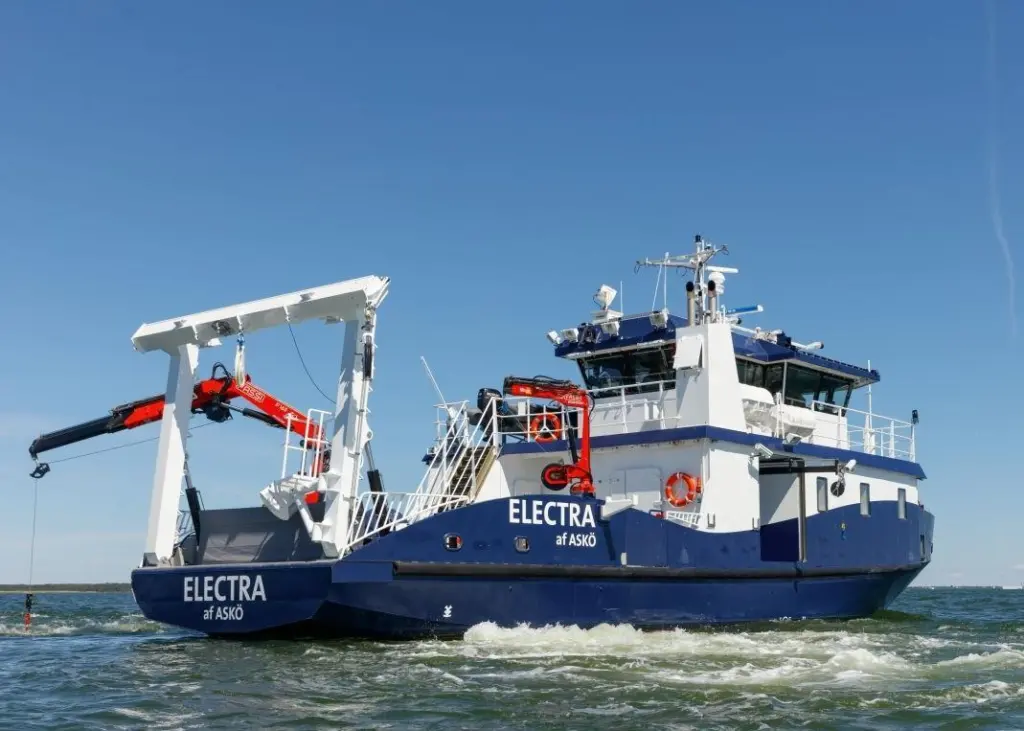
The vessel, Electra, is designed for research work on the Baltic Sea and for transporting students from the mainland to Asko island research centre.
It can accommodate up to 35 passengers plus crew and the hull has been built of steal in accordance to class rules under inspection of STA.
The vessel is built with two single and two double cabins for crew under the main deck, while the sound insulation onboard does not exceed 55 dB(A) anywhere in the accommodation or work space during sailing.
Electra is loaded with various research equipment, including: a set of Kongsberg sensors integrated into the vessel hull, Topas PS40, EK80 and EM2040, as well as Mini SVS, Mini SVP and ADCP sensors.
All of which are connected into K-sync system which has the possibility to display and control all of the data on any of the 17 screens onboard the vessel through the KVM system.
The vessel will be supplied with four research winches for all kinds of sampling including 12-metre piston corer for bottom sediment samples.
Powered by twin heavy duty Volvo Penta D16MH marine diesel engines, each of which power Rolls-Royce US105 FP azimuth thrusters via cardan shafts, the propulsion system matches the Finnish-Swedish ice class 1C rules.
There are also two Seakeeper 35HD gyrostabilizers that have been calculated to reduce roll by 80% at up to 2m waves.
Related Articles
 FISHERIES
 FISHERIES
 WORLD FISHING EVENTS