





New report estimates the global value of tuna
According to a report released by The Pew Charitable Trusts, fishing vessels catch enough tuna to contribute more than US$42 billion to the global economy annually.
The report, Netting Billions: A Global Valuation of Tuna, estimates the worldwide value of the primary commercial fisheries targeting the seven most commercially important tuna species caught in 2012 and 2014. The analysis found that the amount paid to fishermen ranged from $10 billion to $12 billion a year, while the full value – including the total amount paid by the final consumer at supermarkets and restaurants around the world – was at least $42 billion in 2014.
“All told, the value of tuna is greater than the gross domestic product of at least 108 countries,” said Amanda Nickson, Pew’s director of global tuna conservation. “Given the economic gains for coastal economies connected to the commercial industry, tuna is an asset that every government should make every effort to protect.”
The analysis also provides data by ocean region, species, and gear used to catch tuna. According to the data, the total catch in the Pacific Ocean has the highest value, estimated at $22 billion in 2014.
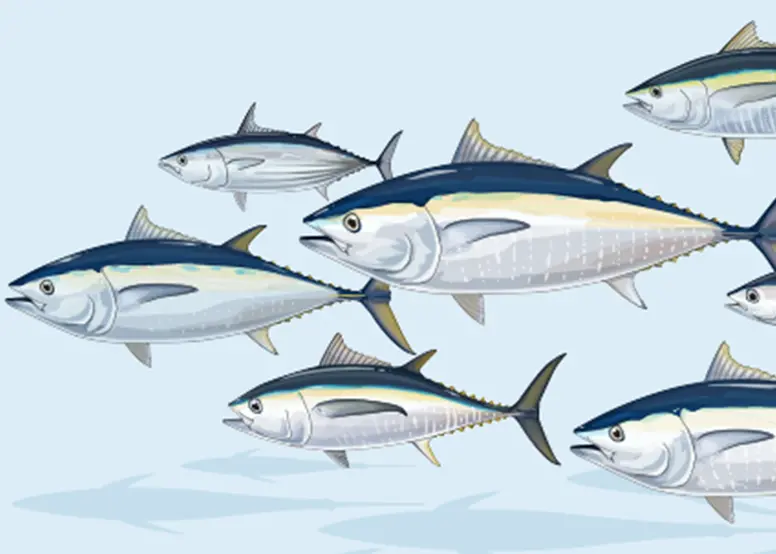
Skipjack tuna is worth more than all bluefin species, when the estimated value is analysed by species, but only because of the volume of skipjack caught every year. If value is considered by individual fish, bluefin is by far the most highly prized. Together, bluefin species generate at least $2 billion to $2.5 billion a year in the global marketplace.
Pew’s report concludes that the value of global tuna stocks can increase if fishery managers take a comprehensive and precautionary approach to managing these populations, some of which are overfished. Scientists recently concluded that the Pacific bluefin tuna population has declined by 97.4% from its historic unfished levels. Likewise, bigeye tuna in the western and central Pacific have declined by 84%.
“Short-term economic gains often drive management decisions, but there is far more value to be found in responsible, forward-thinking management,” Ms Nickson said “The governments responsible for oversight must remove the barriers that block progress toward adopting science-based catch limits and modern management tools.
Related Articles
 ICELANDIC FISHERIES EXHIBITION
 FISHERIES
 FISHERIES