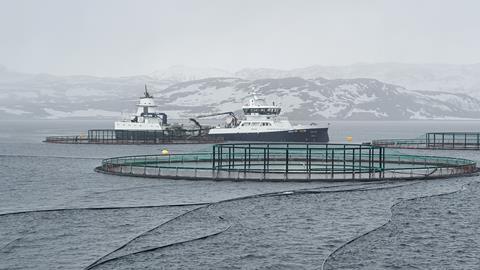




Russia has targeted a dramatic increase in its fish farming output over the next decade, with authorities believing this ambition will be best realised through localised aquafeed and broodstock production and by encouraging producers to switch to recirculating aquaculture systems (RAS).
The country’s aquaculture production has doubled over the course of the past decade, according to estimates from the Russian federal agency for fisheries, Rosrybolovstvo. Its most recent analysis finds that in 2020, Russia’s farmers produced 329,000 tonnes of fish, up 14% compared with the previous year. In 2021, this figure was projected to grow by another 15%, and by 2030, Russian aquaculture production is expected to reach a total 620,000 tonnes, the agency has forecast.
This fast growth will owe much to the increased sophistication of Russian aquaculture production. At the same time, a stronger emphasis on salmonids has emerged.
Historically, Russian farmers were primarily interested in growing carp species. In 2020, this sector accounted for 45% of the country’s overall farmed fish output. However, salmon production has been growing rapidly for several years, with Rosrybolovstvo’s data confirming that Russian farmed salmon and trout production has tripled since 2017, reaching 120,000 tonnes in the first three quarters of 2021.
By 2030, the Russian salmon harvest is projected to reach 220,000 tonnes, of which Atlantic salmon will account for 150,000 tonnes, Rosrybolovstvo said.
New tech in the spotlight
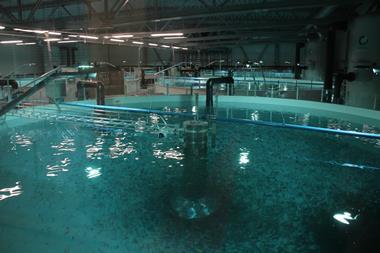
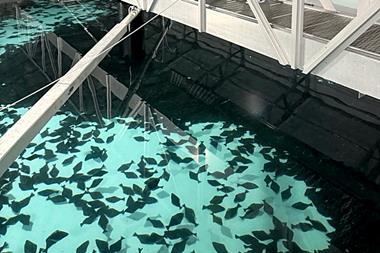
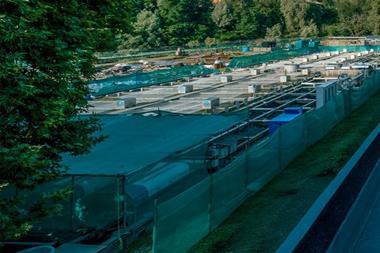
In the first-quarter of 2022, the first Russian industrial salmon farm to run a RAS facility is scheduled to be launched by Vologda-based JSC Aquaproduct. This development is expected to be an important milestone for the entire Russian aquaculture industry, which has been somewhat conservative and reluctant to adopt new innovations in recent times.
However, Rosrybolovstvo is confident that the future of Russian fish farming is RAS.
“In recent years, we have clearly seen this trend [of rising RAS popularity globally] and support it. Aquaculture development [in Russia] should follow the path of creating farms that will move away from open or uncontrolled water sources to industrial cultivation in modern conditions,” Rosrybolovstvo’s Deputy Director, Vasily Sokolov, said.
“This approach helps to avoid many problems. Now we see a meaningful practice of introducing the latest advances in aquaculture. Taking into account the restrictions on the location of cage farms and environmental safety standards, beating the strategic target of [boosting] commercial aquaculture production is possible through the development of this new direction for Russia,” he said.
Alexey Dorin, General Director of JSC Aquaproduct, said that in the company’s first batches in 2022, its salmon is likely to weigh 2.5 to 3 kg, but that in the future, it plans to grow salmon to weights of up to 5 kg.
Dorin also pointed out that most of the farms currently running RAS technology around the world are only growing salmon up to 500g for transfer to at-sea grow-out, so in his opinion, the new Vologda farm will be unique.
JSC Aquaproduct’s salmon farm is not the only project involving RAS technology currently in the pipeline in Russia. In July 2021, Moscow-based investment fund Russian Friends Capital (RFC) announced plans to build two land-based salmon farms in Russia and one in Kazakhstan, with AquaMaof Aquaculture Technologies Ltd. selected as the RAS technology provider for all three facilities.
Each farm has been designed to have a production performance of 2,500 tonnes of Atlantic salmon per year.
RFC spokesperson, Dmitry Perman, said that AquaMaof was chosen as an equipment supplier because its technology secured lower electricity consumption and a higher level of biological safety compared to other offers the company was considering.
Perman also commented that AquaMaof had already had its technology tested in some large markets.
Meanwhile, Rosrybolovstvo has forecast that Russian farms employing RAS technology would be producing to 30,000 tonnes of fish annually.
Achilles heel
Despite the strong growth in production performance, some Russian farmers have continued to complain about the lack of aquafeed and broodstock available in the domestic market. The instability of the Russian Ruble’s exchange rate and the poorly-predictable veterinary policy have also added to their woes.
The aquafeed problem was exposed in November 2021 when an association of salmon hatcheries in the Sakhalin region voiced its concern – suggesting that the challenge could ruin its members’ businesses and wreak havoc on the entire Russian salmon industry.
The Russian veterinary watchdog Rosselhoznadzor imposed temporary restrictions on the supply of feed and feed additives imports from Denmark on 27 October 2021, claiming that recent inspections had revealed “improper control by the Danish regulator over the companies selling feed products to Russia”. However, it turned out that almost the entire feed for salmon hatcheries in the Russian Far East was coming from Denmark, primarily supplied by Aller Aqua. Consequently, Rosselhoznadzor was pushed to urgently withdraw the veterinary restrictions in order to save the salmon farmers.
Moving forward, during a meeting on 28 December, Rosrybolovstvo promised that aquafeeds would be subject to import-replacement in the coming years.
“Currently, Russia has all the conditions for the localisation of feed production and the development of its own feed production,” Rosrybolovstvo said, adding that the Russian regulator was negotiating on some specific projects in this field, including some with foreign investors.
While several Russian companies produce aquafeeds, it’s felt that most of them offer products of dubious and unstable quality, commented a source in Russia’s fish farming industry. In recent years, the country’s fish farmers have also had the constant fear that a ban could be introduced on all European aquafeeds.
“Switching to domestic aquafeed is not possible for us. This could entail lower gains and higher mortality rates. Our businesses have no scientific base to compete with foreign suppliers yet,” the source said.
The picture is similar with broodstock, which is in short supply in Russia. In June 2021, Sokolov said that the Russian salmon industry had complete dependence on aquafeed and broodstock. Sokolov added that Russian authorities planned to attract private investors to overcome the problem of the aquafeed shortage, while on broodstock, the problem could be solved by building a genetics centre in the Karelia Republic.
“There are practically no hatcheries for industrial aquaculture in Russia,” said Lasar Taufik, general director of the Russian company Kroft Tau.
This is primarily associated with long investment cycles on such projects, which normally range between 10 and 15 years, Taufik explained.
“Work with promising aquaculture species has been phased out since the mid-1980s. Few remember that back in the days of the USSR, successful work was carried out on the cultivation of American striped perch and river eel. Work on the technology of industrial cultivation of pike perch has been stopped. Exotic species like arapaima and paca are forgotten, even though they are one of the most promising freshwater aquaculture species.”
Strategic importance
In total, there are around 3,000 fish farms currently in operation in Russia, most of which are small businesses. It is estimated that 55% of these farms produce less than 10 tonnes of fish per year, 35% produce between 11 and 100 tonnes, and less than 1% have a production performance above 1,000 tonnes.
Russian Aquaculture is the largest producer of farmed fish in the country. The company runs several Atlantic salmon and trout farms in the Russian northwest with a designed production performance of around 28,000 tonnes per year.
The upcoming industry development is primarily associated with the major industrial farms, Russian government officials promised. All farms in Russia are currently subjected to state aid, but for industrial farms, it is still easier to be subjected to state support.
“We compensate 50% of the costs of equipment to fish farms, as well as 20% of capital construction costs as well as the price of broodstock from the regional budget,” Oleg Kuvshinnikov, governor of Vologda Oblast, said in a statement published on the government website in 2021.
Kuvshinnikov added that investors tend to go in the segments of the economy where the best economic conditions are offered, and this is why the state aid is introduced in the fish farming sector.
Farmed fish production in Russia is currently eligible for a broad range of state support measures from both federal and regional budgets since it is acknowledged as a segment of strategic importance. In 2014, the Russian government introduced a food embargo banning almost all food imports from the European Union and the US. As a result, the domestic market experienced a shortage of some fish, especially salmon.
Currently, Russia consumes around 90,000 tonnes of Atlantic salmon, most of which is supplied from Chile and Faroe Islands, according to the Russian Federal Customs Service. Rosrybolovstvo, meanwhile, estimates that in 2020 the domestic production met 30% of the Russian demand for Atlantic salmon. It projects that in the next 5-6 years, Russia would be able to fully meet the domestic demand and begin exporting its Atlantic salmon.
This growth is expected to drive the Russian demand for Atlantic salmon up to at least 100,000 tonnes.
Boosting domestic fish consumption is one of the targets regularly proclaimed by government officials. The country has ample wild-catch marine resources – producing around 5 million tonnes of fish per year. However, most fish are caught in the Far East, thousands of kilometres away from the main sales markets in European Russia, whereas the growth in domestic fish farming production should serve to make more fish available to more Russian customers.