


Greener feed for Norwegian salmon
New research has found that using certified Europe soya in aquaculture feed could dramatically reduce CO2 emissions for the Norwegian salmon farming sector.
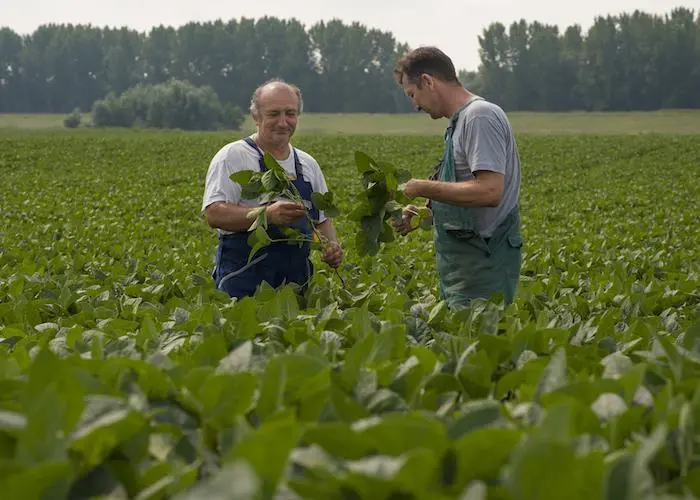
Thanks to its high protein content, good balance of essential amino acids and lower cost, soybean meal is reported to be one of the most suitable fishmeal alternatives in aquaculture feed. Soy protein concentrate (SPC) has a similar content of crude proteins and essential amino acids to fishmeal, along with lower anti-nutritional factors. Over the past twenty years studies have shown that SPC can effectively replace fishmeal in the diet of commercially important fish such as Atlantic salmon and rainbow trout.
Brazil is a key supplier of soy to Norwegian fish feed producers but deforestation, land conflict and pesticides have all been linked to the country’s soy production. If aquaculture in Norway continues to grow and develop, so too will soya imports, unless the feed composition changes.
Fortunately for Norway, the answer to this could be closer to home. According to research by Austrian arm of the Swiss Research Institute for Organic Agriculture (FiBL) and Footprint-consult, if the Norwegian salmon feed industry shifts to Europe Soya certified SPC, it can cut its carbon footprint by 41% compared to SPC from Brazil. Part of a wider project to develop a European SPC supply for Norwegian salmon production, the research was commissioned by Donau Soja, a European organisation in Vienna that was founded nine years ago to promote a non-GM, sustainable and European protein supply.
“We started this specific project aimed at the Nordic aquaculture market four years ago,” said Marija Kalentic, Donau Soja Executive Director and Regional Director – Central and South Eastern Europe.
“We invested in training farmers, certifying companies and building up huge volumes of soya to meet the high demand from the Norwegian salmon farming sector, which needs about 300,000 tonnes a year of SPC to feed its salmon. Our project partner and member of Donau Soja has built a new plant and can now supply up to 150,000 tonnes of SPC a year, so almost half the demand. For us this is a huge step forward.”
The work to measure CO2 specifically for SPC concentrate in salmon feed began last year and is ongoing. Donau Soja joined forces with the Sodrugestvo Group in Russia to build a Europe Soya-certified value chain, sourcing certified soybeans from Serbia, Croatia, and Romania to supply SPC production in the Sodrugestvo processing plant in Kaliningrad.
More than 4700 farmers in Serbia, Croatia and Romania grow soya for Europe Soya certified SPC for the aquafeed market. The research team studied farmers and soya from the Sodrugestvo Group and took each step into account from production at the farm level to the final product. Inputs used in agricultural production such as the amount of seeds, fertiliser use, SPC processing, transport and resulting yields were also included when calculating the emissions.
Reducing CO2 emissions
The team found that if the Norwegian salmon feed industry chose Europe Soya-certified SPC rather than the Brazilian equivalent, it could reduce its emissions by 1.5 million tonnes CO2 equivalent. This is almost 3% of Norway’s national gross greenhouse gas emissions.
“Change in land use is the biggest lever to cut down on CO2 equivalent emissions, along with reduced transport emissions compared to Brazilian SPC,” Marija Kalentic said.
“The carbon footprint of 1kg of Europe Soya certified SPC is 1.6 kg CO2-eq. This is 4.2 times less than Brazilian SPC and on the level of feed it’s extremely significant, not just for Norway but also for the UK and other countries across Europe where aquaculture and agriculture production exist.”
With moves underway in Europe to reduce greenhouse gas emissions, pollution and to focus more on industries and trade closer to home, hopes are high that by adopting a Europe Soya certified SPC, the Norwegian salmon feed industry could lead by example in ensuring that soya doesn’t mean negative consequences for people and the environment. Europe Soya is disconnected from environmental issues such as deforestation in rainforests and is more sustainable, but there are also other benefits as well, according to Marija Kalentic.
Soya growing is very unbalanced between Europe and South America. While only 1% of arable land in the EU is planted with soya, the figure is 70 to nearly 80% in countries such as Brazil and Paraguay, Marija Kalentic said.
Increasing soya production in Europe results in improved crop diversity on European fields and supports more sustainable agriculture. At the same time, more soya fields in Europe decreases pressure on South American regions and ecosystems, and supports a global rebalancing of the food production system.
“There is still too much soya grown in Brazil and it’s causing huge pesticide use and huge pressure on the environment,” she said.
Part of the solution
“This is why we need to look at the whole situation worldwide and here in Europe we need more soya so our answer is let’s produce more soya here. We can do two good things at once – help Brazil produce something else as they don’t need to produce so much soya, and increase European soya production. Soya from Europe can support European agriculture and economies as well as create more diverse and resilient protein supplies.”
“The Norwegian salmon feed industry can be a key part of this solution,” she continued.
“Adopting a Europe Soya certified SPC rebalances the roles in soy bean production and improves Europe’s agriculture by increasing biodiversity on European fields. It will also reduce pressure on South American regions and ecosystems, support a global rebalancing of the food production system and increase the sources of sustainable, deforestation-free soya.”
Donau Soja’s next step is to focus on raising awareness of Europe Soya certified SPC. So far, salmon feed companies have been enthusiastic about soya produced in Europe and are taking steps to buy what is available. Donau Soja has been organising campaigns, talking to media and engaging with stakeholders in the aquaculture value chain from feed companies and salmon producers to retail chains.
As Norway also exports its salmon, plans are underway to reach out to other stakeholders across Europe. Donau Soja will also work with the general public in Norway through social media to highlight how the use of Europe Soya certified SPC could improve the sustainability profile of salmon farming.
“We need to involve consumers more in order to make an impact,” Marija Kalentic said.
“They don’t need to know everything about salmon feed but they need to know whether it’s harming the planet, burning rainforests or using too much pesticides. We hope that this will help to change the negative perceptions surrounding the salmon industry and allow the public to see it in a more positive light.”
According to Marija Kalentic, for Europe to be part of the solution, working with farmers and each part of the aquaculture value chain will be key, as well as making the push towards traditional exporting countries that they stop deforestation, and pressing European companies to import deforestation-free soya.
Related Articles
 PROCESSING & REFRIGERATION
 PROCESSING & REFRIGERATION
 PROCESSING & REFRIGERATION