


Future favourites
Farmed fish is in demand like never before, but many new species are yet to make their mark. Jason Holland takes a look at where the fish of tomorrow are being produced.
The planet’s dependence on aquaculture is fast increasing, thanks in no small part to the population boom – projected to exceed 9 billion by 2050; thanks also goes to the improved management of wild fisheries and the crackdown on overfishing.
Global seafood production is forecast to grow 2.1% this year on account of a 5.8% increase in aquaculture output offsetting a slight decline in wild fisheries yield, according to the latest edition of the Food and Agriculture Organization’s (FAO) biannual Food Outlook.
The FAO has forecast global seafood production will reach 157.3 million tonnes in 2012, up from 154 million tonnes last year and 148.5 million tonnes in 2010. Aquaculture production is expected to grow from 63.6 million tonnes in 2011 to 67.3 million tonnes in 2012, while wild fisheries output is expected to slip to 90 million tonnes in 2012 from 90.4 million tonnes in 2011. WF&A readers should note that at the same time, the value of seafood exports is projected to hit $138 billion (€110.4 billion) this year, up 9.4% from 2011 and up 27.1% from 2010.
“Despite slow economic growth and reduced purchasing power in many of the traditional key import markets, such as Spain, Italy and France, demand for seafood is strong overall,” said the FAO.
According to the FAO Fish Price Index, seafood prices are close to all-time highs, especially for wild species. “Rising energy and feed costs are likely to keep fish prices high during the year,” said the FAO. “At the same time, prices are important drivers of demand as shown by the salmon market, where added farmed production and lower prices in 2012 compared to 2011 are boosting consumption in all salmon.”
In these tough economic times, it’s not surprising that farmed products like Atlantic salmon (Salmo salar) that have more moderate prices tend to fare the best in consumer markets. And it should be noted that a lot of the sustained success enjoyed by salmon has come because supply and demand dictate farm gate prices.
Commercial salmon farming began in the late 1960s and has steadily evolved into a multi-billion dollar global business that will produce up to 1.8 million tonnes this year. But other industries have had more meteoric rises, such as Vietnam’s pangasius industry.
The South East Asian country’s flagship farmed fish has experienced incredible growth over the last 15 years. In 1997, the annual production stood at a modest 22,500 tonnes; this year, the country expects to export more than 1.2 million tonnes with a value of $2 billion (€1.6 billion).
Vietnam now exports pangasius to 135 countries, with shipments to Europe accounting for 29.1%, and to the US market 18.4%. In the first-quarter of 2012, it exported more than 161,000 tonnes of the fish with a value of $421 million (€337 million), up 12% year-on-year.
There have been greater exports to the States, Mexico and Brazil in the opening months of this year. But exports to the EU have been in decline since November 2011 due to the Eurozone economic crisis. Furthermore, Vietnam’s pangasius farmers continue to be hindered by financial woes and industry officials fear some may not find sufficient capital to see out 2012.
However, Vietnam is expected to get on top of its problems and the overall success that pangasius has experienced in what’s a very short period of time will remain an inspiration to many fledgling operations – everything from the giant freshwater pirarucu or paiche (Arapaima gigas) produced in the Amazon to the more modestly sized brill (Scophthalmus rhombus) farmed in the Mediterranean.
Global success
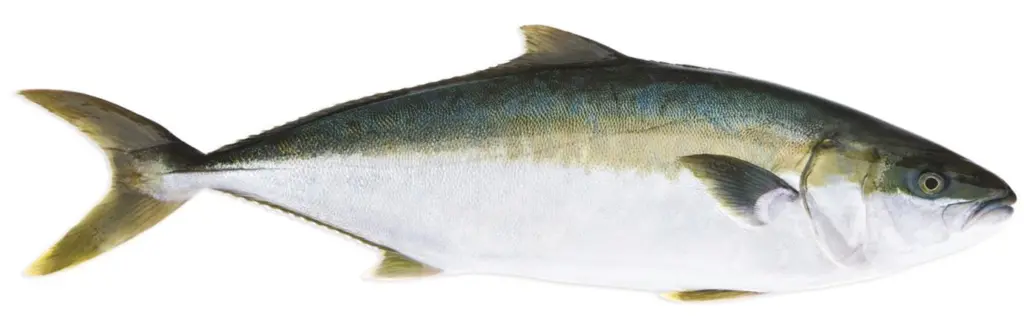
Species such as pirarucu and brill, as well as the likes of more established turbot, halibut and cobia, illustrate that aquaculture is not confined to fast-growing, lower-priced species; there’s equally as much innovation among producers of premium-priced fish. A further example of this and one of the biggest success stories in recent years is the yellowtail kingfish (Seriola lalandi) produced by Australia’s Clean Seas Tuna.
Yellowtail kingfish, also known as just ‘yellowtail’ or ‘hiramasa’, is highly prized in Japan as a sashimi fish. It is endemic to the sub-tropical and temperate waters of Australia and New Zealand, along with the waters surrounding Japan.
Crucially, when Clean Seas commercially launched its farmed fish six years ago it took the bold decision to export to Europe the same time as it unveiled the species in Pacific markets. Fortunately for Clean Seas’ shareholders, the kingfish business has performed well – building a keen following with some of the world’s top chefs. The company claims the fat content of its farmed kingfish, which is certified as sustainable by Friend of the Sea, is superior to that of wild kingfish, as is its flavour and texture.
This year, however, the fingerlings, which are grown in open waters in the Spencer Gulf, South Australia, until they reach a market size of between 3.5kg and 4kg, have suffered from a gut enteritis problem, which new company chairman Paul Steere said has led to “unacceptably high mortality rates and disappointing average growth from remaining fish stocks”.
“These health issues are most distressing to the company, especially as the acceptance of the Clean Seas brand in the marketplace for yellowtail kingfish has been hard earned and farm gate prices continue to rise to a level that would have been profitable in ordinary growing conditions,” said Mr Steere, who added that recent results from a current trial into the non-viral problem were “more heartening” but that it was still early days.
In the meantime, fingerling production for the current season will be moved from Arno Bay to Port Augusta and production will be scaled back to 100,000 fingerlings.
Nevertheless, the company’s ongoing Strategic Review has confirmed it believes the fish is a “suitable species for sustainable long-term aquaculture production” either through sea cage grow-out, as presently practiced by Clean Seas, or alternatively through the onshore production in purpose-designed recirculation facilities. The company has suggested the latter could potentially be more profitable. It will also have noted that other aquaculture producers, including a number of Chilean salmon farming companies, are looking to make inroads into the production of the species due to the growing market demand.
As well as yellowtail kingfish farming, Clean Seas has been at the forefront of the southern bluefin tuna (Thunnus maccoyii) aquaculture industry. In fact, the company says its “core objective” is the successful closure of the lifecycle for the species and has been working towards this end for several years.
Recently, it has been progressively bringing forward the planned production of its bluefin spawning programme so as to transfer juveniles to sea cages for grow-out trials earlier in the summer season. If this move proves successful, and the company admits there may be some biological risk in coaxing forward the spawning season, it’s anticipated that the fish will be increasingly robust to survive the 2013 winter – the next key step in the commercialisation of the species.
Similar projects are underway elsewhere in the world for the propagation of northern bluefin (Thunnus thynnus).
US breakthrough
Another rival in the yellowtail industry is likely to be Hawaii-based Kampachi Farms, which this year successfully completed the final harvest from its Velella research project. The programme raised yellowtail in US federal waters using a single unanchored, submersible pen that rode eddies in the open ocean, three to 75 miles offshore of the Big Island of Hawaii.
Company co-CEO Neil Sims said the harvest far surpassed expectations and the fish thrived in the open water, achieving phenomenal growth rates. He also said the seven-month trial represented a significant step forward in developing the open ocean aquaculture industry in the States.
Importantly, the fish were fed a sustainable commercial diet that replaced a significant amount of fishmeal and fish oil with soy and other alternative agricultural proteins.
Mr Sims, who is to chair the 2012 Offshore Mariculture Conference in Izmir, Turkey, in October, said the fish reached an average weight of 5.6 pounds (2.5kg) in six months, resulting in a first harvest a full three months ahead of schedule.
The final food conversion ratio (FCR) was 1.6:1 (1.6 pounds of feed to produce 1 pound of fish). In comparison, the average FCR for chicken is 1.9:1, and beef is up to 6.5:1.
The next phase of Kampachi’s research will test a single-point mooring six miles offshore in water 6,000 feet deep, where the pen can move freely in currents and still be within easy range of shore for supply delivery and crew rotation.
Geographical split
While there are any number of aquaculture companies that are attempting to develop the next commercial success story, the production of both new and established farmed species tends to be focused in developing countries rather than developed nations.
Despite the EU being the world’s biggest market for seafood, consuming around 12 million metric tons of products per year with a value of around €55 billion ($68.7 billion), it’s far from a leader in production terms, in fact it imports fish with a value of more than €35 billion ($43.7 billion).
WF&A readers should note the import value includes trade among EU partners and if intra-regional trade is excluded, the EU imports around €20 billion ($25 billion) worth of fish and fishery products from non-EU suppliers, including many farm-produced products.
This fact hasn’t gone unnoticed by Maria Damanaki, European Commissioner for Maritime Affairs & Fisheries, who wants to see European aquaculture businesses made more competitive and innovative.
Earlier this year, the commissioner bemoaned the fact that despite parts of the EU having ideal environmental conditions to farm aquatic species, the bloc’s overall aquaculture production has been stagnating.
Through the new European Maritime and Fisheries Fund, Ms Damanaki has proposed promoting new forms of aquaculture that have the potential to transform the industry, such as multi-use offshore and non-food aquaculture, including algae and bio-fuels.
“However, everything does not need to be rebuilt from scratch. We also need to nurture the more ‘traditional’ forms of aquaculture: salmon farming in the Atlantic, seabream, seabass and amberjack farming in the Mediterranean. These activities have been tremendously successful so far, as have traditional shellfish and freshwater aquaculture,” said Ms Damanaki.
Consumer trends
The commissioner also feels the European aquaculture sector needs to be more reactive to market trends and consumer expectations. Furthermore, it needs to be attractive enough to encourage outside investment, which means cutting red tape and creating more licenses.
“My proposal is also to provide EU money supporting new business start-ups through the new fund. I believe that the funds spent on aquaculture are good value for money,” she said.
“Thirdly, my proposal is that information on labels will have to become more precise. This will benefit consumers, but also EU producers, who can highlight the fact that their products have been made on the basis of the highest standards.
“Beyond the labelling, we will need to bridge the communication gap between industry and consumers. We need to find the right way to stress: farmed fish is fresh, inexpensive, healthy, safe, traceable and locally-produced.”
The new fund also contains specific measures to promote organic aquaculture.
Ms Damanaki has said the backbone of the Common Fisheries Policy reform is sustainability, and so aquaculture must also develop in line with the EU’s strict environmental, animal health, and food safety standards.
“To realise these ambitious objectives, EU institutions and national authorities need to work better together. We also need to engage the stakeholders: industry, big and small, down to every link of the supply chain, but also consumers and representatives of civil society.”
At an EU level, Ms Damanaki has proposed developing strategic guidelines containing the main priorities and general targets. Subsequently, member states will be asked to adopt their own multi-annual plans for aquaculture. Within this new framework, they will have the opportunity to exchange best practices, learn from each other and work together, she said.
There’s no doubt that Europe, like other developed regions, has scope to increase its aquaculture output and that there’s a rich diversity of species suited to farming, but history tells us that key to any commercial success is keeping production costs in check while securing a strong and stable market price. Lastly, and most importantly, it’s about getting consumers on board and buying regularly. Therefore, we shouldn’t expect too much innovation too soon but the EU funding, proposed by the commissioner, would certainly help.
Related Articles
 PROCESSING & REFRIGERATION
 PROCESSING & REFRIGERATION
 PROCESSING & REFRIGERATION