

Baltic aquaculture – on the European frontline
Baltic region fish farmers are increasingly looking to tap into opportunities offered by a new era in the aquaculture industry, including RAS technologies, product range diversification and organic certification. However, high energy prices and weakening consumer purchasing power have brought uncertainty to the industry.
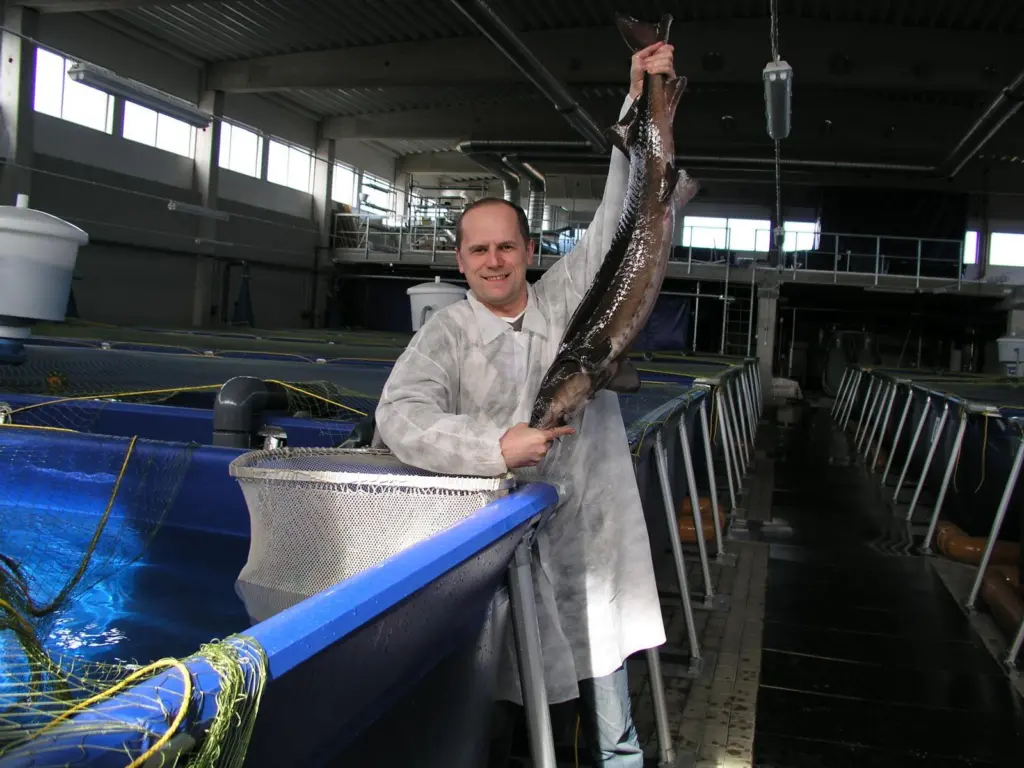
The past few years have been modestly successful for fish farming in the Baltic countries Latvia, Lithuania and Estonia, with a trend of slow but steady growth in terms of both quantitative and qualitative parameters, Szvetlana Lengyel, PhD, Technical Secretary with the Network of Aquaculture Centres in Central and Eastern European (CEE), told WF.
According to Lengyel, Latvia has practically no historical experience in marine aquaculture, and projects in this area have been limited to a few experiments so far. Most of the production and income are generated by one species – carp, which are mainly grown in pond farms.
“Another 20 fish species [produced in the country] still do not reach enough quantities to change the dominant position of the carp segment,” Lengyel said.
The aquaculture industries in Latvia and Lithuania are very much alike. Pond farming in both countries account for the lion’s share of the output, and around 90% of the total production is carp, said Marcis Zingis, Executive Director of the Latvian Fish Farmers Association.
Estonia is different, with trout being the most widely-farmed species, covering around 5,000 hectares, he added.
“Estonian aquaculture, in general, is quite fragmented,” explained Martin Liiv, Chairman of the Estonian Fish And Crayfish Farmers Association. “There are many different types of farms regarding volumes, species and technology involved – from earth ponds to RAS.”
But like the other Baltic countries, Estonia lacks sea farms.
“We didn’t have serious sea farms previously. Nor are we going to have them soon; it will take time, but the ice is melting,” Liiv said. “Production dynamics are about to change.”
A plan hammered out by the Estonian regional and agricultural ministry envisages sea farm production reaching 10,000 tonnes by 2030. However, Liiv believes that meeting this goal will be challenging, as in recent years, the industry’s output has been approximately 1,000 tonnes per year.
Meanwhile, it’s believed some positive shifts in Latvia’s marine aquaculture are likely, with the government embarking on a plan called Sea 2030. This envisages more marine areas being used for aquaculture activities.
In the long-term, this programme is expected to give the sector a long-awaited development impetus.
High energy costs
On the negative side, a number of market players have warned the spike in energy prices seen in recent years will be a key challenge – potentially jeopardising future developments and perhaps even operations that are already up and running. Indeed, Liiv told WF that while the COVID-19 pandemic was a relatively weak storm for Estonian aquaculture to weather, with the industry barely affected, what happened next is a different story.
“The Russian war in Ukraine has affected everything directly and indirectly,” Liiv said, highlighting that energy prices have hit both businesses and consumers.
“The population has less money to spare on healthy and local products,” he said.
Zingis agrees. “Rapidly and to a large extent, the growing prices of energy resources has had a negative impact on production costs and has also hindered the purchasing power of consumers,” he said.
Despite this turbulence, the total volume of aquaculture products produced and realised in 2023 remained the same as the previous year, Zingis said.
Vasily Krasnoborodko, owner of Akva Ferma, a Latvian engineering company that has built nearly 30 fish farms worldwide, has a different perspective. He maintains that the high energy costs in recent years have put heavy pressure on the industry’s future development opportunities.
“The cost of energy resources has skyrocketed, driving operational costs up. As a result, growing heat-loving aquatic species in RAS farms are no longer of interest [to investors] in Latvia,” Krasnoborodko said.
To overcome the energy crisis, he believes Baltic countries need to revive the nuclear energy development programmes that were shut down more than a decade ago when plans for the construction of the Ignalina nuclear plant in Lithuania were scrapped.
“Nuclear power plants are the most environmentally friendly and produce the cheapest electricity. I would put a floating nuclear power plant on a channel on the Daugova River in Riga. The cost of electricity in a 30-kilometre zone from a nuclear power plant is generally a pittance, and delivery is free.”
According to Krasnoborodko, this step would spur investment in the industry and trigger “wild production growth”.
Organic standards
Some local farmers believe the Baltic region should try to position itself as a cluster of clean organic production in Europe.
“Due to the European Union’s planned support for organic aquaculture, some pond farms in Latvia are interested in certification and switching to organic production. It is expected that the volume of organically-grown production will increase in the Latvian aquaculture sector in the coming years,” Zingis said.
If the campaign for promoting organic production meets success, it may also give impetus to the depressed RAS segment, he added.
“I would also create a brand of Latvian trout that is the most environmentally friendly in Europe – healthy and clean food from Latvia, without antibiotics or GMO products,” Krasnoborodko said. “All production and factories are closed in Latvia. This means clean air, water and land. No polluting industries”.
Krasnoborodko also believes the future of the organic segment goes hand-in-hand with RAS technologies.
“Growing trout in RAS [puts them] in relatively sterile conditions and protects them from pathogens and infections that live in natural reservoirs,” he said. “The only thing that prevents me from growing trout in RAS inexpensively is the cost of electricity.”
It’s also suggested organic standards could make Baltic fish more competitive on the global market.
“Regarding prices, we depend mostly on prices of Norwegian salmon and trout, as they determine the benchmarks,” Liiv said. “But during the high season between November and March, the market can also be filled with Finnish, Danish and Swedish trout. And then there is Turkish fish that can enter the market with insanely cheap prices via large European supermarket chains. We are affected mostly by the price of fish produced outside the EU.”
Green reforms
At the same time, a segment of the Baltic fish farming community fear European green policy could be somewhat detrimental to industry growth, with Lengyel acknowledging that most long-standing issues are connected with EU regulations and are also lacking in understanding of freshwater fisheries peculiarities and needs.
“Political factors are among the greatest risk, I believe,” Liiv added. “In the political spectrum, ‘green revolution’ is a new thing to bear in mind and take into account. The environmental agency has unlimited power to decide how one farmer must operate, and usually it’s extremely difficult to argue. It affects both the inland and offshore aquaculture and how foreign investors see Estonia.”
Despite these challenges, there’s general agreement that the future looks brighter for Baltic aquaculture.
“The aquaculture sector [of Baltic nations] grows thanks to increased innovative and research efforts and better connections between different stakeholders, including farmers and academia. The Baltic countries are now better represented in the EU funding programmes and want to become a visible part of the EU scientific community,” Lengyel said.
Liiv added that the industry needs to play its cards right to unlock its full potential.
“The outlook is promising for Estonian aquaculture if it learns and thrives and does not want to skip the necessary steps on the ladder,” he said. “If sea-farming lifts off – and I’m quite sure it will – I think Estonian aquaculture will have new breathing, and many freshwater farms will benefit from it. It all boils down to what kind of rules are being set and the capital availability. The conditions, political will and reality must meet to make it happen.”
Related Articles
 PROCESSING & REFRIGERATION
 PROCESSING & REFRIGERATION
 PROCESSING & REFRIGERATION