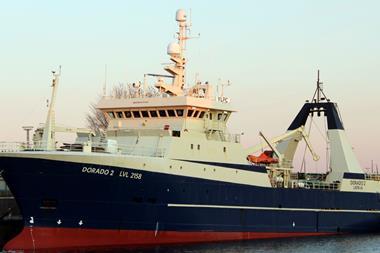




The Ocean Choice International Grand Bank Yellowtail Flounder trawl fishery has entered the full assessment process to be evaluated against the Marine Stewardship Council (MSC) standard for sustainable and well managed fisheries.
In accordance with the MSC standard, the assessment will evaluate the status of the Grand Bank yellowtail flounder stock, the impacts that the fishery has on the marine ecosystem and the management system overseeing the fishery. Moody Marine Ltd. has been selected by the fishery as the third-party certifier to conduct the assessment, which is expected to take 12-14 months.
The client for this assessment is Ocean Choice International L.P (OCI). The fishery, which captures yellowtail flounder by demersal trawl, is managed by Canada’s Department of Fisheries and Oceans, with stock assessment and broad management objectives established by the Northwest Atlantic Fisheries Organization (NAFO). This is the first stock of fish under NAFO’s purview to enter assessment for MSC certification.
“OCI is committed to conducting our harvesting operations in an environmentally sustainable manner,” said Blaine Sullivan, chief operating officer for OCI. “We are pleased to be entering MSC’s full assessment process for our yellowtail flounder fishery, and we look forward to increasing the range of OCI products offered in the international marketplace under the MSC eco-label. North American consumers have enjoyed this North Atlantic Canadian flounder product for many years, and we are currently introducing this sweet, delicate white fish to consumers in Europe and Asia. OCI is committed to the highest quality standards within all our fisheries.”
OCI is allocated 91.4 per cent of Canada’s total annual quota for this species; the remaining 8.6 per cent quota is allocated to five different companies. Only OCI’s landings are included in this assessment. In the 2008 season, the total annual catch of Grand Bank yellowtail flounder was 10,303 tons.
Currently, most product from the OCI Grand Bank yellowtail flounder fishery is sold within North America, with more than half going to the foodservice sector; approximately 30 per cent of those products are sold in fresh form and 70 per cent in frozen form. Less than 10 per cent of the landed quota is currently sold in Asia.