


Scanmar looks at the need for more research in the fishing industry.
We have seen it coming, and we have been waiting for it; the need for more focus on fishery research. There has been a negative development in commercial fisheries in many places, and for various profitable species, around the world. The reasons are many; overfishing, lack of control, but just as often; government’s lack of support and interest in developing sustainable fisheries. Why is this? The answer is very simple: No understanding of the nature of the fishing industry.
On a general basis it is tempting to say that governments only believe that the means for a viable fishing industry are restrictions, regulations and quota reductions. And we see the results:
- A fishing fleet that is getting older every year
- Restrictions, quota reductions and ever increasing operation and maintenance costs
- No, or very limited, development of modern equipment, fishing gear and methods
- And maybe worst of all, but rather a result of what is just mentioned; virtually no recruitment of young people to the industry
Industry struggling
Instead of a viable fishing industry, the result is an industry struggling to survive, and a frustration forcing those involved to hold back on investments and maintenance, which is essential to any industry. The situation is getting worse and worse, and many just feel forced to try to find solutions to survive. It is a shame.
Ever since the start more than 30 years ago, Scanmar has had close contacts with fishery research institutes and researchers all over the world. These relations have had a great impact both ways; the fishery research environment has received new state of the art technology at low cost due to the development that has been paid for by the private sector, and Scanmar has been invited to participate in surveys where Scanmar’s technology has been necessary to investigate new areas, like deep sea biomass etc., and has made observations that have formed basis for new developments.
Fishery research is to Scanmar much more than just acoustic surveys and trial surveys in order to establish quotas:
In addition to the 250 especially equipped fishery research vessels equipped with Scanmar systems, a great number of commercial fishing vessels each year are hired to do special tasks, research is made on new fishing gear construction, gear efficiency on various species under various conditions, sorting methods etc. Much of this is done with Scanmar equipment, and in cooperation with us for use of the equipment and assessments and evaluations of the results.
Scanmar’s involvement has helped us to gain much experience and knowledge on top of what the fisheries research institutes have, especially when we combine it with experience from commercial fishing vessels.
There is no question that many fisheries research institutes are doing an excellent job with some of the tasks they are doing, but that is generally very specific projects or surveys, and from our position it seems to be a lack of coordination in the institutes and across the board.
Small achievements
Who has the total overview? Even in institutes spending vast amounts of money, the achievements are small; various departments are running their projects, fighting for their budgets, and the main task for management is not to rock the boat; it could lead to cut in budgets. That is actually the situation in a lot of places.
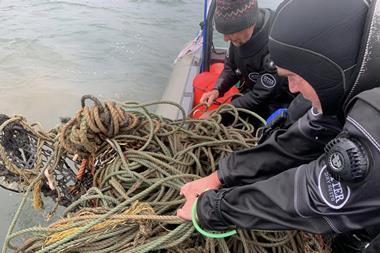
However, we have been involved in projects where obviously the aim is right, and that pleases us a lot, and we will try to present some experiences and results on our website. As a little, and to many an insignificant example, we would like to mention a project the Russian Far Eastern Fishery Research Institute TINRO has conducted in the Bay of Peter the Great, near Vladivostok.
Scanmar has participated in the project with people and equipment. We cannot claim to understand the value of the results for the commercial fisheries in the area, but we are fascinated. The project; the efficiency of different lengths and angles of sweep lines on various species.
Why we are fascinated? The way we understand it, the results may be used for maximum efficiency, combined with selectivity: Obviously a step in the right direction. A small achievement, OK, but it leads to the core of this article: What do we have to do to establish a viable fishing industry?
This article is not about what benefit use of Scanmar systems can do for better, more reliable and trustworthy information for estimation of biomass and establishment of quotas. That is well documented elsewhere. Our contribution is different: We have to bring to the table our opinion on what our experience tells us what should be done if want to have a viable fishing industry in 15 years. To make it short:
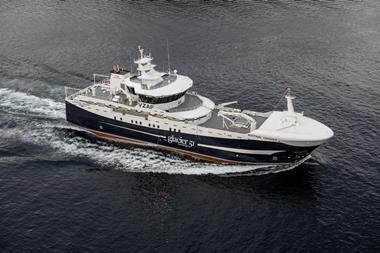
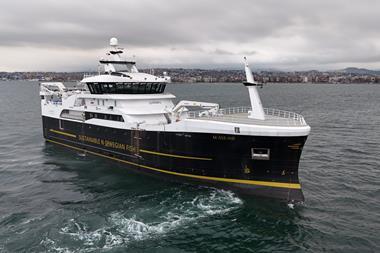
1. There is a great need for replacing old fishing vessels with new:
- Operation and maintenance costs destroy profitability
- Wages and conditions are not attractive to young people
2. Need for recruitment of young people:
- Utilisation of new high tech equipment
- Development and improvements of new fishing gear and methods
The situation has been growing worse for decades, and it is escalating every year. Today, it is critical; the income from fishing is not able to support the necessary investments in new efficient fishing vessels, and it is obvious that a reduction of the existing fleet has to take place to balance the catching capacity with the resources available.
But that is not enough: Fishing itself has to become more efficient; organising, planning and catching has to become more structured and more efficient. That is not only necessary for the immediate economy in the fishing fleet, it will have great impact on other parts of the industry; processing and distribution, shipbuilding and development of fishing gear and equipment, but first of all, recruitment of skilled and motivated people to the industry.
Even if we could point at several things we have observed, we will restrict ourselves to what we know best; catching efficiency, and particularly trawling:
Trawl equipment (design, size etc), trawling technique (rigging, towing speed, on so on) was developed at a time where observation of the efficiency was difficult, and when practically nothing was done. Any development was based on ‘try and fail’, and the individual fisherman’s experience. And, it was hard to estimate the impact of wind and waves, sea bed conditions, underwater currents and so on.
Serious problems
In general terms, based on what we have seen recorded by numerous vessels using Scanmar, there are lots to be achieved. There are other things, but we are limiting ourselves to observations made with the most advanced, and today, most important sensors; Trawleye, Flow sensors, DoorAngle sensors and Twist- and Filling sensors on the net and cod end. The most serious problems are:
- Wrong towing speed causes fish to disappear either in front of the trawl or through the panels due to bucket effect and twisted net
- Wrong door angles due to wrong sizes, incorrect rigging, towing speed etc.
- Low water flow in trawl due to construction or towing speed
The most advanced and modern vessels have the necessary equipment and the skippers and crew are able to make the necessary changes and adjustments themselves, but what about the numerous small trawler owners that never can afford the investments? There must be a challenge for the authorities to assist them to make a decent living. It is not a big task to help developing efficient fishing gear and support and train the fishermen, but it is urgent.
At least if we want to recruit young people to the industry, which again is a prerequisite for a viable fishing industry in 15 years time.