


Agnar Lyng is more than simply a fishing vessel owner. He has built a hard-earned reputation across the Norwegian and international fishing industry as a shrewd businessman who knows what he is talking about. So when he gives an opinion on the products or services of any company, people take notice, reports Cormac Burke.
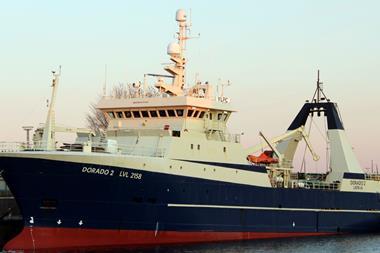
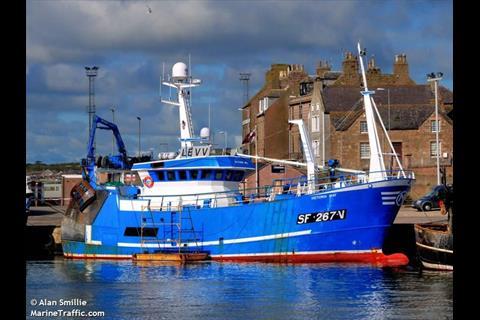
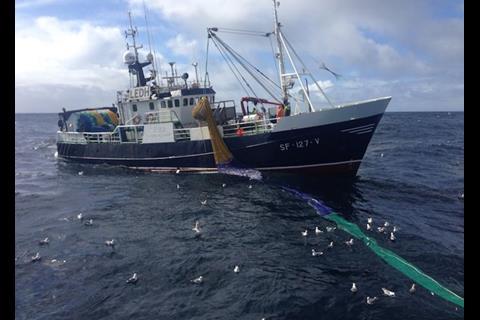
The results of Agnar Lyng’s efforts are clear to be seen; the major marine resource corporation Lyng Group, head of the Måløy-based Stadyard boat-building and repair yard, and head of the fleet company Torbas AS which includes the flagship pelagic vessel of the same name, two pair demersal trawlers Ringbas and Victoria May, and Barents Sea shrimp trawler Kvalstein.
Focusing on his fishing enterprises, Agnar Lyng explained that for the demersal pair-trawling and shrimp trawling operations, the availability of such high quality technology is vital but that sometimes it’s a case of judging what equipment you need and where you need it.
“For example, in Norway Scanmar is practically a household name in the fishing industry and there are plenty of Norwegian skippers who just wouldn’t leave the harbour without these systems on board,” he commented.
“But then, in places like Scotland where the tradition has been more based on experience, skill and lessons historically learned when working the same grounds, perhaps these fishermen often prefer to rely more heavily on their own knowledge than anything that electronic technology can provide,” Agnar Lyng said, adding that neither over- nor under-reliance on electronics is right or wrong, but just a matter of understanding different cultures and traditions.
“While demersal trawling, in the North Sea, for example, may be more straightforward as the skipper knows the grounds and can re-use the same towing tracks trip after trip and year after year, there can be no doubt that this is still a highly complex operation. But understanding all the fishing gear variants, angles, spread and general behaviour of the trawl while it is fishing on the seabed is surely an impossible task without a high standard of reporting from catch, door and spread sensors and systems such as those provided by Scanmar.”
“Instead of the traditional towing path of maybe four to five hours, the sensors tell you what’s going on, if something has happened, and if you need to make and adjustment to the gear, etc. – all these things can prevent loss of towing time and save on possibly wasteful fuel consumption.”
“It’s obvious from my comments that we are extremely satisfied with the Scanmar installations on Ringbas, Victoria May and Kvalstein but I wouldn’t readily give such a glowing testament if I didn’t believe it,” he said.
With a career background in banking, Agnar Lyng is, unsurprisingly, a solid believer in the concept of leasing.
“Whether it’s a new car, or Scanmar’s top of the range equipment, it’s clear that entering into a lease agreement is a more favourable method to operate in. Technology and electronic equipment changes very fast and by owning the objects you can easily be stuck with old fashioned equipment. I believe everyone has felt the frustration of an ‘unexpected’ repair invoice for your own medium-aged car,” he said.
“After paying for the unpleasant maintenance you think your car is more or less like new and keep it another year to justify the spending,” he said, adding that as a fishing-related analogy fishing, this ownership mode might cost a fortune in reduced efficiency.
“For the purse nets and some vital fishing instruments I guarantee you are much better off as a simple user compared to be being an owner. Translating this arrangement to apply to wheelhouse electronics is equally as good a value for money, particularly with the highly attractive rates offered by Scanmar’s offered finance option. Although Scanmar’s technology wouldn’t need to be upgraded to a new full replacement system every three years, it still means that, in the (rare) event of something going wrong, a new replacement system is available immediately – and you don’t need to bother too much for the second hand value.”
“This is good business for this industry,” Agnar Lyng commented.
Anyone would be forgiven for thinking that Agnar Lyng already has enough on his plate with so many business interests and commercial involvements, but that doesn’t stop him from being a driving force in his home port of Måløy where he is one of the key players in the MMG Group (Måløy Maritime Group) – a community-based cluster of fifteen companies, all heavily involved in the marine and fisheries service industry.
There can be few locations around the world that, sited in such breathtakingly beautiful natural surroundings on Norway’s west coast, lies a four-mile radius of every conceivable commercial service that a fishing, or indeed any marine sector, vessel would require.
From its three boat yards of varying sizes, marine electronics and electrical depots, two internationally renowned ship design companies, a major player in the global net & rope manufacturing industry, an international oil supply and bunkering company, as well as fish processing and fishmeal.
“It’s a one-stop-shop that has it all.” Agnar Lyng said.
The Måløy Maritime Group’s fifteen companies (including Stadyard), have been busy throughout 2016 in promoting to the international industry their range of services to the fishing and sea-going fleet, undertaking all relevant operations.
Together these MMG companies have a turnover of 1.5 billion NOK (GB£105m/US$151m)) and have an approximate total of 340 employees.